Sunday, February 5, 2017

279. Village Shops: Chocolate High Heels, Tibetan Singing Bowls, Himalayan Salt, and 1970's Jumpsuits


         For me and my books, and the whole sordid story in a nutshell, click here.

*                   *                  *                 *                   *                 *

         The West Village is full of little shops, many of them unique, that make shopping here great fun, and show the varied tastes and interests of New Yorkers.  I’ll start with one I have never set foot in, and for good reason: it sells chocolates, and I don’t want to be tempted.  This is Li-Lac (“Chocolates since 1923”), which exists at five locations in the city, the one I know being at 40 Eighth Avenue, only a few short blocks from my apartment.  It boasts of being founded in 1923, when George Demetrious, a Greek chocolatier trained in Paris, came to the U.S. and opened a small shop here in Greenwich Village; today it’s still going strong, given the almost universal human urge to devour chocolate.

         I often pass by the store and see its seasonally appropriate displays in the window: a jumbo turkey ten inches high for Thanksgiving; chocolate Santas for Christmas; heart-shaped boxes of chocolates for Valentine’s Day; chocolate Easter Bunnies for Easter; I’m not sure what for July 4; and witches holding out a tray of chocolate goodies and asking, “Sweets, my pretty?” for Halloween.  In my naiveté I used to think the giant Santas and turkeys were cardboard imitations, but glossy Li-Lac literature that comes to me in the mail assures me that they are for-real solid edifices of chocolate, available for a price: the jumbo turkey (4½ pounds of gourmet chocolate that can feed 35 people) for a mere $75.  Also available are life-size chocolate high heels (yes, that’s what I said: high heels) for $46, a life-size chocolate soccer ball for $75, and a chocolate chess set likewise for $75.  Though I’ve never entered the store, I have sampled its offerings, for our friend John used to bring my partner Bob and me little balls of chocolate that matched his budget: a dollar each, but delicious.  So if you want handmade specialty gifts in chocolate, or just ordinary little runt-sized chocolates, Li-Lac is the place to go.  And their goodies are kosher certified, too.

         A  store that I frequent regularly is Integral Yoga, my health-food store, at 227 West 13th Street, which in 2016 celebrated its fiftieth year, having opened in 1966, when the neighborhood – now scrubbed-up and safe --  was a ma gnet for drunks and drugs.  When I was first initiating myself into the mysteries of vegan dining, I would walk slowly past the entrance and peer in, without quite having the nerve to penetrate the arcane precincts of this mysterious emporium.  Finally, having taken some courses in vegan cooking that acquainted me with the basics of a vegan diet – whole grains, legumes (beans, peas, and lentils), fruits and vegetables, and sea vegetables – I dared to venture in, and have been venturing there ever since.  Integral Yoga has given me foods that in my young years in the Midwest I didn’t even know existed: kale, collards, pinto beans, chickpeas, chard, granola, tofu, tempeh, kombu, arame, millet, bulgur wheat, quinoa, and countless others.  Without instruction I would never have known that sea vegetables – these dried-up, skinny-looking tangles of fibers – would expand and soften into delicious edibles, once soaked briefly in water.  Nor would I have known that tofu, a bland food much maligned and scorned by the foes of vegan dining, could become delicious if properly prepared and seasoned.  But in time I learned that these exotic foods, and organic versions of familiar ones, could be made into tasty feasts every bit as satisfying as the conventional meat dishes of most Americans.   And all this is offered with a 10% discount for seniors and students.

         And right next to the food store is the Integral Yoga Institute, where I have rarely ventured.  Available there are books galore on appropriate subjects (meditation, yoga, etc.), not to mention classes in chanting, healing, breathing, massage, gongs, drums, Tibetan singing bowls, and Ayurvedic medicine.  There are even sessions in shamanic womb healing; laughter and sound healing meditation; and “Chair, Chi and Prana: Multidimensional You.”  If all that is too much for you, keep in mind the slogan on the wall of the food store: TRUTH  IS  ONE / PATHS  ARE  MANY.  I’ll admit that I’ve confined myself to a vegan diet, and simple yoga exercises with a touch of meditation.  Putting me off just a bit is a brochure for a workshop on nutrition and yoga, with the healer’s picture flashing a beatific smile that I find just this side of insipid – all that health and happiness stretched from ear to ear.  Which probably shows my unenlightened Western mind, feeding my body appropriately while starving my spirit.  I’m convinced that laughter heals and that Tibetan singing bowls do wonders, but I’m not quite ready to face a Multidimensional Me, having my hands full with my current one-dimensional me.

         A Village store of a different kind is the pet portrait store at 545 Hudson Street, where the proprietor, Mimi Vang Olsen, holds forth, usually busy painting a commissioned pet portrait inspired by a photograph, while listening to opera on the radio.  I went there several times with my friend John, who, having recently been hosted by a friend with felines, wanted to buy a thank-you card featuring cats; in the back of the store are numerous dog- and cat-themed cards.  The front door is always locked, but once a quick glance reassures her, Ms. Vang Olsen opens it and welcomes you warmly.  As for her last name, her husband is Danish, though she herself grew up in the West Bronx in the 1940s, the daughter of an Armenian immigrant who had a portrait-photography business.  So if you want your pooch or tabby immortalized, this is the place to go.

          Another store, quite unique, at 523 Hudson Street, just a short ways south (downtown) from Mimi’s, is The Meadow, where I was taken last fall by a young friend who used to live in the West Village.  The name may invoke a weedy field full of summer wildflowers, but in fact the Meadow specializes in salt.  Yes, salt – every kind you can imagine.  In the front of the store are salt blocks of every size, ranging from small ones at $5.00 up to big blocks at $50.00.  Why one would want blocks of salt of any size or price eluded me, but my young friend assured me that he used salt blocks in cooking. 

         Further enlightenment came to me from the Internet, where The Meadow’s website urges viewers to throw away their table salt, and save their kosher salt for de-icing the sidewalk; gourmet salts, it insists, are infinitely preferable, each kind working in a different kind of cooking.  So here I am again, an unenlightened initiate – or non-initiate – peeking into another realm of mystery, of which the West Village seems to offer a profusion, whether we’re talking about chocolate or tofu or Himalayan salt.  And far in the back of the store, for a note of contrast, is an offering of bitters, since what salt is to food, bitters are to cocktails – a few dashes adding depth and complexity to a drink.  One can leave The Meadow anticipating tasty food and zesty drinks.

         Finally, I’ll end with a store I’ve never set foot in, and only recently heard about, but whose name intrigues me: Screaming Mimi’s.   And what do you suppose it purveys?  Rock music?  Parrots?  Unmuzzled prostitutes?  Wrong, wrong, and wrong.   It has vintage clothing like you couldn’t find anywhere else.  But what would you want with out-of-date apparel?  Stuff for theme parties: a 1920s wedding, a 1980s prom, a 1940s bar mitzah – or any period event you can invent.  And many consider its racks and racks of clothing, and tables adorned with hats, as the ultimate in cool.  Fashion students drop in, and costume and fashion designers come by for inspiration.  And where else would you find a “Cape” section or one labeled “1970’s Jumpsuits”?  It’s all there at its new address, 240 West 14th Street, the parlor floor of a brownstone between Seventh and Eighth Avenues (nearer Eighth), between a liquor store and a nail salon, where it took refuge after gentrification chased it out of its former location on Lafayette Street.  Alas, the purple banner with bold white lettering that proclaimed SCREAMING MIMI’S on Lafayette Street is not in evidence.  Instead, if you look up at the front parlor window, you see a sign:

What the world needs is
LOVE

Who can argue with that?  But to experience love in the form of vintage clothing, you have to climb a steep brownstone stoop, but since when has accessing the good life been easy?  And by the way, who is Mimi?  No idea; the proprietor goes by the name of Laura.


 *                  *                   *                    *                   *                  *


          BROWDERPOMES:  For two new poems of mine, on ninny serene versus deep, and proverbs for the wicked, click here and scroll down to pp. 34 and 35.


For my short poem “I Crackle” and a stunning photo of me, go here

For five acceptable poems, click here and scroll down.  

To avoid five terrible poems, don't click here.  

For my poem "The Other," inspired by the Orlando massacre, click here.  


          BROWDERBOOKS:  No Place for Normal: New York / Stories from the Most Exciting City in the World, my selection of posts from this blog, has received these awards: the Tenth Annual National Indie Excellence Award for Regional Non-Fiction; first place in the Travel category of the 2015-2016 Reader Views Literary Awards; and Honorable Mention in the Culture category of the Eric Hoffer Book Awards for 2016.  For the Reader Views review by Sheri Hoyte, go here.  As always, the book is available from Amazon and Barnes & Noble.
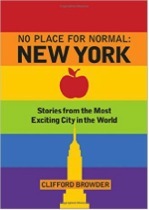

No Place for Normal: New York / Stories from the Most Exciting City in the World

The Pleasuring of Men (Gival Press, 2011), my historical novel about a young male prostitute in the late 1860s in New York who falls in love with his most difficult client, is likewise available from Amazon and Barnes & Noble.
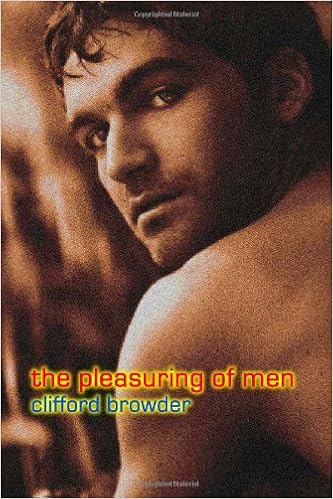


         Coming soon:  Anyone’s guess.  Maybe a reprint of a relevant earlier post.


         ©   2017   Clifford Browder

Sunday, January 29, 2017

278. New York Skyline: Aspiration or Hubris?

         
         New: For my author page on Amazon (bio, photo, books), click here.

         New York is a city of doers, and one thing they do – constantly, maniacally – is build.  Our beloved New York Times had an article last December, “A Year of Skyline Spectacle and Joy,” that chronicled significant architectural restorations and creations in the city in the year 2016.  The photos accompanying it let readers promenade about the city to see these sites without stirring from their humble abode.  So let’s take a gander together.

         The Roy and Diana Vagelos Education Center is described by the Times as a “whimsical 110,000-square-foot exclamation mark” on Columbia University’s Upper Manhattan medical campus near the George Washington Bridge.  The south-facing 14-story tower “presents a cheerfully teetering stack of cantilevered terraces, indoor bleacher seats, lounges and stairs,” as seen in a large photo showing the building’s stairs and adjoining rooms blatantly exposed at night through huge glass windows.  Impressive, to put it mildly, and in the Times’s words, “playful, welcoming, warm” – which for a medical school is pretty good.  And as the sun sets, quoth the Times, “the center becomes a beacon in the neighborhood.”  I’m sure it does, but for me the marvel of that neighborhood is the George Washington Bridge, which arches over the Hudson not whimsically but with massive grace; I’ve walked it many a time, going to or from the alien terrain of New Jersey, and have felt it vibrate beneath my feet from the endless parade of traffic rushing across it. 

         Redrawing the city’s western skyline, according to the Times, is the 467-foot-high Via 57 West at 57th Street, seen in a photo as a towering triangle rising up over the Hudson and strewn with dark splotches that I assume are windows or balconies.  It looks like a child’s giant cut-out, a huge scrap of material like nothing I have ever seen, and one that seems incomplete in itself, as if waiting to be assembled with other giant cut-outs and so become something meaningful and complete.  The Times calls it a “warped, mountainous pyramid,” then corrects itself by describing it as a hyperbolic paraboloid, rectangular on the ground with a swooping roof façade.  The newspaper assures us that the stainless-steel skin shimmers with the changing light, which is some consolation, but I can’t help thinking of it less as a building that as some drug-befuddled architect’s revenge on solid geometry.  And since it features rental apartments, people live there.  Imagine living in a rectangular-based hyperbolic paraboloid with saw-toothed balconies that, angled toward the Hudson, make hundreds of facets in the stainless-steel skin.  The very thought of it gives me the shivers.  But I’ll admit that it ain’t dull, and the western skyline can probably use a bit of sparking up.

File:VIA 57 WEST New York NY 2015 06 09 02.jpg
Via 57 West, under construction in 2015.
Justin A. Wilcox

         Another new development is the Jerome L. Greene Science Center on Columbia University’s 17-acre Manhattanville campus, near the intersection of Broadway and 125th Street.  A photo shows a huge nine-story hunk of a building dazzlingly illuminated at night.  It is described as consisting of four steel-frame glass blocks surrounding a glassy core with meeting rooms, presumably for neuroscientists, since this monstrous achievement is a “nexus for neuroscience” and a “factory for ideas.”  A double-skin curtain wall, its two layers separated by “a muffling pillow of air,” is said to let light in while reducing the rumble of the elevated subway outside.  Furthermore, the science center engineers “illusions of ethereal weightlessness,” as does, in my opinion, our new president, whose sturdy presence seems to emit airy ideas.

File:Jerome L Greene Science Center, Columbia University.jpg
The Science Center by day, and still under construction.  And very close to the subway.
Columbia University / Frank Oudeman
         What fails to engineer anything, least of all ethereal weightlessness, is another 2016 architectural achievement (or nonachievement) chronicled by the Times: the Mulry Square Fan Plant in the West Village, which is where I live (in the Village, not the plant).  Though I pass near it often, I’ve managed not to notice it and so have failed to grieve at its lusterless, prosaic, and totally uninspired appearance.  In fact, I didn’t even know that there was such a thing as Mulry Square, which does indeed minimally exist, in a drab sort of way, at the intersection of Greenwich Avenue and Seventh Avenue, about a six-minute walk from my building.  The Times article calls the structure – an emergency ventilation plant that cost $180 million -- “one of the saddest excuses for architecture completed this year.”  Neighborhood groups pleaded for years with the city to build the plant with a design less hideous than a windowless concrete bunker and a few forlorn benches, yet that is apparently what they got, albeit with a fake-brick townhouse façade topped by a curtain-rod cornice.  I’ll check it out the next time I venture up Seventh Avenue, but from all accounts it makes Via 57 West look inspired, and the Vagelos Education Center look like nothing short of a miracle.

         I don’t want any of this post’s comments to suggest that I’m hostile to modern architecture, for I’m not.  Though I’ve only seen sketches of it and not the edifice itself, which will be completed in 2017, I’m in love with Jean Nouvel’s high-rise going up at 53 West 53rd Street, next to the Museum of Modern Art, with its tapering glass pinnacle vanishing into light.  And every night before going to bed, and every dark early morning when I get up, I see and celebrate One World Trade Center, or the Freedom Tower, lights ablaze at the renascent Ground Zero site, a commemorative wonder that I have christened my “Tower of Light.”  New York sometimes commits architectural monstrosities, but it also creates shimmering marvels.  It always has and it always will.

File:Freedom Tower at night.jpg
The Freedom Tower at night, seen up close.
Christian Kendzierski

         The Real Estate Board of New York (REBNY), a mighty force in the city, heartily agrees.  Its special 16-page supplement to the New York Times of January 19 opens with a full-page black-and-white photo viewing the Chrysler Building from above at night – a plunging perspective that is impressive and almost frightening.  And in another full-page spread the commercial real estate agency CBRE shows another remarkable photo of the city at night and announces, “NEW YORK.  NEW CITY.  From the World Trade Center to Hudson Yards to One Vanderbilt to Brooklyn and beyond, New York is a city transformed,” and then goes on to hail the city’s changing skyline.  

         In a Q. and A. in the same section, REBNY chairman Rob Speyer, a lifelong New York who is raising a family here, evinces optimism about the city’s economy, and hails the city as a thriving global metropolis where people from all around the world want to live, work, visit, and study.  Needless to  say, he is “extremely bullish” on the city’s real estate market, and thinks that President Trump’s stimulus proposals, if enacted, should extend and strengthen the current economic cycle.  As so often in this country, total confidence, total optimism, total certainty that all is, and will continue to be, well. 

         But will it?  So often in the past, blazing optimism has preceded a disastrous decline in the economy.  I am no visionary able to predict the future; I only know that booms are followed by busts, that what goes up must come down, and that the farther things go up, the farther they will ultimately go down.  Meanwhile the city’s destiny – at its immediate destiny – seems to be in these towering structures that reach higher and higher into the sky, an expression of the city’s and the nation’s imperative to DREAM  DARE  DO, to be exceptional, to know that, at every moment, the eyes of the world are upon us.  Aspiration or hubris?  Time will tell.  Meanwhile, in every sense, the sky’s the limit.

         A footnote to the above:  In the past two years, 31 construction workers have died while on the job in the city.  Spending in the construction industry is at a record high, but many contractors won’t pay for training programs and safety measures, including those required by law.  Because the federal enforcing agency, the Occupational Safety and Health Administration, is understaffed, only a handful of construction sites are inspected.  The result: an epidemic of construction worker deaths.  For progress – if progress this is – there is always a price to pay.


 *                   *                   *                    *                   *                  *

          BROWDERPOMES:
  For two new poems of mine, on ninny versus deep serene, and proverbs for the wicked, click here and scroll down to pp. 34 and 35.

For my short poem “I Crackle” and a stunning photo of me, go here

For five acceptable poems, click here and scroll down.  

To avoid five terrible poems, don't click here.  

For my poem "The Other," inspired by the Orlando massacre, click here.  

          BROWDERBOOKS:  No Place for Normal: New York / Stories from the Most Exciting City in the World, my selection of posts from this blog, has received these awards: the Tenth Annual National Indie Excellence Award for Regional Non-Fiction; first place in the Travel category of the 2015-2016 Reader Views Literary Awards; and Honorable Mention in the Culture category of the Eric Hoffer Book Awards for 2016.  For the Reader Views review by Sheri Hoyte, go here.  As always, the book is available from Amazon and Barnes & Noble.


No Place for Normal: New York / Stories from the Most Exciting City in the World

The Pleasuring of Men (Gival Press, 2011), my historical novel about a young male prostitute in the late 1860s in New York who falls in love with his most difficult client, is likewise available from Amazon and Barnes & Noble.


          Coming soon:  ???  Maybe a look at some unique and funky businesses in the West Village, Soho, and Noho.


         ©   2017   Clifford Browder

Sunday, January 22, 2017

277. Two Libraries: An Old Friend and a Mystery Building


         For two new poems of mine, on ninny versus deep serene, and proverbs for the wicked, click here and scroll down to pp. 34 and 35.


         This is a tale of two libraries, one an old friend and one a mystery building; I’ll start with the old friend.   The year 2016 has seen many architectural changes in the city of New York.  The one I can most relate to is the reopening, after two years of renovation, of the Rose Reading Room of the New York Public Library, that formidable Beaux Arts structure on Fifth Avenue at 42nd Street, guarded by two famous sculpted lions.  Behind that Beaux Arts façade and the lions, deep inside and up on the third floor, is the famous reading room where researchers pore over the items they have requested.  

         In years past I have spent hours in the Rose Reading Room perusing books, many of them fragile, fetched up from the library’s innards and delivered to me when my magic number flashed on the screen above the window where you claim the books requested, or where you find, alas, that the items you most want and need are not available.  Sometimes I claimed one thin volume, and sometimes a whole stack of books that I with effort toted back to my seat at one of the room’s long tables.  All round me were other researchers likewise immersed in their work, plus an occasional intruder from the streets who propped some book or newspaper up in front of him (always a him) and pretended to read, while dozing off from time to time, until a library guard nudged him awake and reminded him that sleeping here in the Rose Room is totally and absolutely forbidden. 

         My last project there was reading books – preferably primary sources – about the slave trade in New York, as background material for my unpublished historical novel Dark Knowledge.  So engrossed was I in my research that I failed to look around and above me to appreciate just how magnificent my surroundings were: a room the length of two city blocks, with a 52-foot-high ceiling displaying murals showing fluffy clouds in a wide-arching sky.  The building itself dates back to 1902, when the cornerstone was laid; the roof was completed in 1906, but the library didn’t open until 1911, when on the first day between 30,000 and 50,000 visitors poured in. 

         Given the building’s age, it’s not surprising that time took its toll.  One night in May 2014 an ornamental plaster rosette crashed to the floor of the reading room, causing the library to conduct a full inspection of the ceilings of both the Rose Reading Room and the adjoining catalog room where scholars submit their request and receive the magic number that will let them claim their materials in the reading room.  Restored in the 1990s, the 1911 reading-room ceiling proved to be in good condition, but the library decided to do more than recreate and replace the fallen rosette.  Installing scaffolding and lengthy platforms, it reinforced all 900 plaster elements in both rooms with steel cables, restored the catalog room’s mural, and installed LED lights in the reading room’s chandeliers.  The project cost $12 million and meant the rooms were closed for two years, to the dismay of researchers and the general public, who were serviced in other less grandiose  rooms throughout the building. 

         Today the rejuvenated rooms once again welcome researchers, who need have no fear that a falling plaster rosette will crash upon their noggin, disrupting vital research.  Besides fetching books from the stacks, the two rooms hold about 52,000 reference books, including encyclopedias and dictionaries in various languages.  For one complicated project I once consulted encyclopedias in Spanish, French, and German, as well as a Russian one in translation – a reminder of what outlandish assignments may come to a freelance editor.

         One last detail: why is it called the Rose Reading Room?  Because it is named for the four children of the Rose family that donated the money to restore the room in the 1990s. 


         And now for the mystery building.  There are in fact two mystery buildings side by side on West 13th Street that I pass frequently, but which until now I have never really looked at closely.  One, a three-story windowless slab near Greenwich Avenue, looms strangely, obviously not commercial or residential.  What, then, is it?  A Metropolitan Transportation Authority substation, one of many situated throughout the city, but this particular one hailed by that august authority, the New York Times, as an example of a civic-minded expression of architectural ambition.  Built in the early 1930s, it is described as an Art Deco gem and a neighborhood landmark, prized for its geometric decorations, embossed aluminum doors, limestone frieze, Flemish brick coursing (whatever that is), and square turrets.  Yes, close inspection even of a photo reveals all those things, if only the city’s hurrying pedestrians (myself included) would stop to take them in.

         But what is an MTA substation?  It is a facility, underground or above, that converts high voltage AC current into the DC current used by the subways of New York City.  If that doesn’t clear things up for those who never took a high-school physics course – or even for those who did – I can only add that photos of substation interiors show rows of big boxlike gray structures with gauges and dials that, minus the gauges and dials, remind me of high school lockers where students deposited their wraps, lunches, and other vital items.  There are also panels and cranes and fans and ventilation ducts, and cables and tanks and wires, the exact purpose of which escapes me.  But some substations have been landmarked, and the New York Transit Museum offers tours of substations to those who are eager to learn more about how this city works, even though the public usually exits the tours more confused than ever.  So let’s just say that substations provide the power that makes the trains run.  And if their usually unlovely exteriors are sometimes enlivened with a bit of Art Deco ornamentation, so much the better.

         But right next to the West 13th Street substation is another building,  251 West 13th Street, that is as impressive and intriguing as the substation is prosaic and plain: a three-story red-brick affair with rounded arches over tall windows that reminds me a little of the Jefferson Market Library on Sixth Avenue.  The 13th Street building was once a branch library that I visited when I lived nearby on Jane Street, but it is now in private hands, handsomely ornate, not a bit Art Deco, its recessed ground floor and basement visible from the street through iron bars, the ground floor’s big windows revealing what seems to be an office.  A notice at the entrance announces, “BE AWARE / This entrance is being videotaped,” which for me makes it only more mysterious.  Also posted there: “Suite 1  Private / Suite 2  Levinson/Fontana.”  All this made me curious about the building’s history, and sure enough, like so many old buildings in the city, it has history aplenty.

         The building at 251 West 13th Street was a branch library right from the start: the Jackson Square Library, built in 1887, as announced by wrought-iron numbers on the red-brick façade, a gift to the city’s newly created Free Circulating Library by George W. Vanderbilt who, unlike many of that moneyed clan, was a bookworm eager to make books available to the public.  But my linking it to the Jefferson Market Library was for the most part mistaken, for that library is Victorian Gothic, whereas this one resembles a Flemish guildhall, reminding me of the handsome guildhall façades lining the Grande Place in Brussels, Belgium. 

         This branch in time played a role in the history of libraries, for in 1899 its head librarian initiated an open-shelf system, giving the public free access to the books, and relieving the librarians of the wearying task of fetching the requested books from distant closed shelves, an innovation that then spread throughout the branches and persists to this day.  Yes, a few books were stolen, but librarians still preferred the open system and considered the losses negligible.  Another problem was contagious diseases, no small matter since a janitor and his son who lived in the building came down with scarlet fever in 1908, causing the library to be shut down for fumigation, the patrons having to trudge some distance to another branch.  In more recent times the library was used by writers, artists, and other professionals, among them James Baldwin, Ring Lardner, W.H. Auden, Gregory Corso, and my humble self. 

         In 1961 plans were made to save the Jefferson Market Courthouse on Sixth Avenue and convert it into a branch library serving Greenwich Village – the branch library that I often visit and get books from.  As a result of this conversion, the smaller Jackson Square Library was closed and sat empty until 1967, when the performance artist Robert Delford Brown bought it.  An  extensive restoration followed, bringing light to the dark interior and hacking away the front doors and much of the ground floor, so that the building now seems to cantilever precariously above the sidewalk.  Here Brown staged frequent happenings and installed his First National Church of the Exquisite Panic, a tongue-in-cheek enterprise with two supreme commandments: Live, and Do Not Eat Cars.  Since the state of nirvana was too difficult to achieve, Brown instructed his faithful how to reach the state of Nevada.

         But that was not the end of the building’s transformations.  In the 1980s the television writer Tom Fontana discovered the building and was struck by it, noting its distinctive appearance and deteriorated condition.  Then, in 1996, learning that it was for sale, he bought it and initiated a restoration that obliterated much of the previous renovation, installed a spacious and airy bachelor’s pad (he is divorced, lives alone) on the two upper floors, and installed his office on the main floor, and other facilities in the basement.  His residence is presumably the Suite 1 indicated at the entrance, and Levinson/Fontana in Suite 2 is the TV production company he has founded with director Barry Levinson. The second floor, once the library’s main reading room, now houses Mr. Fontana’s library, its 6,600 volumes lodged in floor-to-ceiling mahogany bookcases.  And on the roof, hidden behind the gable at the front of the building, is a sun-splashed deck complete with a suburban-size grill.  The façade was not restored, however, because of the expense involved, so the building may still seem to cantilever above the sidewalk.

         Having no television, I know little about Mr. Fontana, who is said to party a lot; one of his New Year’s Eve festivities drew 400 guests and lasted till dawn.  Though I’m not that party-prone, I still warm to him because he peppers his speech with profanities (as I, alas, sometimes do), has never owned a car, and doesn’t use a computer, preferring to write his scripts in longhand.  His eschewing the computer balances out my eschewing television.  (Veteran followers of this blog know that I love this verb, which sounds like a sneeze – a perfect note to end on.)


 *                   *                   *                    *                   *                  *

          Browder poems: 
 For my short poem “I Crackle” and a stunning photo of me, go hereFor five acceptable poems, click here and scroll down.  To avoid five terrible poems, don't click here.  For my poem "The Other," inspired by the Orlando massacre, click here.  

          BROWDERBOOKS:  No Place for Normal: New York / Stories from the Most Exciting City in the World, my selection of posts from this blog, has received these awards: the Tenth Annual National Indie Excellence Award for Regional Non-Fiction; first place in the Travel category of the 2015-2016 Reader Views Literary Awards; and Honorable Mention in the Culture category of the Eric Hoffer Book Awards for 2016.  For the Reader Views review by Sheri Hoyte, go here.  As always, the book is available from Amazon and Barnes & Noble.


No Place for Normal: New York / Stories from the Most Exciting City in the World

The Pleasuring of Men (Gival Press, 2011), my historical novel about a young male prostitute in the late 1860s in New York who falls in love with his most difficult client, is likewise available from Amazon and Barnes & Noble.


         Coming soon:  The changing skyline of the city: what’s to hate and what’s to love.

         ©   2017   Clifford Browder