Sunday, August 29, 2021

523. Plants That Kill


BROWDERBOOKS


Recently my e-mails were hacked; people received requests that they buy me a gift card.  Fortunately, those who know me weren't fooled.  When several friends phoned to inform me of the hacking, I immediately changed my e-mail password and informed scores of people on my e-mail list of the scam.  The scammer was clumsy, knew nothing about me, was vague and unconvincing in his approach.  (Scammers can be very convincing, but not this one.)

As if that weren't enough, changing my password somehow blocked all incoming e-mails and most spams as well.   A long session by phone with an AOL rep finally resolved the issue by discovering and deleting two filters that were blocking the incoming e-mails.  How those filters were activated I will never grasp.

Meanwhile Hurricane Henri hit and sent water dripping through the roof into my bedroom.  I caught the water as best I could in pans, but damage was done.  The dripping ended only when the rain did, and so  far as I know, the leaks have yet to be patched.  And heavy rain is predicted at intervals over the weekend.

Did all this fuss affect the e-book sale of New Yorkers: A Feisty People? at $0.99?  I hope not.  The sale still ends this Sunday night, when the price goes back to $3.99.  

Well, it hasn't been dull.  But now I'm ready for some dullness.  Quite a lot of it, in fact.


                    PLANTS  THAT  KILL


Plants that kill have always fascinated me.  I’ll cite three that I have known.


Poison hemlock


File:Conium maculatum-12.jpg


Here in the city, up in Van Cortlandt Park, near a huge sycamore tree at least three-feet thick that towers high above it, hemlock grows, its cluster of little white flowers above the fernlike leaves.  This is Poison hemlock, Conium maculatum, whose juice did Socrates in. As Plato tells it, Socrates, condemned to death for “corrupting the youth” of Athens, drank the juice, felt a numbness overcoming him, and died peacefully.  


But anyone contemplating suicide and hoping for just such a death should reconsider.  Those who confuse the plant with wild parsley and eat it die a horrible death with convulsions.  How does one tell it from similar nonpoisonous species?  The Latin word maculatum, “spotted,” is a clue.  The purple-spotted, grooved green stems identify it as poison hemlock.  A further warning: if bruised, it emits an unpleasant smell.  So for God’s sake, keep away.  This quiet little plant of the parsley family means trouble.


Common milkweed


A stout, downy plant that loves dry, sun-bathed fields, where I have seen it in batches.  In July it blooms: domed clusters of little flowers, their fragrance intoxicating, their color ranging from dusty rose to dull brownish purple.  If bruised, the stem bleeds a milky juice, hence the name “milkweed.”  


The cloyingly sweet aroma of the flowers lures insects to deep pools of nectar past sticky pollen that is a death trap for bees.  I have seen bees squirming, tugging, writhing, doomed to be eaten by spiders or yellow jacket wasps unless, with deft strokes of a twig, I free them and send them on their pollinating way.  I always do this, having a soft spot in my heart for honey bees.


In autumn milkweed's warty brown seedpods appear.  Splitting open, they reveal tight-packed rows of seeds, hundreds of them, like a medieval painting's angelic chorus glorifying God.  I love to pluck them out, silken and fluffy, and toss them in the breeze, where they drift like legions of tiny parachutes whitening the sky.


Fragrant, delicately hued, with a charming display of drifting seeds:  such is milkweed.  But a death trap for bees.  And all parts of the plant are poisonous, if eaten.  They can cause nausea and diarrhea, and if heartily consumed, even death.  Luckily, milkweed resembles no similar plant that is edible, so few foragers are tempted to gather it.


Destroying angel


File:Destroying Angel 02.jpg


Amanita virosa, one of the deadliest mushrooms known.  I have seen it in the woods on Monhegan Island, Maine, where I often vacationed: a mushroom with a classic mushroom shape, quite lovely in its simplicity, white against the forest floor or dark trunks of trees.  It is often confused with edible mushrooms by those who don’t know the characteristics of the Amanita family: fragments of a universal veil on the cap (sometimes missing); a ring or annulus on the stem (remains of a partial veil); and an enlarged base.  If, when hunting for mushrooms, you encounter something with these characteristics, if you value your life, keep away.  And when the mushrooms first come out of the ground, completely enclosed in their universal veil, they could be confused with edible puffballs, another error that could cost you your life.


Amanita poisoning is insidious.  At first one experiences no symptoms.  Then, after six hours or more, there is nausea, cramps, and diarrhea.  Next, these symptoms disappear and for two or three days the victims think themselves healed.  But since the liver and kidneys have been severely damaged, rapid deterioration follows, and after three to seven days, death.  Death is rare if the victim seeks treatment promptly, but a delay can be fatal.


Nature charms, nature inspires, nature kills.  Beauty and danger cohabit.  Beauty is bonded with death.


©  2021  Clifford Browder

Sunday, August 22, 2021

522. Weird: Weird People, Weird Facts.


               BROWDERBOOKS


I have vowed to keep my posts short.  So let’s have a quick look at my nonfiction title New Yorkers: A Feisty People Who Will Unsettle, Madden, Amuse and Astonish You, the third work in my #Wild New York series of books about New York and New Yorkers, then and now.  It combines memoir, history, and travel lore, so what can a reader expect?  Just about anything, and much of it weird.


  • A look at the great blizzard of 1888, when the snowfall was so deep that, on the following day, people who went out were walking over the tops of trees.
  • An imaginary walk along the docks, circa 1870, with glimpses of sugar refineries twelve stories high, and under the docks, a shadowy forest of pilings where harbor thieves stashed their stolen goods.
  • Taxi drivers who may be gypsies, Basques, Tibetans, or Sherpas from Nepal.
  • Gentle fun, hot fun, and weird fun (and I do mean weird).
  • How people die in New York (that can be really weird).
  • Booze, and why Prohibition has never worked in New York, and never will.
  • How Fifth Avenue went from goats to grandeur.
  • And oh yes, my affair with a Broadway chorus boy, to show that if the Cardinal Archbishop of New York could do it, so could I.


A fun book, but with serious moments.  Weird, fascinating facts to surprise visitors and residents alike.  


1733378200


Available from Amazon and Barnes & Noble.

©  2021  Clifford Browder


Sunday, August 15, 2021

521. Whoopee Time in America


                      BROWDERBOOKS


Big news!  Amazon now ranks my nonfiction title New Yorkers: A Feisty People Who Will Unsettle, Madden, Amuse and Astonish You as 

  • no. 1 in Emigrants & Immigrants Biographies
  • no, 7 in New York City Travel Books
  • no. 74 in History of U.S. Immigration.
I am amazed, surprised, confounded, and delighted.  Anything under 100 impresses me.  These ratings can change from week to week, but anyway...  And maybe this helps explain why its sales have picked up, though my Amazon ads could well be the main reason.  (They are another story.)

New Yorkers is the third title in my #Wild New York series of nonfiction works about New York and New Yorkers.  It combines memoir, history, and travel lore, a mix that annoys some readers and delights others.  A fun book -- Basques, hustlers, Broadway, booze, the Beatles, graffiti, chorus boys -- but with serious moments: cholera, fires, dying. #historical #history #nonfiction #travel #newyorkbook

1733378200


Available from Amazon and Barnes & Noble.


               Whoopee Time in America


It’s Whoopee time in America, it’s gaga, it’s carnival, it’s South Sea Bubble time, it’s tulip time, it’s the party to end all parties, and everyone is invited.  But consider this:


If your barber tells you he has invested heavily in Tesla, the maker of electrical cars, whose stock has already risen eightfold,


or Aunt Sally, who has never invested, asks you if Bitcoin would be  good investment,


or Cousin Willy boasts of making a killing in the market, but when you ask him if he put his winnings in the bank, he says no, of course not, he reinvested them in another highly speculative enterprise,


if such things happen, it is safe to assume that a lot of your fellow citizens are plunged neck-deep in a bubble, and that bubbles have a way of bursting.


I have been aware for months of the stock market flirting with its all-time highs, but only recently, thanks to an article in The New York Review of Books, did I grasp how bad it is:


  • Margin debt is at an all-time high, just like in 1929, the year of the Great Crash, which means that a lot of people are buying stocks with borrowed money;
  • A record amount of money has gone into initial public offerings (IPOs) — the stock of new companies untested by time;
  • Special-purpose acquisition companies (SPACs) have proliferated and raked in billions from investors, buying unlisted companies that escape regulation, and such imaginative ventures as flying-taxi start-ups;
  • The cryptocurrency Bitcoin, priced at $7,000 in January 2020, has risen above $63,000;
  • Young investors calling themselves “retards,” “apes,” and “degens” are scornful of traditional investors, and embrace the rallying cry YOYO (you're only young once).


All of which recalls the collective madnesses of the past: the tulip bulb craze of 1636-1637 in Holland; the South Sea Bubble of 1720 in London; the Mississippi Scheme of 1720 in Paris; and in the US, the promotion of Western railroads (anything with “& Pacific” in the name) in the late 1860s and early 1870s, projecting railroads into a wilderness whose native peoples, antelope, and bison felt no need of a railroad.  All these bubbles burst, and thousands lost millions.  


I’m no investment adviser and have no credentials to justify my opinions.  But I’ve been in the market many years and have been through many cycles of boom and bust.  I don’t know when the bubble will burst or what will trigger it.  I’m simply of the strong personal opinion that we are in a colossal bubble, and sooner or later bubbles are sure to burst.  So I don’t urge anyone to join the party — it’s much too late for that.  Keep out, or if you have a sound long-term investment plan, just stick to it and ignore the brouhaha.  Whatever you do or don’t do, good luck!    


Source note: This post was inspired  in part by Edward Chancellor’s article “Waiting to Deflate,” in the August 19, 2021, issue of The New York Review of Books.  Many of the facts cited come from that excellent article.


©  2021 Clifford Browder


Sunday, August 8, 2021

520. Nine Weird Things New Yorkers Are Doing

                    BROWDERBOOKS

Amazon's "Look inside" feature for my nonfiction title New Yorkers: A Feisty People shows the front cover large enough that you can take in all the details.  If you don't know the book, take a look.  It is the third title in my #Wild New York series of nonfiction works about New York and NewYorkers, past and present.


1733378200


NINE  WEIRD  THINGS  NEW  YORKERS         ARE  DOING


So what are New Yorkers doing, as the pandemic hangs on?  Lots of things, many of them weird.


  • An elderly Orthodox Jew in Chelsea, a onetime professional clown, playwright, and sidewalk juggler and mime, is making custom leather masks for actors  (Harlequin and the commedia dell’arte) and occasional wrestlers and rappers;
  • Shakespeare in the Park is doing Shakespeare’s Merry Wives of Windsor set on 116th Street today, with a cast representing African immigrants from Ghana, Sierre Leon, Senegal, and Nigeria;
  • The Metropolitan Museum’s first indigenous curator is reshaping the American Wing by including Native American art, past and present;
  • At age 72, a woman born in India and fearful of drowning in deep water is learning to swim;
  • New Yorkers are flocking to tattoo artists to get tattoos that commemorate the pandemic, which other New Yorkers want to forget;
  • New Yorkers looking for rare spices are going to Kalustyan's, a specialty food shop on Lexington Avenue, to buy fresh turmeric from Fiji, holy basil from Ethiopia, black peppercorns from Ecuador, white peppercorns from Cameroon, and organic ghee from Turkey -- proof that, in New York, you can find anything, if you know where to look;
  • People desperate for sleep, or just bored and curious, are putting lettuce leaves in boiling water and then drinking the result, a new sleep-inducing fad that doctors and sleep experts insist is unsubstantiated;
  • Invited guests took buses provided by the African-American designer host to a historic mansion in Irvington, N.Y., where steady rain made him postpone the couture show, whereupon he invited the guests — African-American and Latino models, career coaches, prison activists, agents, and rappers — to booze and feast anyway and dance like crazy;
  • A couple got married, having met years ago and anticipated a one night-stand that turned into a four-day hookup, followed by ten years of togetherness a belated engagement, and now, finally, a wedding.
New Yorkers are a busy crowd.  No pandemic can stop them.

Coming soon:  It's whoopee time in New York!  There's a wild party going on, and everyone is invited.

©  2021  Clifford Browder


Sunday, August 1, 2021

519. Sensual


                      BROWDERBOOKS


Two days ago I declined a contract with a small press to publish my collection of short stories, Wicked City: Stories of Old New York.  I did this because

  • The contract ran for five years --  too long!  Other publishing contracts I have signed ran for one year, or two at the most.
  • If, for a given sales period, my paperback or e-book sales were under $100, they could terminate me.  I would love to have $70 or $80 or $90 in sales for a given period, yet I might be terminated.
I have learned to keep control.  To do this, I either self-publish, or publish with a small press under a hybrid contract,  A hybrid contract gives the author access to the services of a small press, but lets the author keep control; only the author can terminate the book's publication and sales.  I was terminated once by a small press, which chose not to renew my contract when it expired.  That isn't going to happen again.

Moral of the story: When you sign a contract, read all that fine print and ponder it.  Weigh carefully what's in it for the other party vs. what's in it for you.  Don't be hasty; think! #Browderbooks

Okay, now let's get sensual.


                                     Sensual


First of all, what does this word mean?  "Relating to or involving gratification of the senses and physical, especially sexual, pleasure," the online dictionary states.  Aha, sex!  And because it implies sexual pleasure, the Christian tradition of the West gets nervous.  The thundering God of the Old Testament was not a God to mess around with, unlike the pagan gods of the Greeks and Romans.  Those pagan gods were always diddling one another, plus assorted nymphs and mortals.  And the gentler God of the New Testament, embodied in Jesus, was likewise leery of the sensual, though not given to tantrums and volcanic fulminations in discussing it.  But is sensual really such a big deal?  Let's see who and what are sensual.

Cats are sensual.  Just watch them stretch and strut.

Sharks are sensual.   See them in an aquarium, as I have done.  They twist, dart, plunge: streamlined killing machines, sleek and supple, with savage teeth and an evil grin.

Snakes are sensual.  Their skinny bodies slither in sexy curves, as they flee through the grass at our approach.  Few of them are harmful, and they have the good sense to get out of our way and avoid us.  We are bigger than they are, and in nature that's what counts.  I find them both sensual and beautiful.  

Art is sensual.  Think of all those roly-poly Venuses painted by Rubens and Titian.  And if plump doesn't turn you on, how about Botticelli's Birth of Venus, showing a young girl slender, naked, but almost modest in appearance -- for me, a subtly sensual work.  And if it's young guys you crave, there are loads of martyred Saint Sebastians bristling with arrows in their flesh.  

Is music sensual?  Ravel's Bolero, repeating the same theme with slight variations endlessly, is overwhelmingly sensual.  Bizet's Carmen is the super vamp of all time. And plenty in Wagner is sensual, though usually balanced by a Christian theme.  And for me, all violin music is exquisitely sensual.

Is dancing sensual?  If you feel the music go through you, as I often have, you surrender and do the waltz or lindy or boogie.  So good-bye reason and common sense and whatever else holds us back.  Jive, gang, jive.  Wahooo!

Flowers are sensual.  Those pretty little dainty things, smelling so nice, are really whores flaunting their private parts.  No human could get away with it, not without consequences.  Naughty lilies, wanton roses.

But not everything is sensual.  For instance:

  • Willows are sensual, oaks are not.
  • Wine is sensual, beer is not.
  • Eve was sensual, Adam was not.  

Adam was a good hunk of muscle, but not too bright; Eve was sensual to the core.  Of course she listened to the slick spiel of that evil Satanic snake, grabbed the forbidden apple, and got Adam to chomp.  Result: they were both kicked out of Eden.  So good-bye paradise.  We've all been sweating and straining ever since.  

Thanks Big Mama Eve.  If what they say is true, sweetie, you bamboozled Adam and axed us all.  But maybe we shouldn't blame you.  Maybe we should blame that cunning snake, or the Higher Authority who set the whole thing up.  Anybody but ourselves.  Maybe.

So is sensual really a big deal in the world?  Yep.  And are we humans sensual?  Utterly, totally, flat-out, gung-ho sensual?  You bet your sweet ass.  Like Eve, we're sensual to the core.


©  2021  Clifford Browder


Sunday, July 25, 2021

518. How Cities Die: by Water or by Fire.

                     BROWDERBOOKS

The book trailer for Forbidden Brownstones is finished.  There are two versions, each lasting only thirty seconds.  I will give everyone a link to the trailer very soon.  It's short, but it's an experience. I've never done this before.


Forbidden Brownstones is the fifth title in my #Metropolis series of historical novels set in nineteenth-century New York. 

Recommended by Sublime Book Review with a five-star rating. Available from Amazon, Barnes & Noble, and WiDo Publishing.


         How Cities Die: by Water or by Fire


Cities have many ways of dying.  If circumstances change -- a mine gives out, a railroad goes another way, etc. -- people leave and the town just fades away.  Such was the fate of the ghost towns of our old Wild West.  Such too was the fate of the great Mayan sites of Central America: for some unknown reason, people abandoned them and went elsewhere.

Death by fire is less of a mystery.  Chicago in 1871 was consumed by a fire that sent the inhabitants fleeing into Lake Michigan, where they watched this wooden boom town of the vast Midwest go up in flames and smoke.  I grew up in Evanston, the first suburb to the north, and when we drove into the city my parents never failed to point out, as we passed them, two stone structures on North Michigan Avenue that survived the fire: the Old Water Tower and the Pumping Station, though the latter's interior had been gutted.

San Francisco too was destroyed by fire, following the great earthquake of 1906, which ruptured the water mains and left the city defenseless as fire broke out and slowly began consuming the city.  I lived there for a short time on Nob Hill, and most of the structures in my neighborhood, often with charming bay windows, dated from 1906-1908, when the city began rebuilding.

New York has had many fires, but none ever destroyed the whole city.  The great fire of 1835 ravaged much of the financial district, and the fire of 1845 destroyed much of the same area, but it didn't spread beyond. Today, in spite of congestion, the danger of fire is greatly reduced, because of building codes and the ability of firemen to get to a blaze in a matter of minutes.  I know, having experienced two fires in my building, both caused by human error, that were quickly contained.

And death by water?  Manhattan's West Village, where I live, is vulnerable.  During a hurricane a few years ago, the water in the Hudson River rose up and in a twenty-foot-high wave flooded Bethune Street for a whole block before subsiding.  That unprecedented event flooded the basement of Westbeth, the huge artists' residence, leaving the residents without power.  My building, several blocks from the river, was not affected, but we lost power for four days, because the generators in a basement elsewhere had been flooded.  So New York is vulnerable, but Manhattan does not face the full brunt of hurricanes; that privilege is reserved for the New Jersey shore and Long Island.

In Chicago it's another story.  I relate to Second City, having grown up near it and stared wide-eyed when my mother took me there by the El, and the tracks crossed the Chicago River just after the massive Merchandise Mart.  Seeing no tracks, just the river far below, I felt that we were hurtling through space with no support beneath us: scary, but exciting.

Chicago, I now learn, was built on a swamp.  Why build at all, given the soggy ground?  Because geography made it inevitable.  As the native peoples had known for centuries, a brief portage let one go from the Chicago River to the nearby Des Plaines River, thus connecting the Great Lakes to the Mississippi River, since the Des Plaines flowed into the Illinois River, and that river flowed into the Mississippi.  And when the roads and then the railroads came, any road or line intending to reach the northern Midwest and West -- Minnesota, the Dakotas, and Montana, for instance -- had to pass around the southern end of Lake Michigan, where a fort and then a town was built.  And that town became a metropolis, the city of Chicago.

Chicago and my hometown Evanston get their drinking water from Lake Michigan.  So what does Chicago do with its sewage?  It pumps it into the Chicago River, and as that river flows away from the lake, its water is cleansed by a series of treatment facilities, so that clean water finally flows into the Illinois River and the Mississippi.  And this system, keeping Lake Michigan free of sewage, worked for decades, including the time when I grew up in nearby Evanston.  But it didn't work forever.

What happened?  Starting a few years ago, rain, rain, rain.  Rainstorms the like of which no one alive had ever witnessed.  On May 17, 2020,  the tainted water in the Chicago River rose to record levels.  To keep it from flooding downtown Chicago, some of it had to be released into Lake Michigan, endangering the city's water supply.  This was meant to be a brief emergency measure, but the unprecedented rain continued, so in desperation the gates were opened and closed repeatedly.  Basements were flooded, and electrical power was shut off.  With more such record-breaking rains predicted, the city found itself in a struggle against the lake, whose waters were rising ominously.  But even before that crisis, back in 1987 gale-driven winds had driven swollen Lake Michigan waters into the city.

When my parents drove us into the city of Chicago, they usually went by way of Lake Shore Drive, a lovely lakeside highway that always had the lake in view, often just a short distance away.  But now I learn that back in 1987 the lake flooded Lake Shore Drive.  Lake Shore Drive, that charming highway of my childhood, under water?  Inconceivable -- or so I always thought.  The fact of it shatters all my assumptions, the naive presumption that, just because some things always were, they would never change.  And change they did, as more storms sent Lake Michigan waters shoreward to demolish giant concrete barriers, float 3,000-pound cars, and flood low-lying city streets.  Chicago's south side has become a war zone, with patio furniture replaced by sand bags, concrete blocks, and barriers.  Aware that floods are eating away the very foundations of their buildings, residents live in fear.

If Lake Shore Drive can be flooded, why not all the shorelines of New York?  Why not Greenwich Village?  Why not any low-lying neighborhood in the city?  Death by water -- the death of a whole city -- now seems like a distinct possibility.  Not today, perhaps, and not tomorrow.  But sometime, sooner or later, in the future.  Those who study long-term weather conditions do not rule it out.  Our future: death by water.


Source note: This post was inspired in part by Dan Egan's article, "The Battle Between a Great City and a Great Lake," in the New York Times of Sunday, July 11, 2021.


©  2021  Clifford Browder


Sunday, July 18, 2021

517. Interview with a Male Prostitute


            Interview with a Male Prostitute


A Male Prostitute and His Clients: the Lawyer, the Count, the Minister, the Alderman, and the Lover of Boys, plus His Meddling Aunt

Image result for browder pleasuring of men


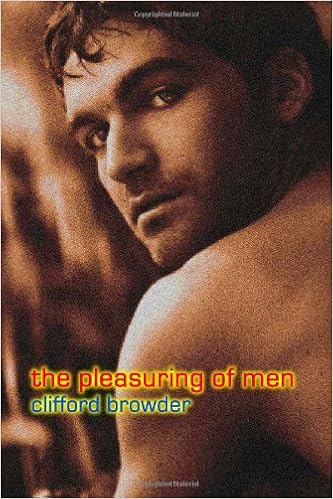
This is a fictional interview with Tom Vaughan, the protagonist of The Pleasuring of Men (Gival Press, 2011), the first novel in my #Metropolis series of historical novels set in nineteenth-century New York.  Tom, a respectably raised young man, tells how he decided to become a male prostitute and fell in love with Walter Whiting, his most difficult client.  I then interview other characters, too.  This is the only gay-themed work in the Metropolis series.  There is some gay sex (inevitable, given the subject), but nothing too graphic and no porn.  Available from Amazon and Barnes & Noble.


                              THE  MALE  PROSTITUTE

Me:  And so, Tom Vaughan, you admit you are a male prostitute.
Tom:  Oh yes, but not just any kind.  I service a rather select crowd.
Me:  You’re not ashamed of your occupation?
Tom:  Not at all.  My clients need me.  For some of them, I'm all they've got.
Me:  But they have to pay.  Quite a bit, I’m told.
Tom:  Of course.  I’m in demand.
Me:  You were respectably raised.  How did you get into this business?
Tom:  Through a friend who was in it.  He told me I was a b.b., a beautiful boy, and I could make money and have fine clothes.  
Me:  But aren’t some of your clients, well, repulsive?  Fat, jowly, balding…
Tom:  Yes, but there’s always something about them – the eyes, a deep, manly voice, elegant manners – that is attractive.  I focus on that.
Me: Who are these clients?
Tom:  Mostly married men.  Lawyers, judges, merchants, aldermen, ministers…
Me:  Ministers?
Tom:  Oh yes.  Even my mother’s minister, whom I see every Sunday at church. We met just once, but it was memorable.
Me:  How can a man of the cloth justify seeing a male prostitute?
Tom:  Ask him.
Me:  All right, I will.  But remember, you can’t be a beautiful boy forever.
Tom:  You have to know when to get out.  I hope to team up with Walter Whiting.  He’s a great scholar and lecturer.
Me:  One of your clients, I gather.
Tom:  My most difficult client.  I’ve even met his wife.
Me:  His wife?  This is getting complicated.
Tom:  Interview him.  He’ll explain.
Me:  I will.  
Tom:  And my other clients.  Talk to them as well.
Me:  All right, I will.


                                     HIS  CLIENTS

The lawyer

Tom Vaughan?  A clever little rascal, he caught on fast.  Stuck 
his tongue out at me, teased me, ran around the office knocking stuff over, until I caught him and spanked him.  He loved it.  

The count

Yes, yes, I remember Tom: auburn hair, pert nose, sensual lips. At gala I give, he jump out of cake naked, astonish guests, but then there is riot.  When I leave for Europe, he cry, I cry.  I never see again.  

The minister

Ah yes, Tom Vaughan.  I trust this will remain just between us.  When he came to my rectory, we were both astonished, but we carried it off rather well.  Justify my seeing him?  So few understand.  Desire is holy.  What happene between us was glory.  

The alderman

Oh Holy Mother of God and all the saints in heaven, forgive, forgive, it was a moment of folly with that randy rum slut of a lad so ripe for reamin’, not a Catholic, niver would I do it with a Catholic, oh niver, niver, niver, just a pagan or Methodist or somethin’, a cunning sodomite set in me way by the Divil. 

The lover of boys

Yes, I am Walter Whiting, and a lover of boys.  Tom Vaughan interests me, but experience has taught me caution.  Does my wife know?  Of course.  I explained this all to her – ever so gently – long ago.  She insists on meeting Tom.  What will then happen I I don’t presume to say.  And if Tom's brother ever discovers Tom's double life, it could get ugly.

Jessica Ames

As Tom Vaughan's Aunt Jessie and a born meddler, I take an interest in him.  He has possibilities.  But he's up to something.  He has a dark secret and whatever it is, I intend to find out.  When Jessica Ames puts her mind to something, she rarely fails.

                    ***                    ***                    ***

Tom has to cope with Aunt Jessica, Walter Whiting, his brother, and a stranger who assaults him.  How does he do it?  Read the book.  Available from Amazon and Barnes & Noble.

©  2021  Clifford Browder