Sunday, March 21, 2021

502. Is Poetry Dead?


BROWDERBOOKS

I am now publishing two of my nonfiction titles as ebooks, with the help of an aggregator named Draft2Digital.  More of this anon.  

Does the term aggregator puzzle you?  Here is my favorite definition.   Aggregator: one that aggregates.  Does that clear it up?  If not, stay tuned.


                      IS  POETRY  DEAD?


"Poetry is dead.   It's an obsolete art form, just as much as cave paintings or silent movies.   It must have died around the year 1960, because that was when the last good poems were published."

This spurt of wisdom came to me online from Quora, a purveyor of cultural and other information that flashes regularly on my computer screen, I don't quite know why.  The author is a German pontificator, Roland Bartetzko by name, whose photo shows a faintly smiling man of middle years, far beyond the stage of youthful exuberance and joyous but ill-informed folly.

Herr Bartetzko, you're full of you know what.  You are uninformed, smart but stupid, misguided, ill-advised, presumptuous, and shockingly ignorant of literary history.

He goes on to question whether poetry can even exist in the wake of the Holocaust, Hiroshima, and Nagasaki.  "There's only bad poetry left and only bad poets.  Too lazy to write more than few lines at once and unable to say anything substantial."  

Granted, he may be addressing the poetry scene in Germany, not here, but I suspect that he's totally misguided there as well.  

Fortunately, he observes, poetry isn't selling anymore.  Poets publish their "pathetic scribblings" in private and give them away as free handouts.  Poetry is now "a pastime of wannabe enlightened senior citizens.  If you have something to say, write prose."

So ends the spiel of this oracle, as translated and communicated online.  I never imagined myself a defender of poesy, but Herr Bartetzko's mouthings prompt me to assume this role.  I will confine myself to only a few trenchant remarks.

  • The death of poetry -- like that of opera and diverse other art forms -- has been proclaimed before and always proven wrong. 
  • Poetry has survived the collapse of the Roman Empire; the Black Death, which killed half of Europe; the French Revolution; the Industrial Revolution; the rise of the middle class; radio, television, and the Internet; 9/11; and the plague now in progress.  And it will survive Herr Bartetzko, too.
  • Calamities don't kill poetry; they inspire it.

©  2021  Clifford Browder

Sunday, March 14, 2021

501. Plastics: They Kill

BROWDERBOOKS

The Alliance for Independent Authors advises self-publishing authors to go WIDE in distribution.  This means making your book available on Amazon, IngramSpark (the other publisher of self-published books), Apple Books (only possible for those with Mac computers), Kobo, and other distributors that most Americans have never heard of.  

Then you should also hire an outfit called an aggregator to market your e-book -- a seeming duplication of your efforts that will get you distribution in places you could never access on your own.  Having done all this, you will have worldwide distribution of 97%, meaning that you have made use of almost all the distributors available.  To reach readers outside the US, this is necessary.  Kobo, for instance, is the prime distributor in Canada.  There is a market for English-language books not just in Britain, Ireland, and the Dominions, but also in India and Japan.  I'm hoping that a book about New York and New Yorkers will have appeal there.  The front cover is a big help.

1733378200


My first step: Apple Books.  I have a Mac computer, so that's no problem.  But pray for me; their website is not user-friendly -- not to me, at least.  So far, I've just gone in circles there, but maybe I can finally figure it out.  And this is just distribution.  It is meaningless, unless marketing lets people worldwide know that you and your book exist.  


                 PLASTICS:  THEY KILL


In the 1967 film The Graduate, the young protagonist (played by Dustin Hoffman) is taken aside at a cocktail party by an older friend of his parents who has a single word of advice to give him.  “Are you listening?” the older man asks.  “Yes, sir,” says Hoffman.  And the oracle speaks: “Plastics!”


In the film it is a superbly humorous moment, but in the years since then plastics have turned into a lamentable fact of life — of all our lives — and have come to signify the artificial and superficial, the non-genuine, something oppressive and inescapable.  


Of course there are rare exceptions among us.  Andy Warhol, the Prince of Pop, called himself a “deeply superficial person” and embraced Hollywood because there “everything’s plastic, but I love plastic.  I want to be plastic.”  (See my book Fascinating New Yorkers, chapter 24, on Warhol.)


But “plastic” is now far more than a common concept and fact of life. It has become a threat of phenomenal proportions.  It is filling our landfills, choking our rivers, and polluting the world’s oceans.  And it will continue to do so for years to come, because it degrades slowly; like diamonds and true love, plastics are forever.  And tiny bits of plastic — microplastics — are everywhere, even in the food we eat and the air we breathe.


Yes, we’re recycling it.  Here in New York rigid plastics are recycled — those almond milk cartons, yogurt cups, pill bottles, and Ajax detergent containers that I put out with glass and metal objects, in hopes of improving the planet.  But what do I discard them in?  Old grocery bags: non-rigid plastic!  Try as you will, you can’t escape the stuff.


But at least those bags are getting reused.  The real villain of the story is what’s called single-use plastic: plastic items that are used once and then thrown away.  Some 80% of the plastic in the oceans comes from land-based sources, and most of it is single-use items.  


Well, I’m trying.  When I go to the supermarket, I take my purchases home in my shoulder bag, or in a cloth bag that is decidedly not plastic.  But gooey garbage soaks through paper bags, so in the kitchen I use plastic grocery bags instead.  I recycle paper and cardboard items — the bulky ones torn neatly into smaller pieces — but what did I used to put them in?  Those damn plastic grocery bags!  But now, being more environmentally aware, I put the stuff in paper bags.  


I survey the foods I buy.  That box of raisins — cardboard, therefore  recyclable.  But what about the wrapping of the raisins inside the box?  I check: paper, not plastic — well and good.  


My olive oil comes in a glass container — bravo! — but my bread, including even the organic bread I get in the greenmarket, comes, alas, in plastic wrapping.  Try as I do, some of what is in my kitchen is going to end up in the world’s oceans, where it will persist for a good five hundred years.


One consolation: my books — both those that I acquire and read, and those that I write and get published — are paper.  Yes, paperbacks, which means that they will in time deteriorate.  By way of contrast, the old hardcover books in my bookcases, their wounded bindings reinforced with tape, persist and endure.  Now there is quality.  But how about the sticky tape I’ve used to repair their wounded bindings?  Plastic!  Yes, inescapable.  I give up.


© 2021 Clifford Browder

Sunday, March 7, 2021

500. Intelligentsia: Brains and Books or Diddled Dupes?

BROWDERBOOKS

For anyone who missed my ZOOM interview, here is a link to it on YouTube:   https://youtu.be/Esx0YYYQw8I

Another excellent review of Forbidden Brownstones, this one from Sublime Book Review.  The conclusion: “Forbidden Brownstones is an addictive novel that will charm, entertain, and mesmerize you; five stars for this wonderful, compelling read.”  The novel is available from Amazon and Barnes & Noble.


INTELLIGENTSIA:  BRAINS  AND  BOOKS

                 OR  DIDDLED  DUPES?


I inherited a subscription to the New York Review of Books from my deceased partner Bob and now subscribe to it on my own.   Compared to its thorough reviews, those in the New York Times look flimsy.  But often it's the Classifieds section, next to the last page of the publication, that grabs me.   It's a perfect example of targeted marketing, when advertisers want to each a very specific and limited audience.  In this case, the intelligentsia, by which I mean people who read, write, and edit books, and ponder and debate their content.  In other words, intellectuals, a suspect group whose existence annoys both the hoi polloi and the politicians who covet their votes.  But these ads tell us a lot about who and what the intelligentsia are, their moods and needs and desires.  So let's find out who we are.  

"We?"  Yes, we.  Because readers of this blog, like the writer, fall into that class.  Like it or not, this is about us.  We'll look at the issue of NYRB of January 14, 2021.

First, there are the personals, usually older people seeking companionship: a "single gentleman, 71, good-looking and active," seeks a liaison with an "attractive unattached lady under 50."  Or an "MWM ERROR THEORIST" (yes, all in caps) wants to meet a "compatible F."  Common enough, let's wish them (us) all well. But how about these?

  • TATTOOED, PIERCED, undercut-having, leather jacket-clad pansexual East Asian femme seeks whiskey-drinking, artifice-touting, anti-authoritarian aesthete to while the hours away with.  Accepting applications for both virtue & sin."
  • WIDOWED MARGRAVE SEEKS RESPITE from coterie of sycophants.  Enclose your most prurient poem.

The first is eye-catching, but the second tops it.  And her e-mail address is lasciviousmargrave@xxxxx.  But maybe this one isn't us. She's allegedly a margrave; we are not.

Under PERSONAL SERVICES I find "EXCECELLENT MASSAGE BY EVA," prompting me to wonder just how "personal" it is.  (Honni soit qui mal y pense.)

And there is much more:
  • a vacation rental for Yellowstone in winter;
  • a full-floor condo in Paris;
  • someone unnamed offering the "unfiltered truth" about your relationships; 
  • someone offering to buy "mid-century design furniture"; 
  • someone looking for philanthropic funding to save the planet;
  • a "charismatic, aging French rock star" who will write an original song for you, your mom, your lover, or your pet in French, English, or Franglais;
  • a ghost writer eager to help you write your book;
  • PROUST-INK, a website selling an online course in Proust, and mugs and T-shirts bearing the master's image.
The biggest ad is for AIRBRUSH, the World's Finest Eye Cream, reg $68 but now only $54.40, though we can also have La Mer Eye Balm for $200.   

The most mysterious ad is for Athena Pheromones, a fragrance guaranteed to increase your attractiveness.  Discovered in 1986 by a Ph.D. in biology, it is not sold in stores, but has been proven 74% effective in two 8-week studies, and 68% effective in a 3rd 8-week study, $99.50 for men and $98.50 for women, free shipping in the US.

So what is one to make of all this?  The American intelligentsia (i.e., us)
  • craves companionship, maybe with a massage (hmm) thrown in;
  • likes to travel and live abroad;
  • needs to know the truth about its relationships;
  • wants to save the planet;
  • wants design furniture;
  • will pay for a song, even in a bastard French corrupted by English,  for its lover, mom, or pet;
  • needs help in writing its book;
  • has eyes in need of a cream or a balm (maybe from squinting too much at the fine print of academic publications);
  • will pay almost a hundred dollars to boost its attractiveness.

But there is also another possibility: we are grievously insecure, and our insecurity makes us a prime target for every con, dodge, diddle, rip-off, and hoax conceivable.  So which one are we?  Your choice.  Probe hard, think, dig deep. 

©  2021 Clifford Browder


Sunday, February 28, 2021

499. Do we need heroes?

BROWDERBOOKS

Bad news: The splendid new book cover with the Statue of Liberty --  one of the most exciting covers I've ever seen -- will be trashed.  The new edition of Fascinating New Yorkers is canceled, partly because of Amazon's rules about new editions, and partly because I have had a stressful relationship with BooksGoSocial, the outfit that was going to help me publish it.  Too bad, but that's how it is.


DO  WE  NEED  HEROES?


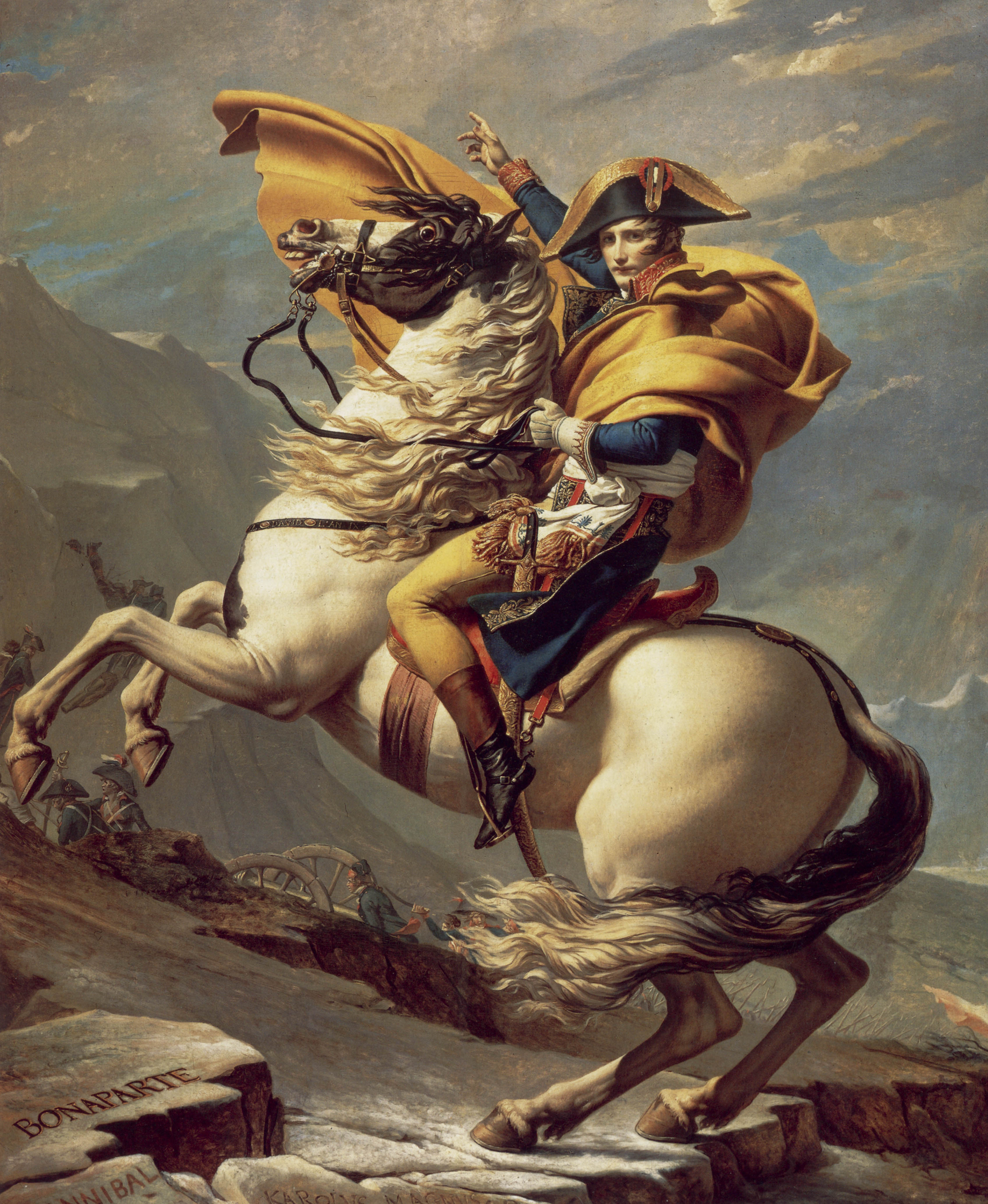
They seem to come out of nowhere well stocked with charisma, bigger than life, and almost divinely appointed to answer the needs of the people.  They used to come on a white horse, handsomely outfitted and with grandiose gestures.  Or at least they were painted like that.  There is a painting by Arayo Gomez, Simon Bolivar Crossing the Andes, that shows Bolivar in a uniform with gold epaulettes, topped by a tall hat topped by a plume.  And yes, the horse, rearing, is white.  

Bolivar, the liberator of half of South America, was likewise in fact a hero, but the painting was inspired by David's painting, Napoleon Crossing the Alps.  Napoleon was certainly a hero to many, and he was shown in a uniform, gesturing grandly, on a rearing white horse.  


File:David - Napoleon crossing the Alps - Malmaison2.jpg


Heroes in those days were enhanced by white horses, uniforms, and mountains that needed to be crossed.  And they seemed to be begotten by revolutions overthrowing an old order and establishing a new one.  Bolivar was ousting Spanish rule, and Napoleon got his chance for glory in the wake of the French Revolution.

Our George Washington was of a different breed.  He did appear mounted, though I don't know if his horse was white.  His heroic painting is the 1851 painting by Emanuele Leutze, Washington Crossing the Delaware.  He had no mountain handy, but the ice-jammed Delaware served very well.  He is seen standing grandly toward the front of a boat, as his men row heroically through the ice-clogged river to attack the Hessians at Trenton.  He did indeed cross the river, though surely not standing grandly, or he might have been tossed into its icy waters.  


File:Washington Crossing the Delaware by Emanuel Leutze, MMA-NYC, 1851.jpg


Washington, a bona fide hero, astonished many by his lack of ambition.  Once our Revolution was over and the thirteen colonies were independent, he resigned his commission and retired to private life.  Called back into public life when elected our first president, he served two terms and again retired to private life.  This makes him almost unique among the heroes who appeared in the eighteenth and nineteenth centuries in Europe and the Americas, riding white horses, most of them (the horses) imaginary, not real.

A good example of the effects of charisma is Hegel's comment, when he saw Napoleon riding through Jena the day before his great victory over the Prussians in 1806.  He said he had seen the "World Soul riding out of town."  And this from a philosopher!

The risks of having a charismatic leader are obvious.  Few of them are going to retire gracefully like Washington.  They break rules and are praised for it; they are beyond routine and hostile to it, beyond good and evil.  Such were Hitler and Mussolini, to cite obvious examples.  Said Bolivar, "I am convinced deep in my bones that only a skillful despotism can rule America."  While in exile on St. Helena, Napoleon told a confidant that, had he been in America, he would willingly have been a Washington.  But all you could do with the French, he said, was give them orders.

Charismatic heroes often end badly, having shown poor judgment.  Hitler, Mussolini, Trujillo of the Dominican Republic, Muammar Gaddafi of Libya.  And when Napoleon fought his last battle at Waterloo, he had managed to alienate every great power in Europe; they were all against him.  All these heroes were superbly gifted in some ways, but in the long run, far from brilliant.

Which American presidents, besides Washington, were unusually gifted with charisma --  a charisma  felt not just by their devoted followers, but by many others as well?  I suggest the following: 

  • Teddy Roosevelt, remembered for our national park system, the Teddy bear (named for him), and charging up San Juan Hill.  He wanted to come back for another term in 1912, ran on a third-party ticket, split the Republican vote, and gave the election to the Democratic candidate, Woodrow Wilson.  But even so, he played by the rules.
  • Andrew Jackson, though some Americans loathed him.  Our first Western president ("Western" = west of the Appalachians), his frontier ways offended genteel Easterners but delighted Westerners.  Tough, imperious, and scrappy, he too played by the rules.
  • Abraham Lincoln, though also in his time controversial.  He had a folksy benevolence that went over big with voters.  He too played by the rules.
  • Franklin D. Roosevelt: a charmer, but his charm masked craftiness and a will of iron.  He broke the rules by running for a third, and then a fourth, term -- not illegal, but unprecedented.  He couldn't give up power, least of all with war looming and then declared, but he got himself re-elected.
  • John F. Kennedy: young, dynamic, good-looking.  Tremendous appeal, but he died too soon for a good appraisal.  His early death made him available for all kinds of idealization.
  • Benjamin Franklin:  Not a president, but a founding father with loads of charisma. During our Revolution he used it to good effect in France, gently nudging the king and his foreign minister toward war with Great Britain.  He simply oozed charm, captivated everyone -- ministers, courtiers, gracious ladies of the aristocracy.  But he had no inflated notion of his own importance, no need to flout the rules.
In conclusion I would say that democracy needs heroes, whether mounted on a white horse or not, for their charisma helps bind the nation together.  And democratic nations, tending to be fractious and divided, need binding.  But heroes, having a high opinion of themselves, risk breaking the rules by grabbing and keeping power.  Our system of checks and balances counters this, and our most charismatic presidents have accepted limitations and defeat.  I can think of one exception, but I'll not mention him by name.

Source note: This post was inspired in part by "Democracy's Demagogues," a review by Ferdinand Mount of David A. Bell's "Men on Horseback: The Power of Charisma in the Age of Revolution," in the New York Times of Sunday, January 14, 2021.

©  2021  Clifford Browder


Sunday, February 21, 2021

498 The Everleigh Sisters: Shrewd, Scandalous, Successful


BROWDERBOOKS

Another review of Forbidden Brownstones has come in.  It is by Lisa Brown-Gilbert for BestsellersWorld. It concludes: 

I thoroughly enjoyed this adult-themed read; the story flowed easily, while the narrative provided as much food for thought, as it did historical tidbits. Additionally, as a character-driven story, I found myself engrossed from the story’s outset, as the interesting characters both historical and fictional, especially that of Junius, were brought into focus. I heartily recommend this book as well as the others in the series; they are all well worth the read.

To see the full review, go here.  The book is available from Amazon and other booksellers (sometimes with delays), and from the author (i.e., me).  It is no longer sold by the original publisher, Black Rose Writing.

The fate of my next book, a new edition (coincidentally) of Fascinating New Yorkers, hangs in the balance.  Its compelling cover somehow got attached to the information for one of my published books and has to be replaced by that other book's cover.  Then, maybe, that cover -- one of the best I've ever seen -- can be joined to the information for the new edition of Fascinating New Yorkers, which can then be published.  If it sounds complicated, it is.  I'm the author, and I can barely get my mind around it.


THE  EVERLEIGH  SISTERS: SHREWD,     SCANDALOUS,  SUCCESSFUL      


They lived quietly in their well-furnished townhouse at 20 West 71st Street in Manhattan.  They were sisters, two years apart in their forties,  and liked to think that they looked ten years younger, which perhaps they did.  Certainly they had been handsome in their younger years.  There was nothing flashy about them; theirs was a quiet retirement that did not invite attention.  Their favorite pastime: theater.  They loved it  and attended frequently.  Its availability in New York was one reason they had chosen to live there, another attraction being its distance from Chicago.  Their life in Chicago they had left behind.

They lived contentedly in New York for decades.  The Roaring Twenties came and went, and then the Crash and the Depression, but their modest fortune was secure, and they went on seeing plays.  

Their names on the 1913 deed to their Manhattan residence were Minna and Aida Lester, for long ago, and briefly, they had been married to two brothers named Lester.  The marriages had not lasted long; Minna said that her husband was a brute who had tried to strangle her.  Their maiden name was Simms.  Sometimes they went by it, and sometimes by Lester.  But they had a third name as well, never mentioned during the years they lived in New York: Everleigh.  For Minna and Aida Simms were the Everleigh sisters, who under that assumed name had run the Everleigh Club in Chicago, the most exclusive, expensive, sumptuous, and notorious house of prostitution in the country.  Yes, these seemingly respectable women were ex-madams who had left that life behind for one of tranquil propriety.  

This, as it happened, was the dream of many a Manhattan madam: to retire to a quiet and very respectable community -- in their case, somewhere upstate, far from the fleshpots of Manhattan -- where their money would make them most welcome, and they could spend it shrewdly on worthy local causes, perhaps including a nearby college or seminary packed with well-scrubbed students as yet untried by life.  But for Minna and Aida (who also spelled it Ada), coming from the toils of Chicago, Manhattan was their refuge, and theater their pastime. 

Why am I, a committed New Yorker, concerned now with the Everleigh sisters, whose claim to fame was their dozen golden years in Chicago (1900-1912), cut short when the mayor shut them down, thus eliminating one of Second City's unique charms, surpassing anything of its kind in New York?  The explanation: I received an e-mail from a writer interested in the connection between the Everleighs and Polly Adler, a famous madam in New York in the 1920s and beyond.  Christened the Queen of Tarts, Polly ran a sumptuous house in Manhattan that was modeled on the Everleigh Club; I tell her story in chapter 14 of Fascinating New Yorkers.  How they connected is what this writer wonders about.  He thinks one possibility was the gangster Al Capone, a Brooklyn boy who transferred his endearing talents to Chicago.  Polly mentions him favorably in her 1953 memoir, A House Is Not a Home, a bestseller that let her also retire to a life of tranquility.

This query from a fellow writer prompted me to search in my cluttered apartment for my Everleigh file.  Long ago I thought of doing a biography of the sisters and researched them intensively.  I finally found the file, a thick bundle of notes and clippings that was surprisingly comprehensive.  Whatever there was to know about Aida and Minna, I had set out to learn.  There are notes on deeds of property; my correspondence with the nephew in Charlottesville, Virginia, who took Aida in, when Minna died in New York; a genealogy chart of the Simms family that I created; and the richest prize of all, discovered only after patient toil: copies of the entries for them and their girls in the 1900 census.  Thanks to the last item, I can confidently report what happened when the census taker visited 2131 South Dearborn Street in Chicago and recorded the occupants of what would soon become the most famous brothel in America.

The Everleighs were long remembered in Chicagoland.  My father, an honest toiler in law and in no way a man about town or roué, told me about them without condescension or censure.  This, of course, was the kind of story, not mentioned in the presence of women, that fathers passed on to their sons.  Today the sisters may be remembered chiefly by historians, but they were shrewd businesswomen long before they could vote, and their story is well worth telling.   

©  2021  Clifford Browder


Sunday, February 14, 2021

497. Psychiatry: Mother hugs, seizures, lethargy, or an ice pick through the eye.


BROWDERBOOKS


Many thanks to those of you who watched my interview with BooksIntoZoom.  If anyone missed it, go here and scroll down: 

https://www.facebook.com/ZoomIntoBooks

But don't wait.  It won't be there much longer.

The book release for the new edition of Fascinating New Yorkers, scheduled for today, is delayed by technical problems.  It will be announced soon.


                        PSYCHIATRY


It wants to help.  Over the years it has tried to help.  Sometimes it has wanted to be rigorously scientific, like the natural sciences, and sometimes it has abandoned this approach, stopped squinting through a microscope, and began talking at length to patients.  But its catalog of ailments, as chronicled in successive issues of its Diagnostic and Statistical Manual (DSM), went from 106 in 1952, to 182 in 1968, 285 in 1980, and 307 in 1994.  One may well ask, as some therapists did, if there were really so many ways to be ill.  Were all these categories driven by rigorous scientific inquiry, or did they reflect an arbitrary and subjective approach by the profession?  Which makes a lay observer suspect that psychiatry, far from being rigorous and scientific, is something of a mess.

And an evolving mess, to be sure.  It has gone through phases.  Consider those phases from the nineteenth century on:

  • Mental illness derives from organic pathology, a belief reinforced by the discovery that general paralysis was caused by syphilis (late 19th century).
  • Mental illness derives from the patient's thoughts, feelings, and perceptions (early 20th century, reinforced by Freud's work).
  • Euthanasia is, or is not, permissible (a 1924 US law permitting it was cited by Germany's Nazi government in 1933 to justify a similar law of its own).
  • Shock treatments, especially for schizophrenia: treatment with malaria, then with insulin, to produce comas; drug-induced epileptic seizures; electroconvulsive therapy (ECT) to produce convulsions; prefrontal lobotomy of the brain, first done with ice picks through the patient's eye sockets (1920s and 1930s).
  • A Freudian psychoanalytical approach: emphasis on patient's childhood and unconscious conflicts, and "remothering"of the patient to cure "maternal deprivation" (1940s).
  • Motherhood is to blame for mental illness: "smother love" makes a son homosexual, coldness causes autism, permissiveness leads to delinquency (1950s).
  • Tranquilizers are given to reduce "psychic energy" and get patients out of long-stay hospitals, which some critics likened to concentration camps (1960s).
  • Researchers posing as patients get themselves admitted to psychiatric institutions, are diagnosed with schizophrenia or manic-depressive psychosis, and then, upon release, report abuses and assert that psychiatry can't tell the sane from the insane (1973).
  • Antidepressants are mass-marketed to the public, despite side effects and the risk of dangerous overdoses; depression is a chemical imbalance correctable by drugs (1970s, 80s, 90s).
  • Yet another new approach: patients given their own apartment, and/or access to a supportive community, improve noticeably, even to the point of needing little or no attention from psychiatrists (today).

So what does all this mean?  Depending on when and where it occurred, mental illness was supposedly caused by germs, the unconscious, mental institutions, or too much mother or too little.  And by way of treatment patients risked epileptic seizures, malaria, sterilization, hugs from a therapist who encouraged gifts of feces, an ice pick through the eye, or even euthanasia.  When one researcher got himself admitted to an institution, and was obligingly diagnosed, a fellow patient said to him,"You're not crazy.  You're a journalist or a professor checking upon the hospital."  The researcher's conclusion: the mentally ill are better judges of sanity than the clinicians. 

Many in the profession are trying earnestly to help people, and some are even succeeding.   But I am thankful that, today, I can pass for "normal" -- whatever that is -- and not risk seizures, a mother hug from a therapist, drug-induced lethargy, or an ice pick through the eye.

Source note: This post was inspired by "Changing Psychiatry's Mind," Gavin Francis's review of two books on psychiatry in the New York Review of Books, January 14, 2021.

©  2021  Clifford Browder


Sunday, February 7, 2021

496. Can New York Restaurants Survive?


BROWDERBOOKS


As previously announced, the new edition of my nonfiction title Fascinating New Yorkers: Power Freaks, Mobsters, Liberated Women, Creators, Queers and Crazies, will be released a week from today, on February 14.  The new edition is updated in facts and has a much more colorful and appealing cover.  It will be available from Amazon and Barnes & Noble in both paperback and e-book formats.

With help from my marketing consultant, I did a one-day Facebook ad for $5.00.  The result: 13,284 people reached, 830 post engagements (people who reacted to the ads), and 74 link clicks (people who hit the link and were taken to the Amazon page where all my books are listed).  Our aim at the moment is to boost my numbers, so as to set me apart from the vast number of authors on Facebook who have about 30 followers each (like me, before now).  In this, we have succeeded; 13,284 people have now heard of me, and 830 were interested enough to react to my ad.  Mostly young people, by the way, age 18 to 40,  and many of them in India.  All credit to my marketing consultant; I could never have done it by myself.  (Does this all sound a bit commercial and downright grubby?  I know.  Like most authors, I'd rather be at my desk or computer, writing.  But nowadays authors have to do marketing too, like it or not.)


CAN  NEW  YORK  RESTAURANTS  SURVIVE?


New York has always been renowned for its restaurants.  In the nineteenth century residents and visitors could dine cheaply, and perhaps shabbily, in a basement oyster bar, or grandly (and expensively) in any of several Delmonico's, with beautiful menus in unremitting French, and waiters who appeared just when you needed them, their footfall muffled by thick carpeting.  So it was then, and so it is today, with Delmonico's replaced by numerous upscale establishments.  Or rather, so it was until the pandemic hit.  Since then, New York restaurants have been in crisis mode.  Consider:

  • Indoor dining is taboo.
  • Outdoor dining is impossible, now that winter has arrived.
  • Rents are high.
  • Competition is keen.
  • Even in normal times, 60% of new restaurants fail in the first three years.
  • According to a recent survey, 54% of the city's restaurant owners doubt if their restaurant can survive for anyther six months without government assistance.
Obviously, the outlook is grim.  But never doubt the inventiveness of New Yorkers, who are famously tough, resilient, and imaginative. They are finding ways to survive.
  • They hibernate, closing now with plans to reopen later, when conditions are more favorable.
  • They become "ghost kitchens," with patrons ordering takeout from their website.
  • They remain open but enclose outside dining areas with prefabricated "igloos," yurt-type tents, lean-to structures attached to their store front, prefabricated canvas pavilions, and other greenhouse-like structures.
The last recourse, filling sidewalks with the strangest constructions, is made possible by relaxed city guidelines permitting them to install outdoor seating on sidewalks and streets, and by the cooperation of designers and architects now organized as NYCxDESIGN.  A communal solution for a communal problem.

But it remains a fact that New York restaurants, like restaurants and other small businesses throughout the country, desperately need assistance from the federal government.  But will they get it, and will it come in time?  The closings continue at an alarming pace.  But if you want to support local restaurants, order takeout if they offer it.  You're hungry and they are desperate.  

© 2021 Clifford Browder