Saturday, December 14, 2013

104. The Beauty and Danger of the Palisades


     Just across the Hudson from New York City, cliffs of dark gray rock rise almost vertically some 500 feet above the river, sometimes clothed with vegetation and sometimes just bare rock.  This is the New Jersey Palisades, a solid wall of rock stretching from Fort Lee northward as far as the eye can see, all the way to the New York State boundary some twelve miles to the north.  Huge signs advertising patent medicines and other worthy products once blazoned forth their message from the cliffs for the benefit of steamboat passengers in the years following the Civil War (“Obscenery!” proclaimed Horace Greeley of the New York Tribune), and the rock itself was once quarried for railroad ballast.  And when, in the late 1890s, a movement developed to preserve the Palisades, the quarry operators used dynamite to speed up their work before conservation efforts put an end to it.  Fortunately, those efforts soon paid off; quarrying ended in 1900 with the creation of the Palisades Interstate Park Commission by the governors of New York and New Jersey.  In time, the Park Commission would undertake to acquire for the park all the private property both below the cliffs and on top of them.  In 1933 John D. Rockefeller, the robber baron turned philanthropist, donated to the Park Commission all the land he had acquired along the cliffs, on condition that the Commission acquire all the estates not owned by him and demolish their mansions, so as to restore unobstructed views of the river.
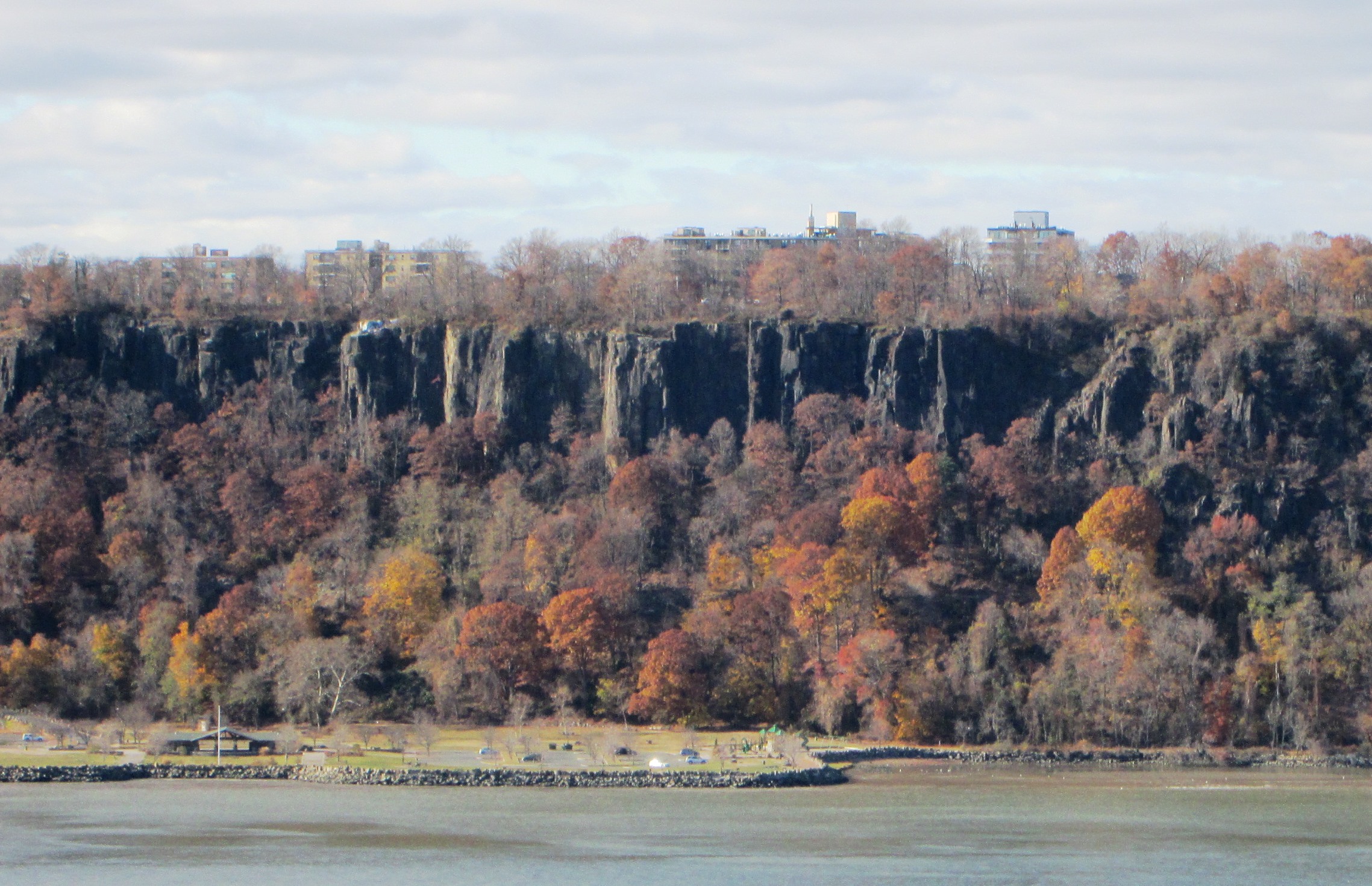

File:Hudson River Palisades seen from 187th Street.jpg
                                                                                                                                                                                  Beyond My Ken

     This park is a long, skinny stretch of green squeezed in between the Palisades Parkway and the cliff edge, often only an eighth of a mile wide, so that you can’t possibly get lost in it, but you are constantly serenaded by the sound of zooming traffic.  I have often hiked the length of it, though not all at once but in segments.  Two paths traverse it: the Long Path along the top of the cliffs and, far below, the Shore Path along the edge of the river; each has offered me a climactic experience, unique, at the end of my hike.  There are three real dangers in the park, two of which I have encountered; I shall deal with them all in time.  Let me now relate a hike on the Long Path, which is easily accessed just over the George Washington Bridge (which I have usually walked) in Fort Lee, New Jersey.

The Long Path

File:View north along the Long Path just north of the Women's Federation Monument in Palisades Interstate Park on May 5th 2013.jpg
                                                                                       Famartin
     Starting north from the bridge, I would pass through a shady, dank wooded area and turn onto a side path that took me to right up to the approaches to the bridge.  There, in late spring and early summer, in a dry, sunny spot I always found a stand of common milkweed, my favorite summer flower, thrusting domed clusters of tiny intricate flowers, dusty rose or lavender or dull brownish purple in color, and emitting an intoxicating fragrance.  That the plant is also toxic seems irrelevant, since one is tempted only to sniff it, not at all to eat it.  A nice beginning for the hike, in spite of the unending traffic sounds from the bridge.

     Pressing on along the trail, which is marked with turquoise blazes, I passed the remnants of foundations of former mansions that always puzzled me, until, researching this post, I learned how, at Rockefeller’s insistence, the Park Commission acquired and  demolished them.  At times I would go to the cliff edge and look back at the bridge, measuring my progress by how much it had retreated into the distance.  Its sounds faded, but those of the nearby parkway persisted, and my quest of solitude in nature was further frustrated by the presence of a roadside gas station.  Just beyond it, however, I would come to Allison Park, a small, well maintained bit of greenery offering a nice view out over the Hudson, benches for picnic lunches, and water fountains and rest rooms.  It is named for the first mayor of Englewood Cliffs who once had an estate here and was a leader in the movement to preserve the Palisades.

     Continuing north through the oak forest that prevails here, I would come to High Tom, a rock promontory offering fine views north and south, and then to Rockefeller Lookout, another spot for good views, a mile north of the bridge and just across from the northern tip of Manhattan, where the Harlem River flows into the Hudson.  Here once, finding a bit of cliff just beyond the fence that offered an unusually fine view, I stepped out onto it, settled down, and enjoyed the vistas.  At this point another hiker happened by, saw me, and warned that in going beyond the fence I risked arrest for reckless endangerment.  He himself had been arrested on that very spot and had been obliged to go to court and pay a hefty fine.  Thus warned, I stepped back over the fence and never transgressed again.  It’s just as well, since in the summer of 2012 alone three deaths occurred here, two accidents and a suicide whose body was found 225 feet below the edge.  Yes, the cliffs are dangerous, and if Big Brother is out to keep you safe, however annoying he can be, his intentions are the best.  So much for the first of the three dangers to be encountered in the park, though we’ll return to it later.

File:Wild Turkey.jpg
                                                                                        Malcolm
     Continuing to the north, I would pass the fenced enclave of Greenbrook Sanctuary, a large nature preserve created to protect native species.  Only members are allowed inside, but for a season or two I became a member, so as to have a look at whatever treasures lay inside.  Near the entrance was a feeding station where the sanctuary naturalist put out quantities of seed to attract seed-eating birds, and there, along with sparrows and pushy blue jays, I had my first sighting of wild turkeys, who were scooping up the seed ravenously.  I had always wondered how so big and bulky a bird could survive in the wild, with hunters all about, but when I saw them run into the brush, I understood: their plumage was such that they instantly vanished among the weeds and bushes.  This was the bird that Benjamin Franklin thought should be our national bird, and not the bald eagle, whom he censured for grabbing fish out of the mouths of osprey – a spectacle that I once had while hiking this very trail in late autumn; it happened so fast I hardly realized what I had seen, but the fish-deprived osprey, and the triumphant eagle, fish in beak, convinced me.  But I still prefer the bald eagle as a national symbol, and not these bulky earth-bound gobblers, who can only fly short distances and have nothing majestic or inspiring about them.  Still, I’m grateful to the Sanctuary for affording me a glimpse of the creatures.


File:Concrete bridge to Grey Crag from the Long Path in Palisade Interstate Park on May 5th 2013.jpg
The concrete bridge to Grey Crag.
Famartin
    Passing the Park Administration Building, a former estate mansion that escaped demolition, I would come to Grey Crag, a detached bit of cliff only ten to twenty feet wide, accessed by a narrow concrete bridge without a railing.  I always crossed that bridge quickly, without looking down.  I’m surprised that the crag is even open to visitors; Big Brother isn’t always on the job.  And what do you find, once you’ve mustered up your courage to cross the bridge and reach Grey Crag?  Poison ivy!

File:View north from Ruckman Point in Palisades Interstate Park on May 5th 2013.jpg
View north from Ruckman Point, north of Grey Crag.
Famartin

File:View from the southwest of the Women's Federation Monument in Palisades Interstate Park on May 5th 2013.jpg
                                                            Famartin
    Still farther to the north I would come to the Women’s Federation Monument, a little stone castle where you can climb up to a sort of battlement, though it doesn’t provide a spectacular view.  When I first encountered it, I wondered why it was there, seemingly so out of step with nature, so pointless, so useless, but later I learned better.  Dedicated in 1929, it honored the role of the New Jersey State Federation of Women’s Clubs, who from the late 1890s on played a major role in preserving the Palisades.  God bless those girls; while their wealthy spouses were out making money, these wives put their leisure time to good use, helping to reclaim these magnificent cliffs from the quarrymen who were blasting them to pieces.  And God bless this pint-sized castle, even if it provides no rest rooms and, alas, reeks at times of urine.

File:Palisades cliff.jpg
Can you make out the Indian Head?
Erhudy
     Beyond the monument I would come to State Line Lookout, a park with a snack stand, picnic tables, and good views out over the Hudson.  Looking south, you can see a rock formation called the Indian Head, since that is what it looks like in silhouette.  I have often lunched in this park and found summer flowers, including catnip, from which I harvested a few leaves to offer a neighbor with a cat, so her pet could get high and roll about in ecstasy.  From here the trail crosses the state line, marked by a chain link fence, into New York State and advances along the cliff edge, but I would rather describe this section the way I have usually traversed it, coming from the state line bus stop on route 9W, near the entrance to Columbia University’s Lamont-Doherty Geological Observatory.  From that point the Long Path continues to the north as far as the Catskills and beyond.  I have done segments of that trail and have dreamed of doing the whole trail in another life, but that takes us far beyond New York City and its environs. 

     Coming from the bus stop, I would pass through a dank, shady stretch of forest, approach the cliffs, and climb up, up, up a staircase, huffing and puffing, to reach a point almost at the top of the cliffs, where I would emerge into morning sunlight and experience, once a year, the climax of the trail, the goal of my annual pilgrimage.  Here the path passes between the cliff edge on one side and a sloping wall of rock on the other, and here, and here only, I would find two spring flowers that thrive in rocky soil. 

     At the cliff edge, and even on ledges on the face of the cliffs, grow clusters of wild pink, a flower with wedge-shaped pink petals and a sticky stem: beautiful, but not to be approached too closely, given its preference for the edge of the cliffs.  


File:Carolina wild pink flower.jpg
Other rock-loving spring flowers bloom there as well, mostly inconspicuous little mustards, but one flower growing singly here and there on the rocky wall opposite upstages even wild pink.  This is columbine, whose yellow-centered nodding red petals with long curved spurs have always fascinated me and drawn me year after year to this very special spot.  


File:Columbine flower in British Columbia.jpg
The flower points down, but the spurs of the red petals point up.
Alan Vernon
I always lingered there for at least fifteen minutes, usually having the path to myself, bathed in the bright morning light, with the river scintillating in the sun far below, and overhead a blue arch of sky, with one or several turkey vultures gliding on unseen currents of air.  A magical moment, unique, not to be repeated for a year.

The Shore Path

File:American Dog Tick (Dermacentor variabilis).jpg
You don't want him on you.
Jerry Kirkhart
     The path along the river, marked with white blazes, is a totally different experience, offering not breathtaking views out over the river, but, at intervals, impressive views of the cliffs rising from the riverbank.  The path is accessed by side paths leading off from the Long Path and involving a long descent to the river.  Taking the first of these paths, one goes down to the Ross Dock Picnic Area, where I have rarely lingered.  The first stretch of the Shore Path, between that area and the Englewood Boat Basin, is easy walking, but dull.  Then, beyond the Englewood Picnic Area and Boat Basin, the path proceeds narrowly between the wooded cliffs and the river and passes an abandoned bathhouse, a reminder that this area was once a popular bathing resort.  Along this stretch of the path, one spring I encountered the second danger of the Palisades paths: the wood tick (Dermacentor variabilis), which in May and June of every year swarms all over this stretch of the Shore Path.  I and a friend were so misguided as to hike this section of the path one May of a wet spring and spent all our time, not gazing out over the river or up at the towering cliffs, but flicking ticks off our pant legs, which made for a fiasco of a hike. Their bite can be harmless or infectious, so they are to be avoided at all costs.  Never again have I attempted the Shore Trail in spring.

     I am informed that this area once had a settlement called Under the Mountain, and a mix of small farms and quarries, fishing shacks, and manure and bone factories, of which the only remnant today is a small cemetery somewhere on an upper level that I have never seen.  At intervals the remains of a dock, usually masked by vegetation, jut out into the river; going out on them, I would get a better view of the cliffs to the north and the south.  Passing under Greenbrook Sanctuary, you come to Greenbrook Falls, a trickle in late July and August, when I often came this way to harvest raspberries, but an ice mass in winter and, in spring after rain, a gushing waterfall – sights I have never seen, since I avoid the Shore Path in winter, fearing ice on the paths leading down, and likewise avoid it in spring, not wishing to renew my acquaintance with the ticks.

     Approaching Alpine Boat Basin and its picnic area, you come upon the Blackledge-Kearney house, dating from about 1750 and now a museum, where Cornwallis, landing his troops here in November 1776 in pursuit of Washington across New Jersey, is said to have spent the night.  His troops marched up to the top of the cliffs by the very same switchback trail that I have often used to access the Shore Path here.  Beyond, one comes to a place where the Indian Head already viewed from State Line Lookout is seen from below; here, it isn’t the Indian or the patroon that is seen, but the Yankee pioneer.   


File:KearneyHouse.jpg
Blackledge-Kearney house.
KForce

     Now, 11.5 miles north of Fort Lee, comes the climax of the hike, the so-called Giant Stairs, a vast jumble of boulders that over the centuries have tumbled down to the foot of the cliffs, creating a lunar landscape such as I have never experienced elsewhere in the East.  The caves and cavities under these masses of rocks harbor raccoons, foxes, small rodents, lizards, and snakes, including the third danger of the park, the venomous copperhead.  I have never encountered any of these creatures except a harmless little green lizard, and least of all the copperhead, since in following the path over the boulders I make too much noise; he doesn’t want to face me, slithers down into the dark cavities under the rocks at the least hint of a human approaching. 

A copperhead.  Look close or you won't see him.
     I have traversed the Giant Stairs a number of times, following the white blazes of the Shore Path as they led me up, down, over the boulders or around them, in a zigzag path that took forty-five minutes to cover a mere quarter of a mile.  As you scramble over or around them, the boulders have a way of wobbling, which doesn’t make the hike any easier; in fact, you have to focus so on where you’re stepping next, you can easily forget to survey the unique landscape all around you, and the cliffs that tower above.

     A sign used to warn hikers that the going from this point on was difficult, and advised them to take a path blazed blue and white back up to the Long Path above.  It’s not just the Giant Stairs that pose problems, since beyond it the Shore Path is impaired by erosion; once, having survived the Stairs, I pressed on, only to find a short section of the path completely worn away, obliging me to drop down a few feet and continue that way, before climbing back up to the path.  So once the sign appeared warning of the problems ahead, I would go only so far as to view the beginning of the Stairs, then retreat to the path leading upward and return that way – an arduous climb, even so – to the Long Path far above.  Today, however, a sign simply warns hikers that the going ahead is difficult.

     That’s not quite the end of the story.  On May 12, 2012, a 500-foot rock face came crashing down from the cliffs, shaking the ground and dumping a fresh layer of boulders onto the Giant Stairs right down to the edge of the river, and sweeping a whole stand of trees – oak, birch, and paulownia --  into the water.  Witnesses on the New York side of the river reported hearing a sound like jet planes overhead, and seeing what looked like a big cloud of smoke as the rocks tumbled down.  Fortunately, because the slide occurred in the evening, no one was injured, but the path over the Stairs was closed until further notice, so heavy machinery could be used to stabilize the boulders and make the path safe again for hikers.  So nature’s raw power can be exerted at any moment, without warning.  I have often hiked that very stretch of the Shore Path where the rock slide occurred, which gives food – a whole feast – for thought.  Yes, the Palisades can on occasion be dangerous, and in those cases no amount of precautions can guarantee your safety. 


Taken by the photographer while kayaking on the river one week after the slide.
Michael J. Passow


     Another note on WBAI:  The financially beleaguered station continues to spiral downward.  One fund drive succeeds another, with ever more desperate pleas for donations.  I thought the award-winning evening newscast would be sacrosanct, but even that has disappeared.  I now listen to Gary Null at noon, but little else.  The Thom Hartmann program, replacing an informative program that I liked, doesn't hold me, when the host repeats his fund drive plea again and again in exactly the same words as before -- obviously a recording (maybe he's taking a rest break).  Hartmann is knowledgeable, but his self-promotion annoys me.  For the minimal donation he will give you a bumper sticker, "Graduate of the Thom Hartmann University."  I usually flee to WNYC.  

     Coming soon:  New York Mosaic: The Neighborhoods (the Diamond District, Chinatown, Soho, and much more).  In the offing: items from my Inanities File of the 1960s, ranging from hilarious to sinister, but always inane.

     ©  2013  Clifford Browder


Sunday, December 8, 2013

103. Lighting the City: Pushing Back the Night


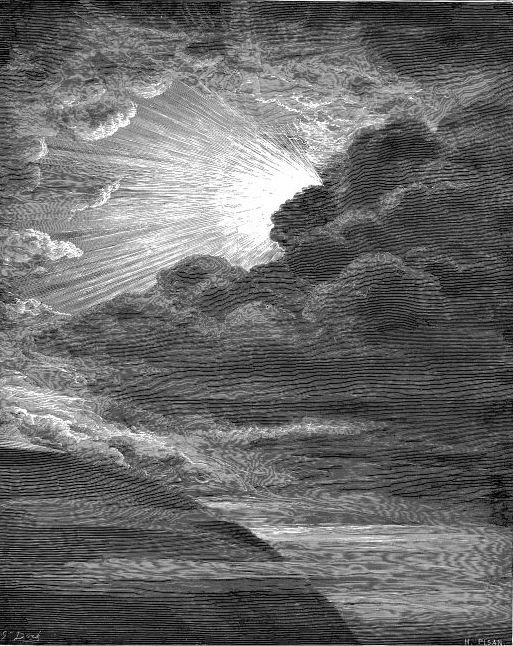
File:Creation of Light.png
Gustave Doré: Let there be light.

     “Let there be light,” said God in Genesis 1:3, “and there was light.”  In myths worldwide, light is associated with life and good, whereas darkness is associated with death and evil.  Lucifer, the Light Bearer, rebelled against God and was cast down into hell to become the Prince of Darkness.  In many cosmic myths the forces of light and darkness are at war, nor is the victory of light guaranteed.  Prehistoric humans huddled around their fire at night, or used fire as a barrier at the entrance to their cave.  For them, darkness meant risk and danger and prowling wild beasts, whereas light brought at least relative security.  And without light there could be no life, so they worshiped the sun, the source of life and light.  (For more of my take on darkness and night, see post #64, A West Village Murder and the Fear of Night.)

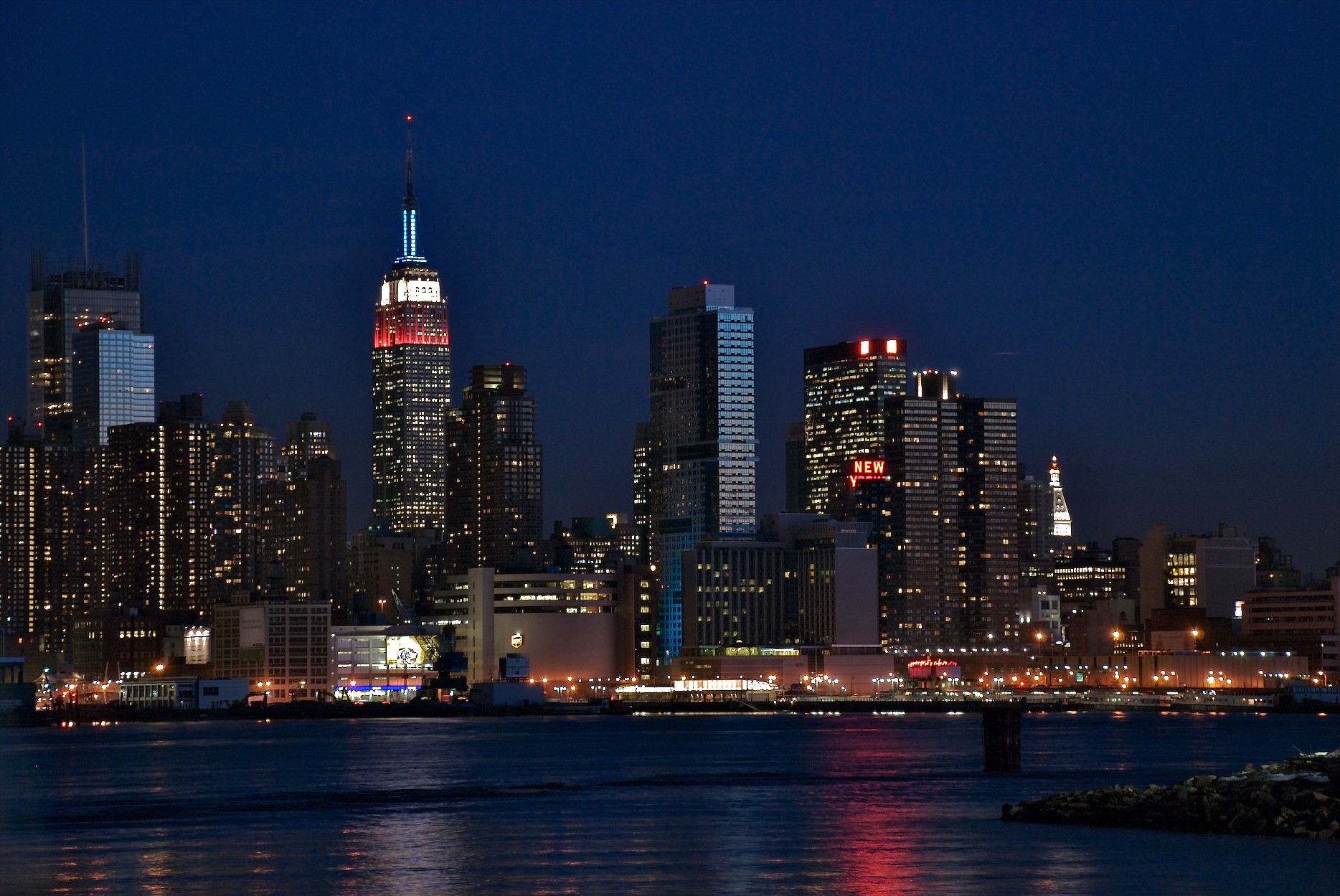
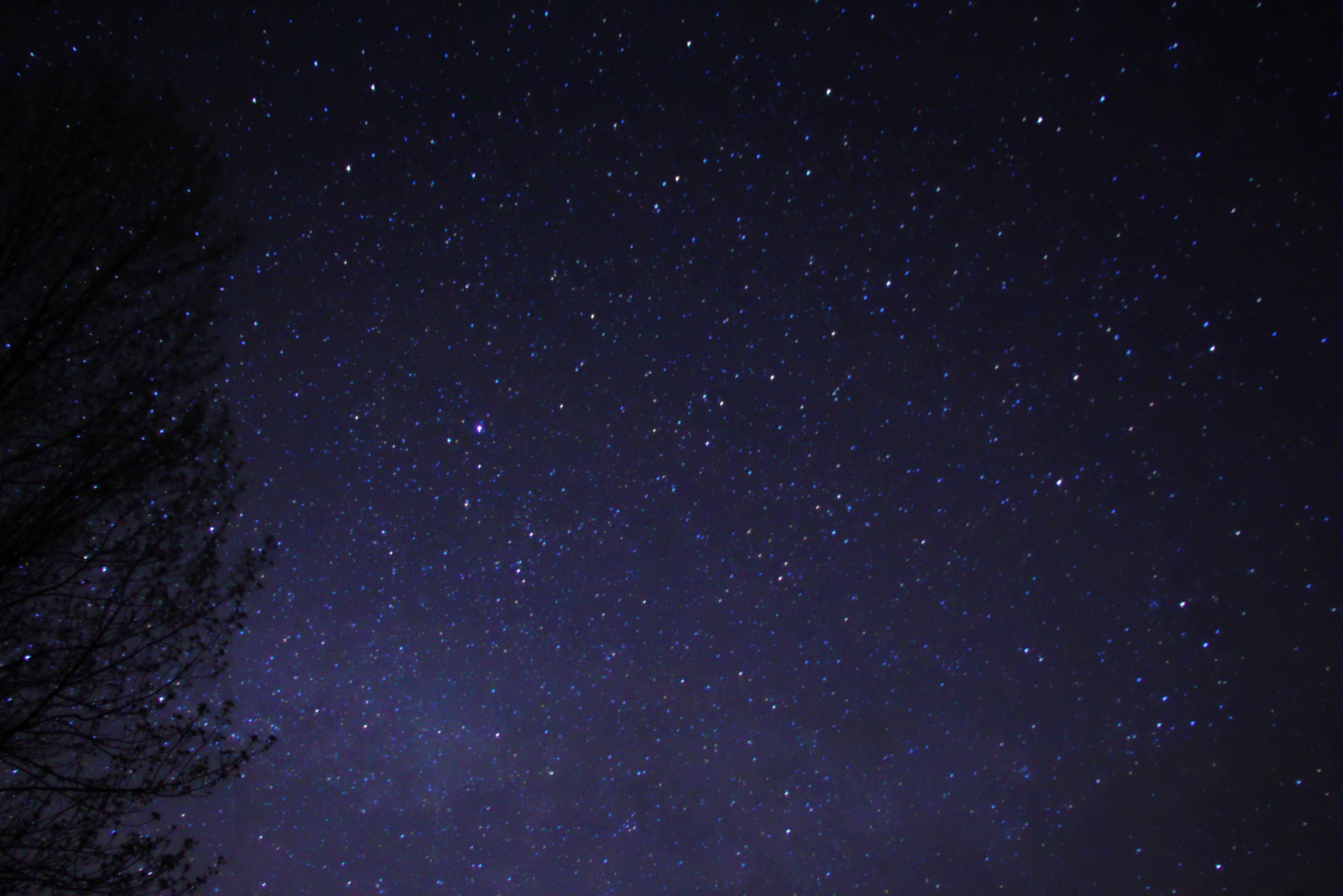
     The story of lighting in the city of New York, like that of all cities, replicates these cosmic myths and beliefs, for it is the story of light versus darkness, of pushing back the frontier of night.  In our well-lit cities today, we have little experience of the night sky, the starry infinitudes of space – an experience both humbling and inspiring.  But back in the eighteenth century, before the coming of gaslight and electricity in the nineteenth, darkness was a part of people’s lives, something to wonder at, yet also something to be reckoned with, something to be fought.  And what means of illumination could they use, to fight back the darkness of night?  Outside, torches; in their homes, the fire on the hearth, candles, and lamps.

File:New York City at night-0.jpg
What we have gained.
lecates

File:Night Sky Stars Trees 03.jpg
What we have lost.
Michael J. Bennett

     The torch, dating from prehistoric times, has been called the first portable lamp.  The fabled lighthouse of Alexandria, one of Herodotus’s Seven Wonders of the World, was simply a soaring tower with a torchlike fire at the top, visible for miles at sea.  In this country, well into the nineteenth century torchlight parades honored visiting dignitaries like the Prince of Wales in 1860, and rallied supporters during political campaigns.

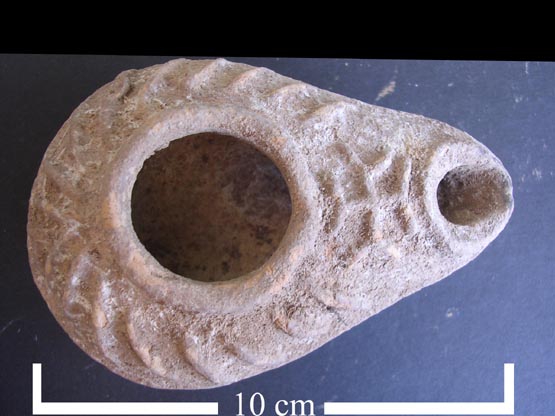
File:Byzantine oil lamp.jpg
A Byzantine oil lamp.
     Inside homes, the wood fire on the hearth was a source of light and warmth and, in the kitchen, the means for cooking meals.  Lamps too existed from prehistoric times: a small open or covered bowl containing some kind of inflammable liquid, and a porous wick that sucked up the liquid and could be lighted.  At first the bowls were improvised from rocks, shells, and horns; later they were fabricated.  The oil might be fish oil, nut oil, sesame oil, or any number of other plant oils, olive oil being the commonest in the Mediterranean countries.  These are the lamps mentioned in both the Old and New Testament of the Bible. 

File:Whale oil lamp.jpg
A whale oil lamp.
Bullenwächter
     In the 1700s, however, the American colonists discovered that spermaceti, a semiliquid, waxy substance obtained from the head of the sperm whale, burned with a bright glow without any disagreeable odor.  It was therefore used more and more in both lamps and candles, and in street lamps as well, creating a profitable market that sent whalers out in great numbers to search the North Atlantic and later, in the nineteenth century, as the sperm whale population in the Atlantic declined, on voyages of several years into the far Pacific, as described in Melville’s Moby Dick.


     The candle is a relatively recent invention.  It was known in China and India before it was created in the West, where it was used by nomadic tribes in Europe in the late Roman period.  Beeswax candles were used in medieval church rituals, but since beeswax was expensive, ordinary people used tallow candles, which were smelly and smoky, dripped, and gave a feeble light.  (Tallow: a mixture of refined animal fats.)  Starting in the eighteenth century, for Americans who could afford them, candles using sperm oil were far superior.

An English Restoration theater, with
candle chandeliers and oil lamp
footlights.
    But what about the interiors of large buildings like theaters?  The theaters of ancient Greece and Rome relied on daylight; night performances were unheard of.  But during the Renaissance, theater moved indoors into the great halls of the nobles, and then into theaters as such, which were lit from overhead by chandeliers with candles – not the ideal lighting, since they dripped hot grease indiscriminately on actors and audience alike, but the best that the times could do.  So let's count our blessings today; in our theater seats we're quite safe from drippy candles, and risk only a crashing chandelier, if a Phantom of the Opera is lurking overhead.

    So eighteenth-century New Yorkers fought the night with means of illumination that had been used for centuries, even millennia: torches, hearth fires, lamps, and candles.  All these involved flame and, when used inside,  had serious drawbacks: they had to burn right side up, be supplied with air, be distanced from inflammable objects, and be protected from drafts. 

     Another problem: these fires were hard to start.  What, no matches?  Not until 1827, when the first friction matches, called lucifers (that name again!), were invented in England; they soon appeared in New York.  But before that, how did people light candles and lamps?  From other candles and lamps, if available, otherwise from fire struck with flint and steel.  And yes, there’s the old joke about doing it by rubbing two Boy Scouts together, inspired by the Scouts’ practice of rubbing two dry sticks together to produce the friction that creates a flame.  But however it was done, it was a lot of work.

     The nineteenth century brought changes that revolutionized lighting.  Candle making by machine made mass production of candles possible, so that cheap candles became available to everyone, and with the introduction of paraffin wax in the mid-1850s, candles were made that burned cleanly without the smell of tallow candles.  But by the second half of the century candles were on their way out, replaced by competing illuminants.  First  introduced in London in 1814, gaslight came soon afterward to New York, where the Common Council granted charters to competing companies to lay pipes in different sections of the city, replacing the whale oil lamps then in use.  In 1824 a banker’s residence in Cherry Street became the first house in the city to receive gaslight.  (Bankers and their friends have a way of getting the latest improvements first.)  In the 1820s and 1830s gaslight lit more and more of the streets, with lamp lighters lighting the polished glass boxes of the lamps at dusk and snuffing them at dawn. 

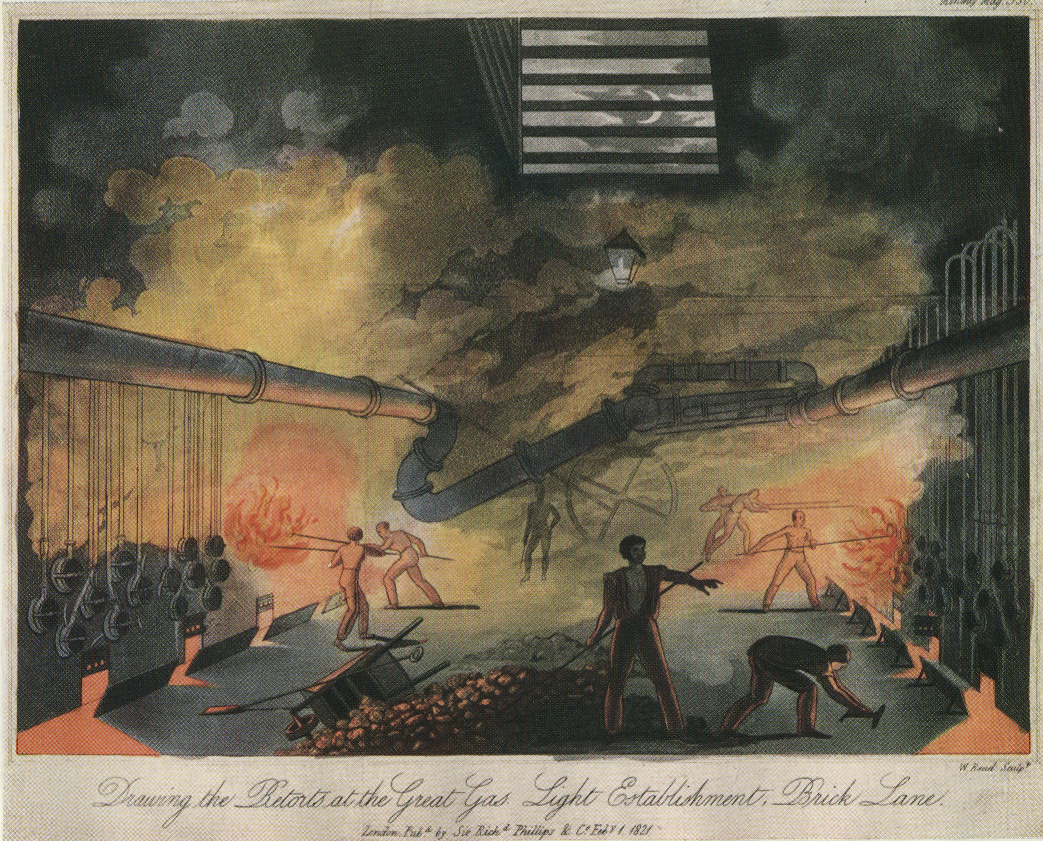
     But gaslight was not for every community, as it had several requirements.  A plentiful supply of coal, from which the gas was manufactured, was needed, and the means of transporting it.  New York City’s coal was mined in the mountains of Pennsylvania and shipped by barge via the Delaware and Hudson Canal to the Hudson River and then on to the city.  Gas works were also needed: clusters of red-hot retorts, where the coal was burned to create gas, and of gas containers, big bulblike structures of iron where the gas was held, before being sent by underground pipes to the streetlamps, fancy hotels and stores, and well-appointed homes of the affluent.  Gas works were ugly and smelly, and therefore confined to the Hudson and East River waterfronts, well out of sight – and smell – of the fashionable sections of the city. 


File:Drawing the retorts at the Great Gas Establishment Brick Lane.png
Inside a nineteenth-century gas retort.  Not something you would want next door.


     Gaslight needed big money and a lot of effort to put up all those smelly gas works, so it was confined to the big cities; small towns and rural communities were not accommodated.  But it transformed New York, providing lighting such as had never before been possible.  Hotel lobbies glowed, and the front windows of Fifth Avenue brownstones blazed with light as arriving guests mounted the steep front stoops, while theaters offered Spanish dancers, waterfalls, and naughty cancans in a stellar glare, and pickpockets worked overtime in the evening, though second-story men lamented the illumination, so inimical to their furtive operations.  (We'll learn more about second-story men in a future post about the so-called ladder of thieves; they were on a middle rung, far from the top or the bottom.)


     Another significant development came in 1859 with the discovery of oil in a farming district of northwestern Pennsylvania, which ended abruptly that region’s rural tranquility.  Oil rigs began drilling intensively, and kerosene, a petroleum derivative, became readily available and cheap enough to be widely used in lamps.  As an illuminant it quickly replaced whale oil, which could only be obtained in far distant oceans.  Characteristic of the kerosene lamp was a glass chimney that protected the flame and controlled the flow of air to it, and a knob that adjusted the size of the wick, and thus the size and brightness of the flame.  Kerosene lamps didn’t require the infrastructure of gaslight and so could be used anywhere.  My first awareness of these lamps came in the bad Westerns, often Saturday afternoon serials, that afflicted my childhood.  These were the “Meanwhile back at the ranch …” species, humdrum black-and-whites meant to lure their young victims back a week later for the next installment, which they rarely did.  Viewing them, I always knew that at some point a fight would erupt in the ranch house, a kerosene lamp would be knocked over, curtains would catch fire, and the whole place go up in flames; I was rarely disappointed. 

     Later I encountered the lamps in real life.  In the 1960s, when I first went to Monhegan Island off midcoast Maine, kerosene lamps were still in use there; I learned such niceties as how to refill them, how to light them, and how to trim the wicks of these rather cumbersome contraptions.  Schooled by those dreary old Westerns, I was careful to keep them away from curtains.  Only with the creation some years later of a local company to supply electricity to the island – first for only a few hours, then for more, and finally all day and night – were the kerosene lamps supplanted, thus repeating the progress of mid-nineteenth-century New York.  Progress may be long in coming, but come it does … finally.

     By the late 1870s gaslight, so wondrous at first, and hailed as a clean source of light, had worn out its welcome in the city.  Gas jets emitted headache-inducing fumes of ammonia, sulfur, and carbon dioxide, turned ceilings black, and defiled the parlor, that sanctuary of middle-class gentility, with, alas, soot.  In the land of Go Ahead, in this progress-giddy age, surely something better could be devised.

     It was.  On December 20, 1880, all of Broadway between Union and Madison Square was suddenly bathed in light.  New Yorkers were dazzled, amazed.  Projecting the light were a series of twenty-foot-tall cast-iron posts, one per block, each with an arc light that cast a brilliant glow.  Arc lights, powered by steam engines and electric generators, were cheaper to install than hundreds of lampposts, and were soon spreading illumination along the avenues and over markets, factories, railroad stations, and wharves.  But arc lights were too intense for use in homes, and they too gave off noxious fumes, and created power failures when assailed by storms.  (Sound familiar?)  Something still better was needed.


Arc lights along Broadway in 1880.

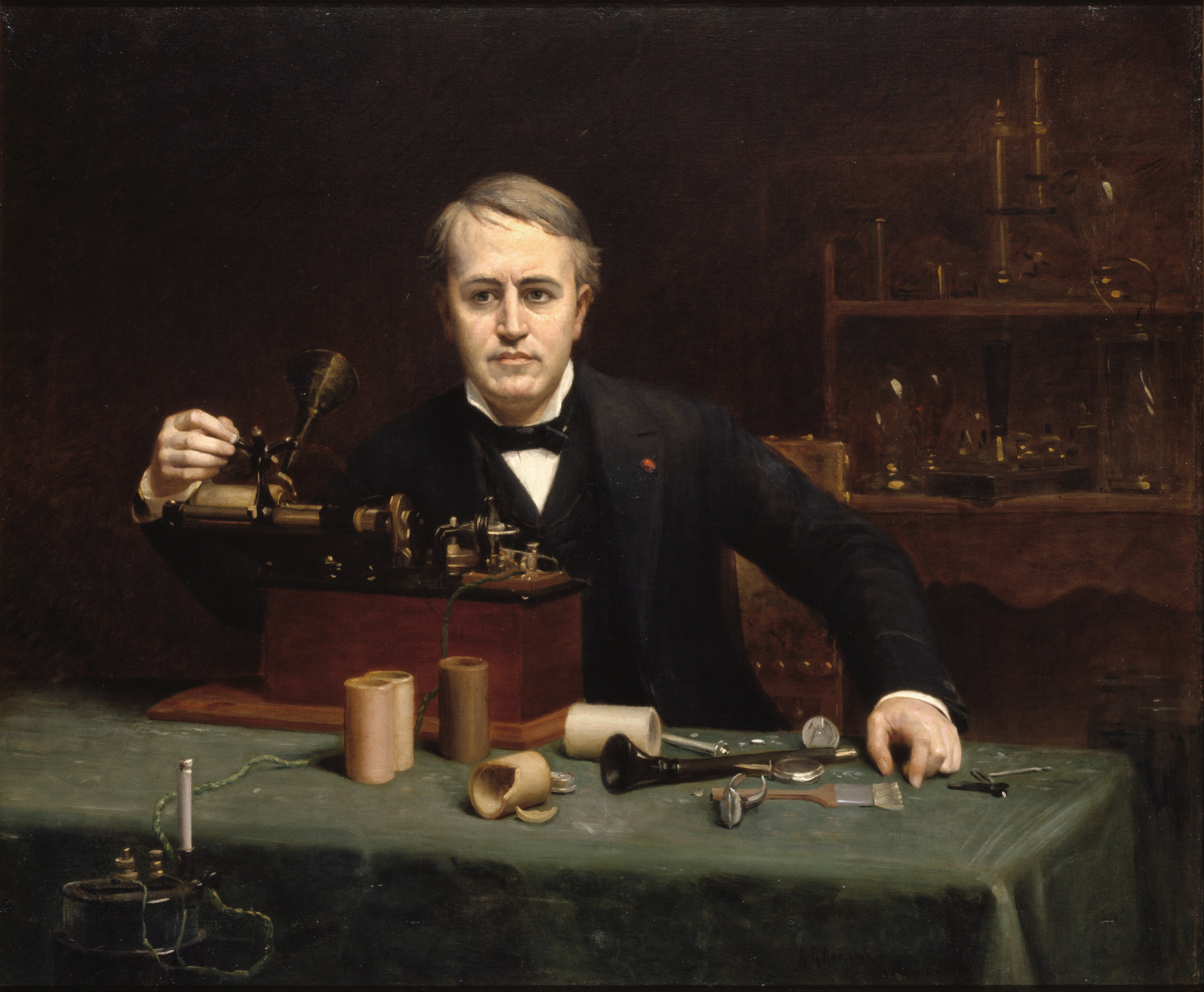
     In 1878 Thomas Edison, a young inventor already known for numerous inventions that included the phonograph, informed the press that was he going to develop an incandescent lamp suitable for homes.  Canny investors on both sides of the Atlantic perked up their ears, opened their wallets, and helped create the Edison Electric Light Company, of which Edison himself, wise now in the ways of Wall Street, retained significant control.  Vast sums and great hopes were invested in this ingenious experimenter, who in this matter so far had produced only promises – brash, glowing promises, but promises only, mere words.  Supremely confident, he got to work in his research laboratory in Menlo Park, New Jersey. 


File:Abraham Archibald Anderson - Thomas Alva Edison - Google Art Project.jpg
A portrait of the young Edison.

     Months passed, progress was made.  Aldermen and councilmen were invited to Menlo Park for a gala demonstration of the new lights.  Edison established his power station on Pearl Street, had armies of workmen dig trenches to lay subterranean wires in massive insulated power mains, and installed powerful generators in the power station.  Then, on September 4, 1882, fifty square downtown blocks housing the city’s key financial, commercial, and manufacturing establishments were suddenly illuminated.  If gaslight had been a wonder, and arc lights magic, this was a miracle.  


     J.P. Morgan and the Vanderbilts (those bankers and their friends again!) immediately installed incandescent lights in their mansions, and within a year over five hundred wealthy homes were electrified.  The Stock Exchange followed, then office buildings, machine shops, piano factories, sugar refineries, department stores, and theaters, and middle-class homes as well, though tallow candles were still used in tenements.  People in New York, and then the world over, marveled: with a flick of a switch, there was light.  No lamp to fill, no wick to trim, no fumes, no flickering, just bright, steady light.

     Night life intensified, as hotels, restaurants, and shops, and brothels and gambling parlors too, turned radiant with light, and customers flocked.  By the mid-1890s people were beginning to call a stretch of Broadway blazing with illuminated signs the “Great White Way.”  The New York of today was coming into being, to be further enhanced in the 1920s and 1930s by the advent of neon lights, first developed commercially by the French engineer and inventor Georges Claude.  Today, if in our cities awareness of the night sky has all but vanished, no one seems to care, since there is so much to do at night down here.  Yes, darkness has been vanquished.


File:Times Square at night- Manhattan, New York City, United States of America (9867936733).jpg
Times Square at night, the ultimate in neon lights.
Boris Dzhingarov
     
File:Witch hazel Central Park in winter.jpg
Witch hazel in Central Park.
Downtowngal
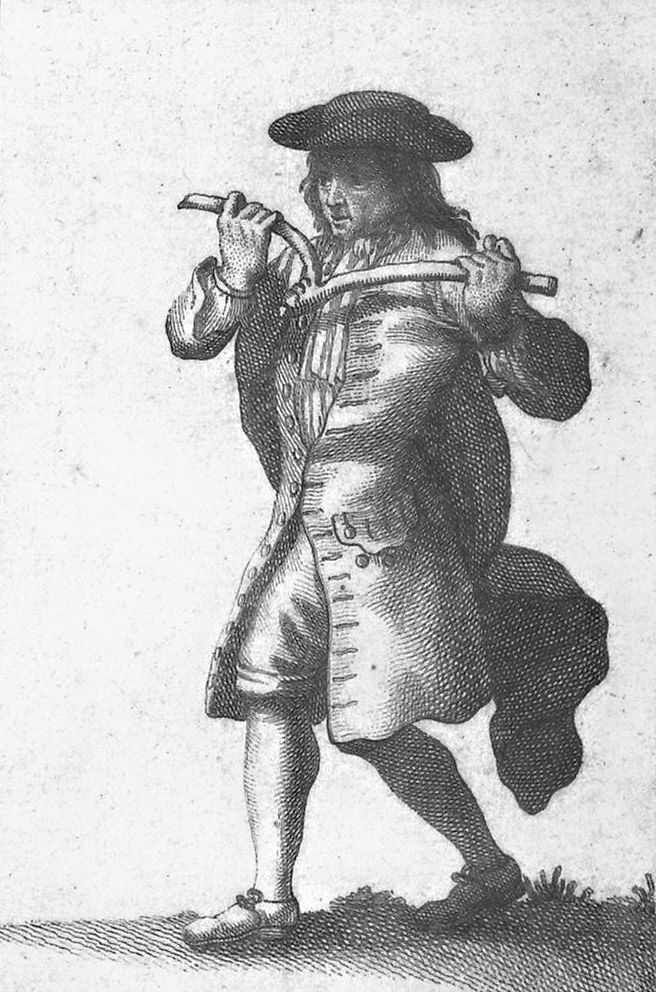
File:18th century dowser.jpg
An eighteenth-century dowser.

     A note on witch hazel:  A short article in last Sunday's Times reminds me that even this late in the autumn, with snow predicted, this strangest of plants is blooming.  I have seen it on Monhegan Island in Maine, and down here in Central Park, though you can easily pass by this ribbon-petaled, spidery yellow flower and not even realize it's a flower.  Yes, this is the source of the astringent sold in pharmacies as a remedy for itching (it works!), bleeding, inflammation, acne, bruises, and other skin conditions.  And yes, it was once used for "water witching": a dowser or water witch would hold a forked branch of the plant and traipse an area where underground water might be found, until the stick was tugged or bent downward, indicating the source of water; a well would then be dug.  Skeptical?  Well, I haven't tried it myself, but there are those who insist that it works.  Try it for yourself and report back to me.


     Coming soon:  The Beauty and Danger of the Palisades.


    ©  2013  Clifford Browder