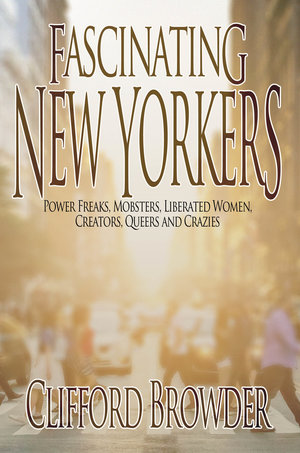
This is the one that's getting sales in England. Here too, I hope. Mini-biographies of some of the most colorful people who lived or died in the city where anything goes. My personal favorites: Cardinal (Was He or Wasn't He?) Spellman and his double life; J.P. Morgan and his nose; Brooke Astor, with whom I could have danced up a storm; and Texas Guinan, who when her speakeasy was raided and she and all her patrons were arrested, threw a party for patrons, reporters, and police at the police station.
Available from Amazon and Barnes & Noble.

Hustle No. 2: Holiday Special
Bargain, bargain, bargain! All my paperbacks are now available from me (but not from Amazon et al.) through December 31 with free shipping. (U.S. only. Sorry, Canada, Australia, and Japan.) This is my hustle for the biggest gift-giving season of the year, and I want everyone to be happy (myself included). For the books, see under BROWDERBOOKS below, following the post on booze and me. As always, signed copies are available from the author.
BOOZE AND ME
“You don’t know anything about drinks!” my partner Bob
declared, with a touch of scorn, when in my apartment, early in our
relationship, he saw me fumbling an attempt to serve him some alcoholic
concoction he had requested. Far from
feeling put down or insulted, I took it as a back-handed compliment, since most
of his friends were alcoholics, and mine were not.
 |
That I ever came to terms with alcohol is surprising, given
my beginnings. I was born and raised in
Evanston, the first suburb north of Chicago, which was determinedly dry and, in
consequence, the national headquarters of the WCTU (Woman’s Christian
Temperance Union), that heroic striver for temperance. In Evanston, no liquor
could be sold within the city limits, for sober Methodists had founded
Northwestern University on the lakeshore in the 1850s, and the university’s
charter banned the sale of liquor within four miles of the university. Of course one could bring in liquor and serve
it discreetly at home, as I knew from an early age, when, exploring the alley
that ran beside our house, I detected a telltale smell from the contents of a
neighbor’s garbage cans. I didn’t know
what it was, but it was suspicious, and only that one neighbor’s cans gave a
whiff of it. The nearest liquor stores
were on Howard Street, the boundary between sober, honest, Republican Evanston
and the huge, corrupt, and bibulous Democratic city of Chicago. Or one could drive west four miles and find
roadside bars and liquor stores catering to Northwestern students of a thirsty
disposition.
Even if liquor had
been flowing everywhere in Evanston, our house would have been the
exception. “No Browder can drink!” my
father often exclaimed, and for good reason.
He had once imbibed a little too freely, until my mother got her
minister to talk to him, following which the imbibing stopped cold. As I would learn later, his father, a
brilliant young lawyer in Indianapolis, had ruined his career and marriage
through alcoholism. When my grandmother
saw that her husband wasn’t going to change, she divorced him – unusual in
those days, but she was a strong-willed woman -- took not a penny of alimony,
and sent her four sons out to sell newspapers on the street. It was a tough, challenging childhood, with
just barely enough food for all, but my father and his siblings came through.
So in our house, alcohol in any form was taboo – a ban that
lasted as long as my father did, reinforced by strictures at the Methodist
Sunday School that I attended. Methodist
Sunday School? you may ask. Didn’t that
involve taking communion with bread and wine?
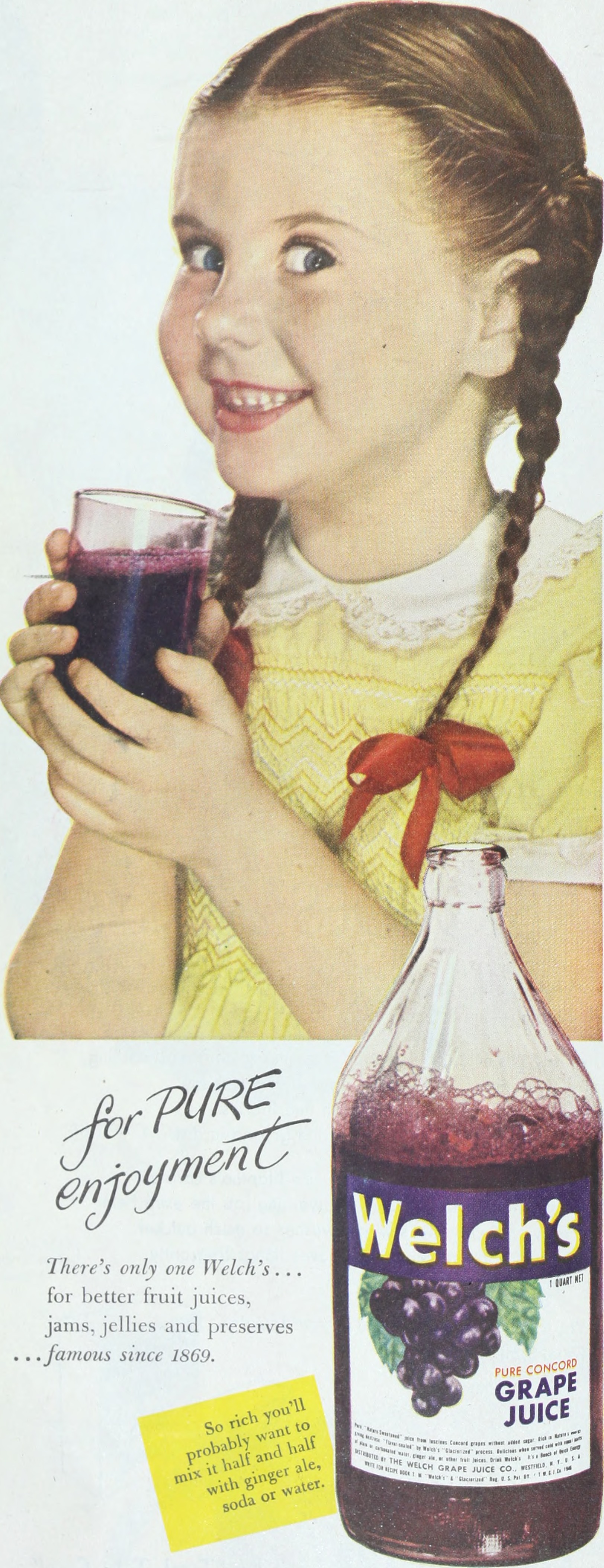
Bread, yes, wine no; Welch’s Grape Juice was substituted.
 |
instead of
 |
Once, at family gathering at an aunt’s home,
my Uncle Mox was present. An Annapolis
graduate and now a stern-faced captain in the Navy, when off duty he could be a
bit of a clown. He faked a fashion
parade, holding an umbrella up at an elegant angle, and then appeared in
various hats confiscated from other members of the family, including the
ladies. This performance delighted my brother
David and me, the only children present, but my father, suspecting his brother’s
inspiration, frowned. And he frowned
even more when, sure enough, Uncle Mox produced a flask and offered me and
David a nip. We obliged him, but I
winced at the unfamiliar taste. Sensing
his brother’s disapproval, Uncle Mox said, “It’s better that they get their
first taste from me, than from some bum in a bar!” My father was not convinced.
When I went off by train to California to college, the Santa
Fe line spent a whole day crossing the level plains of Kansas, and the bar in
the club car was closed, since Kansas was the one state in the union that was
still dry. Not that I cared; just
turning 18, I wasn’t into liquor, and it wasn’t into me. At college I participated
in the inevitable freshman-year beer drinking, facilitated by a draft card with
an altered birth date that made me 21, but this did not distract me from my
studies. After all, I was only half
Browder, and the other half, my mother’s family, the Felts, had no history of
alcoholism. But for my older brother it would be a different story; he would in time become an alcoholic, though he finally quit.
When I was about to enter high school, a Catholic family had
moved in on Bryant Avenue, the one-block street where I grew up in north
Evanston. Their arrival occasioned the hushed comment among the Protestant neighbors, “They’re Catholic, you know,”
answered by a discreet, “Oh.” But since
the family had three attractive teen-age daughters, their home soon became the
teen-age center of the neighborhood, and remained so throughout my high-school
years. And when I first came home from
college for the Christmas holiday, I was invited to a party that the girls were
giving for their Northwestern friends.
Eyebrows were raised again among the neighbors when a truck drove into
their back yard and unloaded quantities of beer destined for the gullets of the
guests.
 |
| On Bryant Avenue ... ! Bjarki Sigursveinsson |
But the imbibing was discreet,
no one got drunk, and a good time was had by all. Still, for sober Bryant Avenue, it was an
unprecedented event. Only years later, when
my mother became a widow, did she drive a short distance out of town to buy
wine to serve her clubwomen friends. The
club ladies convened at her residence for serious discussions of plays or
poetry, intensely cultural occasions that could hardly be termed orgies.
After college I got a Fulbight scholarship and spent two
years in Europe studying French language and literature and hitchhiking around
on vacations. To initiate me into the
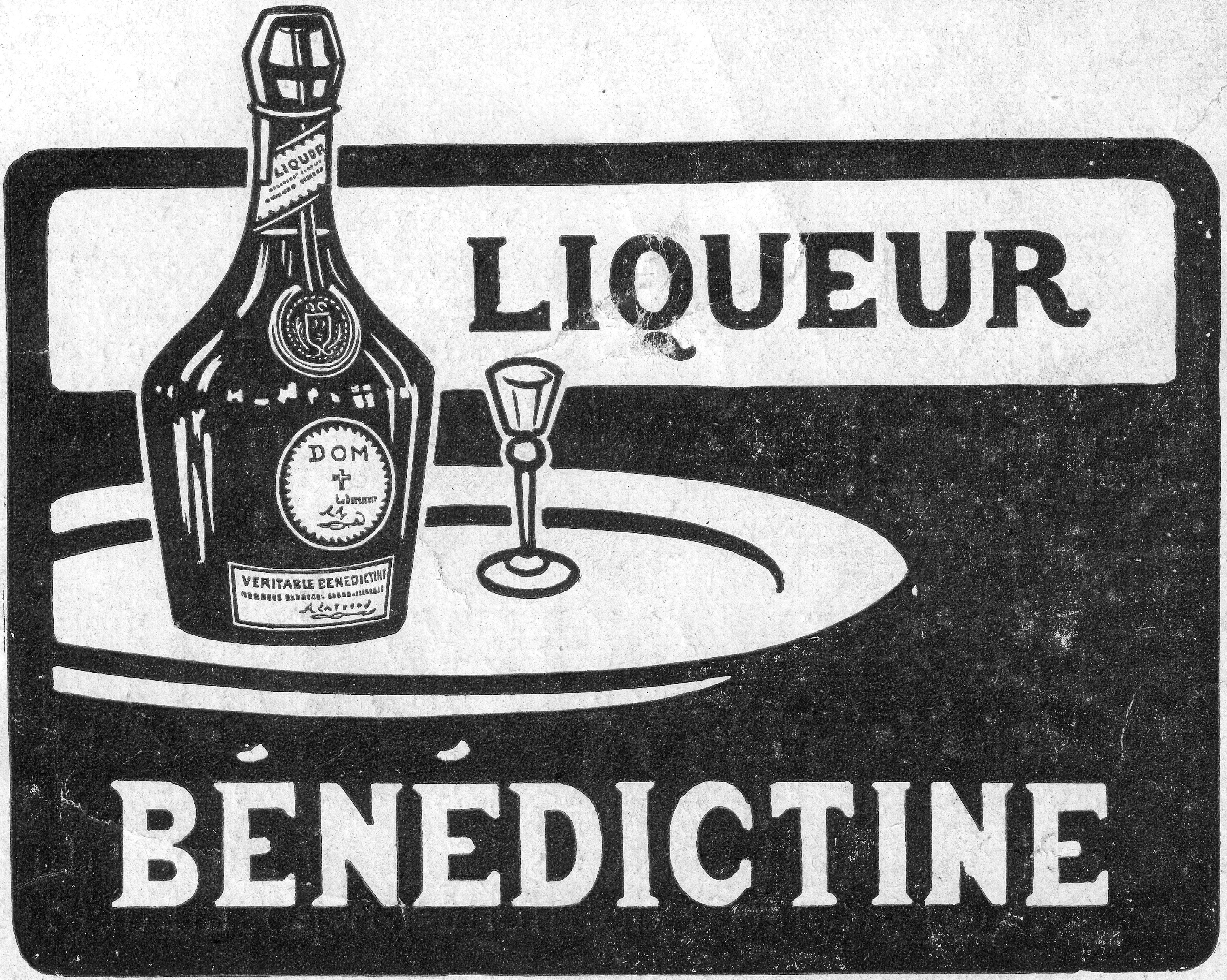
marvels of liqueurs, in Paris my friend Bill bought tiny bottles of
Bénédictine, Chartreuse, and Cointreau.
 |
Their
taste, sweet and pungent, was a new experience for me, and even a sip or two
went a long way, for they are high in alcoholic content. Learning that the first two had been
perfected over many years by French monks, my Protestant psyche was smitten with
respect for those adventurous holy men, and for what Catholicism, which shunned
Welch’s Grape Juice for real wine in communion, was all about. (I didn’t realize at the time that the monks
perfected their liqueurs primarily for medicinal purposes. A noble goal, but not what I had in mind.) Dining in modest French restaurants on a
student’s budget, I learned even there how to eat a meal course by course, and
how to sip wine in the process. France,
after all, was not Evanston, and I was only half Browder.
When I came to New York for graduate studies, I was suddenly
immersed in a culture where drinking, and often heavy drinking, was the
custom. So began my adventures and
misadventures with gin. Everyone was
drinking martinis, often with only a trace of vermouth, so I did, too. I soon learned that one martini made me
sociable; two made me a babbling idiot and a friend of everyone; and three
fuzzed my mind and guaranteed a fearsome hangover on the morrow. Only gradually did I come to learn that
martinis were not for me, whereupon I instituted a ban that continues to this
day.
 |
| My enemy. Dennis Mojado |
But that was not the end of gin for me. When the sultry, hot days of summer hit New
York, I learned that a gin and tonic was just the thing, cool and refreshing,
but with so modest an input of gin that I didn’t get drunk. Civilized drinking at last! From my martini days I had already learned
the different brands of gin, with costly Beefeater at the top, until I heard of
even costlier Tanqueray. Fortunately, I
came to shun these English exotics and settled for a good, solid American
brand: Gordon’s, less classy, perhaps, but easier on the budget.
Yes, gin has had a special place in my life, which is
strange, since I’m not drawn to hard liquor.
When, at election time, conservatives praise the manly whiskey-drinking
heartland and evince scorn for the wimpish wine-sipping elitists of Martha’s
Vineyard, I know which side I’m on; even though I’ve never been there, I’ll
take Martha’s Vineyard and its elitist wine-sippers any time. Yes, to this day I go with wines, not
whiskey. But since I like gin and
tonics, gin is different. For one thing,
I’ve trodden it and even been tripped and wounded by it in the wild.
Essential to all gins is the juniper berry, and one species
of the juniper shrub it comes from is trailing juniper, known as trailing yew
on Monhegan, the island off midcoast Maine where I have often vacationed. A prostrate, mat-forming plant, it likes
sandy soil and on Monhegan is especially common in a low, sandy area known as
Lobster Cove. I have often hiked there,
have been tripped by it, and once got a sprained
ankle that had me housebound and limping for days. Yet from this treacherous trailing plant, as
from other forms of juniper, comes the dark purple berry that flavors all
gins. The name itself, “gin,” is an
Anglicization of the French word for juniper, genièvre, or maybe the Dutch word
genever. And its history is colorful as well.


&body=https%3A%2F%2Fcommons.wikimedia.org%2Fwiki%2FFile%3AJuniper_Berries_(11519861655).jpg%0A%0ABureau%20of%20Land%20Management%20Oregon%20and%20Washington%20%5BCC%20BY%202.0%20(https%3A%2F%2Fcreativecommons.org%2Flicenses%2Fby%2F2.0)%20or%20Public%20domain%5D%2C%20via%20Wikimedia%20Commons)


 |
| Juniper berries, ripening and ripe. |
Gin in some form dates from the Middle Ages and was
considered medicinal. (That’s what they
all say, isn’t it? Coca-Cola and heroin
were once advertised as medicines, too.) Be
that as it may, when Hollanders tried the medicine – WOW! – it did wonders for
them. And when English soldiers went to
reinforce the Dutch fighting the Spaniards around Antwerp in 1585, they tried
the new drink and again – WOW! – they found themselves supercharged with
courage.
The English soldiers took their “Dutch Courage” back to England,
where, being cheap and easy to produce, it became vastly and disastrously
popular, especially with the urban poor.
Hogarth’s 1751 engraving “Gin Lane” shows the resulting devastation,
which caused the government to legislate bans on the drink, which in turn
provoked the production of illicit gins.
Such gin, flavored with turpentine, bore names like Cuckold’s Comfort,
Royal Poverty, and My Lady’s Eye Water.
 |
| Hogarth's "Gin Lane." |
Modern gin dates from the late nineteenth century, when
several London distillers began producing a refined, nonsweet gin quite
different from the one that got Gin Lane its name. But gin was still favored by working-class
Londoners, as evidenced by Shaw’s 1913 play Pygmalion,
when Eliza Dolittle says of her mother that “gin was mother’s milk to
her.” And history was repeated in
America in the 1920s, when Prohibition spurred the production of “bathtub gin,”
which was indeed at times made in a bathtub.
But Prohibition was repealed, and gin, being mixable, was used in
numerous cocktails and is so used today.
Here are a few special experiences with alcoholic drinks
that I treasure.
· A wine that Bob and I bought at a modest price, not
expecting anything special, and that proved to be velvety, or what the French
call velouté. And instead of one blunt, unchanging
taste, it was like a musical phrase, starting on one note and modulating to
another. We experienced this twice, to
our surprise and with no strain to our wallets.
 |
· Sipping wine and nibbling an assertive cheddar cheese
with my ailing partner Bob, and our friend John Anderson, at Bob’s bedside
while he had Parkinson’s. It
was our Sunday ritual, following which John and I went out to lunch, and Bob’s
home-care aide served him in bed. These
were not velvety wines, just ordinary ones that I bought cheap (ten dollars at
the most), and that John, on a scale of 1 to 10, 10 being best, rated as 4 or
5. But even in these unremarkable wines
he and Bob could register nuances of flavor that my palate failed to detect.
· To sip the Italian liqueur Strega after a sumptuous
meal at Gargiulo’s, Bob’s and my favorite Italian restaurant, located in distant
Coney Island and reached by a long above-ground subway ride through the wilds
of Brooklyn. Yellow-tinted, Strega is a
blend of some seventy herbal ingredients and has a bold, rich taste with a
trace of mint. Strega is the Italian word for “witch,” and it did indeed bewitch
us, even to the point of ordering a second one that was usually on the house. Wonderfully relaxed, we coasted on this
experience all the way back by subway to Manhattan.
 |
| Hendrick ter Brugghen, The Merry Drinker. He's having fun, but not my style at all. |
Obviously, I’m a savor-and-sip imbiber, not a guzzler. For me, this is civilized drinking. And when, a few times in the past, I drank
too much and got tipsy, and drawled or mumbled my speech, I felt great
self-contempt and got home and to bed as soon as I could. Blessed are the prudent and the at least
semi-sober. But as a friend once reminded me, down through the ages and in all cultures, alcohol and tobacco have been celebrated in poetry, art, and song; of the joys of abstinence, hardly a word.
Coming soon: A grim one: War Is Fun.
If you love the city (or hate it), this may be the book for you. An award winner, it sold well at BookCon 2017 and 2018, and at the Brooklyn Book Festival 2018.
"If you want wonderful inside tales about New York, this is the book for you. Cliff Browder has a way with his writing that makes the city I lived in for 40 plus years come alive in a new and delightful way. A refreshing view on NYC that will not disappoint." Five-star Amazon customer review by Bill L.
Available from Amazon and Barnes & Noble.
For readers who like historical fiction and a fast-moving story.
"A real yarn of a story about a lovable pickpocket who gets into trouble and has a great adventure. A must read." Five-star Amazon customer review by nicole w brown.
"This was a fun book. The main character seemed like a cross between Huck Finn and a Charles Dickens character. I would recommend this." Four-star LibraryThing review by stephvin.
"I am glad that I have read this book as it goes into great detail and the presentation is amazing. The Author obviously knows his stuff." Four-star LibraryThing early review by Moiser20.
Available from Amazon and Barnes & Noble.
"At times amusing, gritty, heartfelt and a little sexy -- this would make a great summer read." Four-star Amazon customer review by BobW.
"Really more of a fantasy of a 19th century gay life than any kind of historical representation of the same." Three-star Goodreads review by Rachel.
Available from Amazon and Barnes & Noble.
Available from Amazon and Barnes & Noble.
Coming soon: A grim one: War Is Fun.
BROWDERBOOKS
All books are available online as indicated, or from the author.
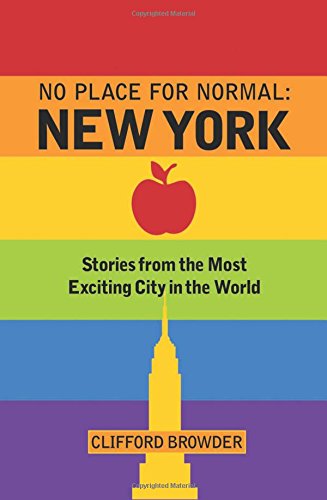
1. No Place for Normal: New York / Stories from the Most Exciting City in the World (Mill City Press, 2015). Winner of the Tenth Annual National Indie Excellence Award for Regional Non-Fiction; first place in the Travel category of the 2015-2016 Reader Views Literary Awards; and Honorable Mention in the Culture category of the Eric Hoffer Book Awards for 2016. All about anything and everything New York: alcoholics, abortionists, greenmarkets, Occupy Wall Street, the Gay Pride Parade, my mugging in Central Park, peyote visions, and an artist who made art of a blackened human toe.
If you love the city (or hate it), this may be the book for you. An award winner, it sold well at BookCon 2017 and 2018, and at the Brooklyn Book Festival 2018.
 |
Reviews
"If you want wonderful inside tales about New York, this is the book for you. Cliff Browder has a way with his writing that makes the city I lived in for 40 plus years come alive in a new and delightful way. A refreshing view on NYC that will not disappoint." Five-star Amazon customer review by Bill L.
"To read No Place for Normal: New York is to enter into Cliff Browder’s rich and engaging sixty years of adult life in New York. Yes, he delves back before his time – from the city’s origins to the 19th Century that Ms. Trollope and Mr. Dickens encounter to robber barons and slums that marked highs and lows of the earlier Twentieth Century. But Browder has lived such an engaged and curious life that he can’t help but cross paths with every layer and period of society. There is something Whitmanesque in his outlook." Five-star Amazon customer review by Michael P. Hartnett.
Available from Amazon and Barnes & Noble.
2. Bill Hope: His Story (Anaphora Literary Press, 2017), the second novel in the Metropolis series. New York City, 1870s: From his cell in the gloomy prison known as the Tombs, young Bill Hope spills out in a torrent of words the story of his career as a pickpocket and shoplifter; his brutal treatment at Sing Sing and escape from another prison in a coffin; his forays into brownstones and polite society; and his sojourn among the “loonies” in a madhouse, from which he emerges to face betrayal and death threats, and possible involvement in a murder. Driving him throughout is a fierce desire for better, a persistent and undying hope.
For readers who like historical fiction and a fast-moving story.
 |
Reviews
"A real yarn of a story about a lovable pickpocket who gets into trouble and has a great adventure. A must read." Five-star Amazon customer review by nicole w brown.
"This was a fun book. The main character seemed like a cross between Huck Finn and a Charles Dickens character. I would recommend this." Four-star LibraryThing review by stephvin.
Available from Amazon and Barnes & Noble.
3. Dark Knowledge (Anaphora Literary Press, 2018), the third novel in the Metropolis series. Adult and young adult. A fast-moving historical novel about New York City and the slave trade, with the sights and sounds and smells of the waterfront.
 |
New York City, late 1860s. When young Chris Harmony learns that members of his family may have been involved in the illegal pre-Civil War slave trade, he is appalled. Determined to learn the truth, he begins an investigation that takes him into a dingy waterfront saloon, musty old maritime records that yield startling secrets, and elegant brownstone parlors that may have been furnished by the trade. Since those once involved dread exposure, he meets denials and evasions, then threats, and a key witness is murdered. What price must Chris pay to learn the painful truth and proclaim it?
Reviews
"A lively and entertaining tale. The writing styles, plot, pace and character development were excellent." Four-star LibraryThing early review by BridgitDavis.
"A lively and entertaining tale. The writing styles, plot, pace and character development were excellent." Four-star LibraryThing early review by BridgitDavis.
"At first the plot ... seemed a bit contrived, but I was soon swept up in the tale." Four-star LibraryThing early review by snash.
"I am glad that I have read this book as it goes into great detail and the presentation is amazing. The Author obviously knows his stuff." Four-star LibraryThing early review by Moiser20.
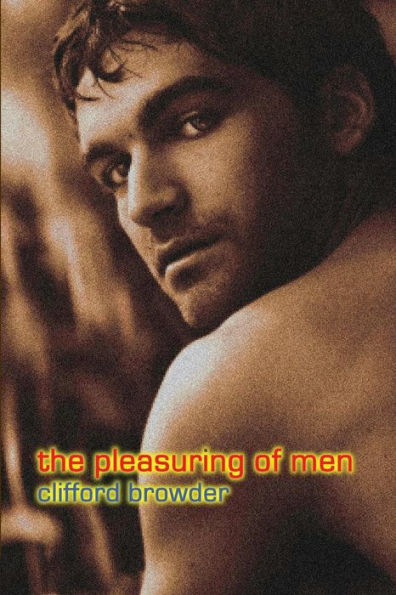
4. The Pleasuring of Men (Gival Press, 2011), the first novel in the Metropolis series, tells the story of a respectably raised young man who chooses to become a male prostitute in late 1860s New York and falls in love with his most difficult client.
What was the gay scene like in nineteenth-century New York? Gay romance, but women have read it and reviewed it. (The cover illustration doesn't hurt.)
What was the gay scene like in nineteenth-century New York? Gay romance, but women have read it and reviewed it. (The cover illustration doesn't hurt.)
 |
Reviews
"At times amusing, gritty, heartfelt and a little sexy -- this would make a great summer read." Four-star Amazon customer review by BobW.
"Really more of a fantasy of a 19th century gay life than any kind of historical representation of the same." Three-star Goodreads review by Rachel.
"The detail Browder brings to this glimpse into history is only equaled by his writing of credible and interesting characters. Highly recommended." Five-star Goodreads review by Nan Hawthorne.
Available from Amazon and Barnes & Noble.
5. Fascinating New Yorkers: Power Freaks, Mobsters, liberated Women, Creators, Queers and Crazies (Black Rose Writing, 2018). A collection of posts from this blog. Short biographical sketches of people, some remembered and some forgotten, who lived or died in New York. All kinds of wild stuff, plus some stuff that isn't quite wild but fascinating. New York is a mecca for hustlers of every kind, some likable and some horrible, but they are never boring.
Reviews
"Fascinating New Yorkers by Clifford Browder was like sitting down with a dear friend and catching up on the latest gossip and stories. Written with a flair to keep the reader turning the pages, I couldn't stop reading it and thinking about the subjects of each New Yorker. I love NYC and this book just added to the list of reasons why, a must read for those who love NYC and the people who have lived there." Five-star NetGalley review by Patty Ramirez, librarian.
"Unputdownable." Five-star review by Dipali Sen, retired librarian.
"I felt like I was gossiping with a friend when reading this, as the author wrote about New Yorkers who are unique in one way or another. I am hoping for another book featuring more New Yorkers, as I couldn't put this down and read it in one sitting!" Five-star NetGalley review by Cristie Underwood.
© 2018 Clifford Browder


&body=https%3A%2F%2Fcommons.wikimedia.org%2Fwiki%2FFile%3ADart_(PSF).png%0A%0APearson%20Scott%20Foresman%20%5BPublic%20domain%5D%2C%20via%20Wikimedia%20Commons)