Sunday, March 5, 2017

283. Doctors from Hell


    I want to thank everyone who has bought a copy of my new novel; it is much appreciated.  BUT:  Please don't buy it just to be nice; buy it only if you really want to read it.  It will find its readers in time, as most books do.  Here follows the front and back cover and the back-cover blurb.


browder-cover-9781681143057-perfect-2
Bill Hope: His Story: ($20: Softcover: 6X9”, 158pp: 978-1-68114-305-7; $35: Hardcover: 978-1-68114-306-4; $2.99: EBook: 978-1-68114-307-1; LCCN: 2017933794; Historical Fiction; May 17, 2017): is the second novel in the Metropolis series. New York City, 1870s: From his cell in the gloomy prison known as the Tombs, young Bill Hope spills out in a torrent of words the story of his career as a pickpocket and shoplifter; his scorn for snitches and bullies; his brutal treatment at Sing Sing and escape from another prison in a coffin; his forays into brownstones and polite society; his brief career on the stage playing himself; his loyalty to a man who has befriended him but may be trying to kill him; and his sojourn among the “loonies” in a madhouse, from which he emerges to face betrayal and death threats, and possible involvement in a murder. In the course of his adventures he learns how slight the difference is between criminal and law-abiding, insane and sane, vice and virtue—a lesson that reinforces what he learned on the streets. Driving him throughout is a fierce desire for better, a yearning to leave the crooked life behind, and a persistent and undying hope.
          This is the second title in the Metropolis series of historical novels set in nineteenth-century New York.  The first in the series is The Pleasuring of Men (Gival Press, 2011), mention of which appears at the end of this post. 

         The book can be ordered from Amazon and will be shipped after the release date of May 17, 2017.  But the paperback, which goes for $20, will cost an additional $4.95 for shipping, unless you order books totaling $25 or more.  The book is also available now from the author and will be sent immediately.  And now on to doctors from hell.

*                 *                 *                 *                 *                  *                  
         I have known several doctors from hell, though I’m seeing none of them now.  We’ll start with Dr. Creep (not his real name), a dermatologist on the Upper East Side – that mecca for status-conscious physicians -- who had a way of filling up his waiting room with patients, each of whom would get 15 minutes of his precious time.  This annoyed me, but I stayed with him for a while.  Then one day I arrived, punctually as always, for an appointment, and found twelve patients in the waiting room, and not a single seat available.  By wandering through a labyrinth of nearby rooms, I found a vacant chair, but seethed: twelve ahead of me, and yet I arrived on time!  Finally I told his receptionist to cancel me for the day and told her why.  “Oh yes, all right,” she said noncommittally, and I left, never to return.  Since then I’ve seen a dermatologist on East 15th Street in whose office I wait fifteen minutes at the most.  Good-bye, Dr. Creep.

         Next up on my list of doctors from hell is Dr. Omar (not his real name), an ophthalmologist from another culture into whose office I ventured only once.  In the office there were only two people, a husband and wife.  The wife had evidently just seen the doctor and was incensed.  “What is he?” she fumed.  “A God-damned homosexual?  A lady wants to be treated like a lady!”  I was tempted to correct her impression that male homosexuals dislike women, since the truth is exactly the opposite, but I didn’t.  In any case it was a less than promising prelude to my first-time encounter with the doctor.  Summoned in due time to his inner office, I found a fiercely bearded man with piercing eyes and a face that registered not a hint of a trace of emotion; he was the Great Stone Face or, better still, an efficient, well-oiled machine.  Acknowledging my presence with the barest hint of a nod, Dr. Omar examined my eyes without a scrap of conversation, pronounced them healthy, and dismissed me.  I came away feeling like I’d just been examined by a robot.  I never went back.

         Given my icy encounter with Dr. Omar, what or who can surpass him in hellishness to be at the top of my list of doctors from hell?  No one, you might think, barring sadistic fiends and besotted practitioners.  But at the very top of my list is Dr. Grede (not his real name), who presented himself as quadruple board certified in laser eye surgery, which is a lot of certification.  His waiting room was large and well furnished, never crowded, its tables laden with the glossiest of magazines, and his receptionist was charming.  But once you were summoned to an inner room, the August Presence entered with an assistant and, examining first one eye and then the other, dictated a long list of scientific terms, implying dire conditions in both my ailing eye and the healthy one.  Then the Eminence briefly translated the terms into plain English, which only heightened my awareness of vulnerability, impaired vision, and impending blindness.  A list of prescriptions followed, after which he exited abruptly, interrupted just once when I almost flustered him by thanking him for his attention; surprised by this moment of human contact, he brusquely thanked me in turn.  But then and always, as I paid my co-pay to the receptionist, the Eminence’s assistant appeared and informed me that the doctor had ordered this medication as well – she presented a small bottle – costing another twenty dollars.  So I left his office out not thirty dollars – the usual co-pay – but fifty.  Subsequent appointments followed the same pattern exactly, climaxed by the co-pay augmented by another twenty dollars.  Finally I resolved to face them down by refusing the extra medication, but instead I simply switched to an ophthalmologist who felt no need to peddle medications in his office.

         Such is my triad of doctors from hell, though I don’t rank them among the worst of the worst.  None of them was drunk or drug-impaired or otherwise incapacitated; they were all sober, sane, and repellent.  Friends of mine have reported worse cases by far.  One, seeing a dentist for the first time and questioning him about certain dental practices, offended the man to the point of fiery resentment; the dentist could not conceive of a mere laymen presuming to discuss such matters with an experienced professional.  And another friend, seriously ill, was rejected by a doctor who could not be burdened with a new patient and dismissed him summarily; my friend ended up in a hospital and was dead within a week.

         “First do no harm” (primum non nocere) conveys the spirit of the Hippocratic Oath that all doctors subscribe to, but does modern medicine really adhere to this injunction?  As a layman, I can only wonder at such practices as these:

1.    Prefrontal lobotomy, a surgery that severs connections in the brain so as to improve the patient’s mental state.

2.    Electroconvulsive therapy (ECT, also known as shock treatment), a psychiatric treatment in which seizures are electrically introduced in patients to provide relief from severe depression.

3.    The Tuskegee syphilis experiment, a clinical study run by the U.S. Public Health Service at Tuskegee University in Alabama from 1932 to 1972 to study the progression of untreated syphilis in rural African American males who thought they were receiving free health care from the federal government.

         Re (1):  The originator of the practice, Portuguese neurologist Antonio Egas Moniz, shared the 1949 Nobel Prize for Physiology or Medicine for its discovery, even though patients suffered inertia and became emotionally  and intellectually impaired.  As a result of the operation some patients died, some committed suicide, and some suffered severe brain damage, but the survivors were often less disruptive, easier to manage.  In the U.S., some 40,000 people were lobotomized, until the practice, always controversial, was abandoned by the late 1970s.  Among the victims were Rosemary Kennedy, the sister of President John F. Kennedy, and Tennessee Williams’s sister Rose, both of whom were incapacitated for life.

         Re (2):  Requiring informed consent, ECT is used in emergencies, or when all other treatments have failed.  While patients often respond well to treatments, half of them relapse within twelve months.  Though approved for use by the U.S. Surgeon General in 1999, patients often suffer confusion, memory loss, and small seizures.  In the 1980s some 100,000 people received ECT annually.  It came to my attention back then when a young woman who was a friend of our family told my brother that, being emotionally unstable, she was being urged to have the treatment, a prospect that she anticipated with dread.  Why someone already so vulnerable should be encouraged to undergo such a treatment baffled me then, and still does.

         Re (3):  The two previous practices were implemented in the hope of healing, whereas this one in the name of science exposed impoverished African American sharecroppers, a vulnerable and ill-informed population, to gradual physical decline and death.  Besides free medical care (such as it was) and meals, the men were given free burial insurance, but they were never told that they had syphilis and were never treated for it.  The program was terminated in 1972 following a leak to the press, by which time many participants had died of syphilis, 40 wives had been infected, and 19 children had been born with congenital syphilis. The experiment was subsequent labeled “infamous,” but no one was ever prosecuted.

         These practices are no longer current.  But what about such treatments as radiation and chemotherapy for cancer?  They are still standard, but to my knowledge they may, at a cost, buy a little time, but they do not heal.  One friend of mine, a heavy smoker who had contracted lung cancer, chose to enroll in an experimental chemotherapy program, trying a new drug.  The drug devastated him; waking up in the morning, he never knew if he would get through the day with ease or be stricken with crippling side effects.  And the drug didn’t heal him.  He also did radiation. “Where is it?” asked his doctor, while examining him a week later.  “I can’t find it.”   The tumor had disappeared.  Everyone rejoiced, and by way of celebration my partner and I took our friend out to dinner.  But the cancer returned with a vengeance, and  in time he died of it.

         Modern medicine works miracles in some cases and is helpless in others.  Too often, for all its advances, it gropes forward, trying this or that, sometimes healing, sometimes alleviating pain, and sometimes imposing treatments with horrific side effects and little chance of healing.  Only a few doctors merit the label “doctor from hell.”  Most of them are doing the best they can, but the mainstream rarely acknowledges the benefits of alternative medicine, which in some cases – though not all -- has effected amazing cures.


 *                  *                   *                    *                   *                  *


          BROWDERBOOKS:  No Place for Normal: New York / Stories from the Most Exciting City in the World, my selection of posts from this blog, has received these awards: the Tenth Annual National Indie Excellence Award for Regional Non-Fiction; first place in the Travel category of the 2015-2016 Reader Views Literary Awards; and Honorable Mention in the Culture category of the Eric Hoffer Book Awards for 2016.  For the Reader Views review by Sheri Hoyte, go here.  As always, the book is available from Amazon and Barnes & Noble.


No Place for Normal: New York / Stories from the Most Exciting City in the World

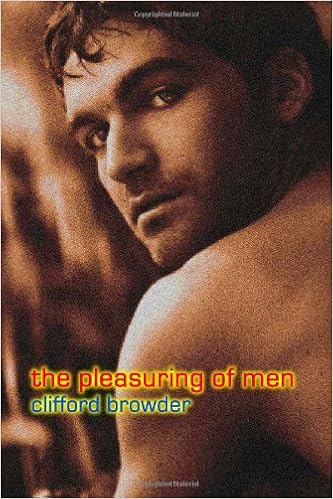
The Pleasuring of Men (Gival Press, 2011), the first novel in the Metropolis series,  tells the story of a young male prostitute in the late 1860s in New York who falls in love with his most difficult client   It is likewise available from Amazon and Barnes & Noble.


         Coming soon:  Sooner or later, the inevitable sequel, patients from hell.  And maybe something else.


         ©   2017   Clifford Browder

Sunday, February 26, 2017

282. A Rockaway Mystery: Death, Theft, a Pauper's Grave


         The author's copies of Bill Hope: His Story have arrived and are available.  Here is the publisher's announcement of the book.


browder-cover-9781681143057-perfect-2
Bill Hope: His Story: ($20: Softcover: 6X9”, 158pp: 978-1-68114-305-7; $35: Hardcover: 978-1-68114-306-4; $2.99: EBook: 978-1-68114-307-1; LCCN: 2017933794; Historical Fiction; May 17, 2017): is the second novel in the Metropolis series. New York City, 1870s: From his cell in the gloomy prison known as the Tombs, young Bill Hope spills out in a torrent of words the story of his career as a pickpocket and shoplifter; his scorn for snitches and bullies; his brutal treatment at Sing Sing and escape from another prison in a coffin; his forays into brownstones and polite society; his brief career on the stage playing himself; his loyalty to a man who has befriended him but may be trying to kill him; and his sojourn among the “loonies” in a madhouse, from which he emerges to face betrayal and death threats, and possible involvement in a murder. In the course of his adventures he learns how slight the difference is between criminal and law-abiding, insane and sane, vice and virtue—a lesson that reinforces what he learned on the streets. Driving him throughout is a fierce desire for better, a yearning to leave the crooked life behind, and a persistent and undying hope.
          This is the second title in the Metropolis series of historical novels set in nineteenth-century New York.  The first in the series is The Pleasuring of Men (Gival Press, 2011), mention of which appears at the end of this post. 

         The book can be ordered from Amazon and will be shipped after the release date of May 17, 2017.  But the paperback, which goes for $20, will cost an additional $4.95 for shipping, unless you order books totaling $25 or more.  The book is also available now from the author and will be sent immediately.  And now on to the Rockaways.

*                 *                 *                *                 *                 *                

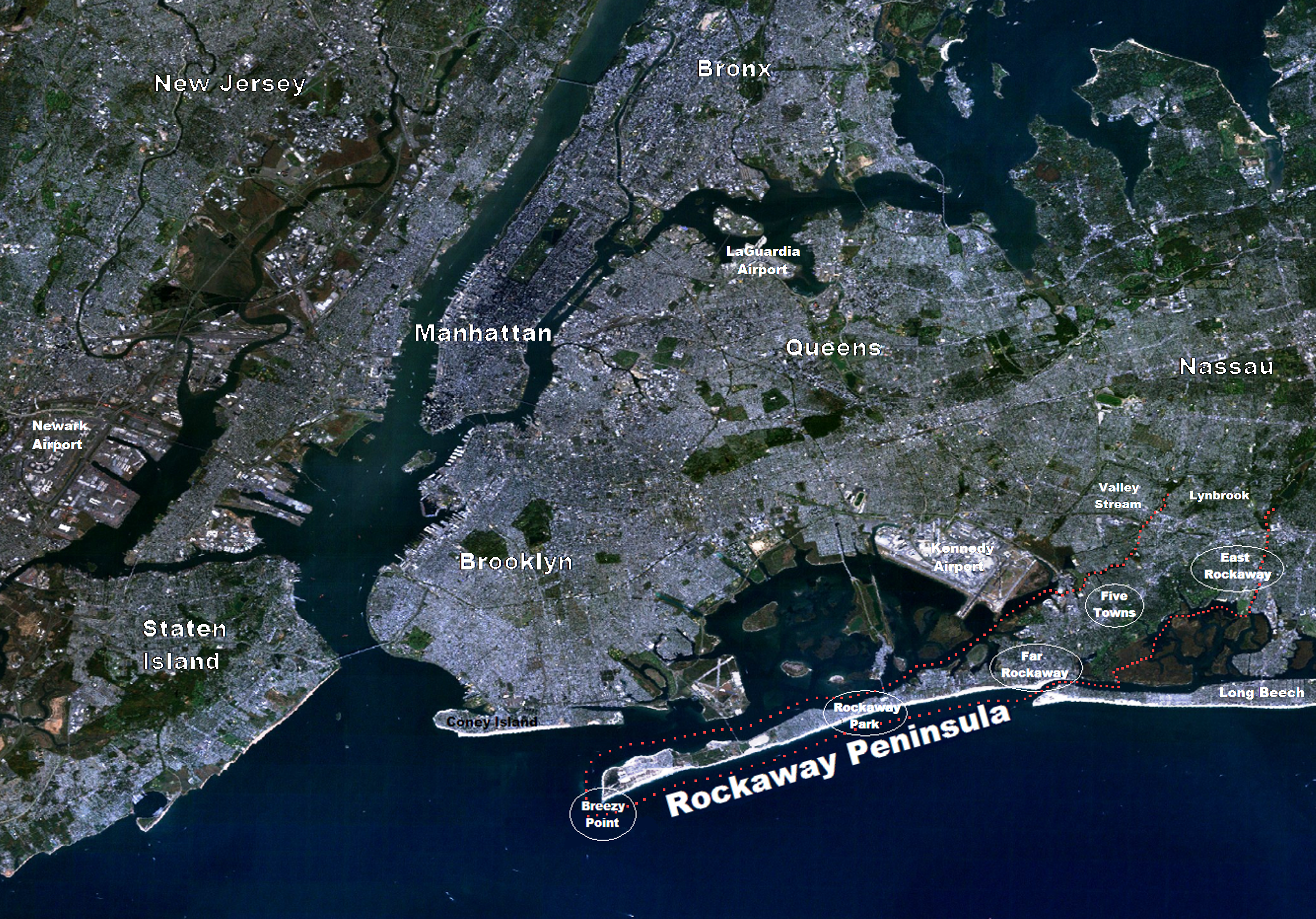
         Rockaway, also known as the Rockaways (a corruption of the Lenape name for the site), is a skinny peninsula in the borough of Queens that faces the ocean and as a result has been a recreational area – first for the rich and later for everyone – but also a site exposed to the rigors of the sea.  Unique though it is by virtue of its location, like many New York neighborhoods it has experienced the ups and downs of development, crime, economic decline, renewal, and gentrification, and in October 2012 it was ravaged by Hurricane Sandy.


File:Landsat-nyc-rockaway.png


         I first knew the Rockaways in the 1950s when I made the long trip by subway and bus from Manhattan to Riis Park beach, one end of which was a gay section that the authorities were well aware of and tolerated … up to a point.  Most of the sunbathers were well-behaved, though I do remember once hearing a young kid emerge from the sea exclaiming joyously, “I just had wild sex out on the sandbar!”  The distant sandbar indeed had a naughty reputation, though I never ventured that far out.  On another occasion I saw the police lecturing two very young boys whose bikinis were deemed a bit too skimpy.  And once I saw three teen-age gay boys talking to two wide-eyed teen-age girls who were sitting on the sand next to them.  “We don’t need you!” one of the boys exclaimed, less with hostility than affirmation.  For the girls it was a lesson in life not taught in the public schools.
        
         But my most memorable experience on the gay beach at Riis Park is of an exhibitionist giving a performance – just a witty spiel, nothing more -- that drew too much of a crowd.  When the police arrived, he said to them, “Just a few more minutes, please,” and they obliged, allowing him, when a plane zoomed overhead, to finish his impromptu act by staring skyward, arms outstretched, and yelling, “Come back, Dave, come back -- all is forgiven!”  With the crowd convulsed with laughter, he then let himself be led off by the minions of order, to what fate I do not know.

         My one other experience of the Rockaways came years later when, enticed by reports of migrating shore birds in the area, I went out there to Fort Tilden, whose abandoned military installations once guarded that part of New York.  Traipsing along the beach and through the sand dunes, I saw not one migrating shore bird, but a great many graffiti-covered batteries and magazines, relics from World War I originally installed to fend off any aggressive designs that Kaiser Wilhelm might have toward the unoffending borough of Queens.  But graffiti-covered batteries weren’t what I had come for, so I departed therefrom and by bus and subway accessed the Jamaica Bay Wildlife Refuge, where birds of all kinds abounded.  So ends this prelude about my scant knowledge of the Rockaways, where recently a strange and disturbing tale has unfolded.


File:Rockaway Beach Queens.JPG
Rockaway beach
Urielevy

         In July 2013 Donata Rea, a resident of the Rockaways acting with power of attorney for the Karen M. Connors Living Trust, applied for Build It Back funds, the city’s program to help homeowners with reconstruction of property damaged by Hurricane Sandy.  Ms. Rea received $60,000 in payments for repairs to the Trust’s two houses on Beach 120th Street, where she herself lived, and turned one of them into an apartment house with three units and leased them to tenants.  When tenants moved in, they were told that Karen Connors was the landlady, yet they never saw her.  Neighbors said that they had seen Karen Connors carried off in an ambulance two years before, and that she had never returned; though puzzled, the tenants continued to write their monthly rent checks to Ms. Rea.    


File:SW edge of burnt district Breezy Sandy jeh.jpg
The Rockaways after Sandy

         That all was not on the up and up on Beach 120th Street became apparent in 2015, when investigators received a tip in that Ms. Rea had sold two condominiums in Florida belonging to Karen Connors for $146,000,had collected $50,000 in rent from the three apartments, and had signed a contract to sell the house to a buyer for $800,000.

         It turned out that Karen Connors was dead.  The county public administrator’s office learned now that the late Karen Connors had an estate that included not just the two houses on Beach 120th Street, but also two condominiums in southern Florida, and quickly brought action against Donata Rea to recover the property.  Ms. Rea had created the Karen M. Connors Living Trust in a document that, bearing the forged signature of the deceased Karen Connors, gave Ms. Rea not just the two Rockaways houses, but also the dead woman’s jewelry and furniture, and a bank account of more than $32,000.  And shortly after that, again with a forged signature, she had obtained power of attorney over Ms. Connors.  Confronted with these facts, Ms. Rea surrendered the property to the public administrator and was then arrested, charged with grand larceny, and released on her own recognizance.  Ms. Rea’s lawyer insists that his client, unaware of Ms. Connors’ death, had acted in good faith after Sandy hit, trying to help her friend and neighbor restore her damaged property – a matter that will be settled in court.  But it does appear that Donata Rea was a woman of a very enterprising nature.

         The story does not end there.  What had become of Karen Mary Connors?  Age 63, she had died of cancer and a heart attack at Peninsula Hospital Center on November 18, 2011.  When she died, her body was released to the Office of the Chief Medical Examiner, which normally notifies the county public administrator of the death of anyone with no known next of kin, so that office can oversee the estate.  But for some reason that did not happen in this case, so the authorities were completely unaware of her estate.  Result: she was mistaken for a pauper and buried in a mass grave on Hart Island, the city’s potter’s field at the western end of Long Island Sound, where the coffins of the unknown, unclaimed, and unwanted are stacked up by convicts from Riker’s Island and buried deep.  Covered with the crumbling ruins of abandoned facilities of another era, the island today is a forbidden zone, accessible only to grave-digging convicts and the unknown dead.

         So who was this woman who, dying, suffered the double indignity of a pauper’s grave and the alleged theft of her estate by a neighbor?  The only child of a New York City firefighter turned lawyer, she had attended St. Leo College in Florida, graduating in 1972 with a degree in philosophy and theater.  Photographs show an attractive young woman with long blond hair who engaged in many activities at college.  How she spent the years that followed is unknown.  Her father died in 1966 and her mother in 1976, and sometime after that, having never married, she returned to the family’s two-story summer home on the Rockaways, where neighbors described her as a recluse in her later years, more apt to complain about noisy children than engage in conversation: one of those solitary figures, so common in the city, who live and die obscurely.

         What now?  The public administrator will auction off her homes in March, the proceeds going to any cousins who can be located.  Her remains will be disinterred from Hart Island and buried, not in the Long Island cemetery where her parents are buried, since it is full, but in a Catholic cemetery nearby.   And Ms. Rea?  When a reporter knocked on her door, down the street from the Connors houses, a woman inside announced, “She’s not here.”  And who provided the tip that led to the discovery of Ms. Rea’s activities?   A suspicious neighbor?  The authorities haven’t said.

         I love New York, but lost in its feverish intensity are quiet lives that no one notices until they obscurely die, if even then.  What happens after their death depends upon whether or not there are friends or relatives to identify the body, see to its disposal and then administer the will, if there is one, or otherwise claim, and then divide the estate.  Karen Mary Connors was one such person, and her passing would hardly have attracted attention, had it not been for Ms. Rea’s intervention.  May she rest in peace.

         For more on Hart, the forbidden island, see post #233, “Hart Island.”  For more on dying alone in the city, and all that can follow, see post #210, “Dying Alone.”

         Source note:  For the story of Karen Connors and her estate, I am indebted to an article in the New York Times of February 20, 2017.


 *                  *                   *                    *                   *                  *


          BROWDERBOOKS:  No Place for Normal: New York / Stories from the Most Exciting City in the World, my selection of posts from this blog, has received these awards: the Tenth Annual National Indie Excellence Award for Regional Non-Fiction; first place in the Travel category of the 2015-2016 Reader Views Literary Awards; and Honorable Mention in the Culture category of the Eric Hoffer Book Awards for 2016.  For the Reader Views review by Sheri Hoyte, go here.  As always, the book is available from Amazon and Barnes & Noble.


No Place for Normal: New York / Stories from the Most Exciting City in the World

The Pleasuring of Men (Gival Press, 2011), the first novel in the Metropolis series,  tells the story of a young male prostitute in the late 1860s in New York who falls in love with his most difficult client   It is likewise available from Amazon and Barnes & Noble.


         Coming soon:  Maybe a post on Doctors from Hell and Their Opposites.  Reports from the medical battlefield, with defeats and victories.


         ©   2017   Clifford Browder