Sunday, December 8, 2013

103. Lighting the City: Pushing Back the Night


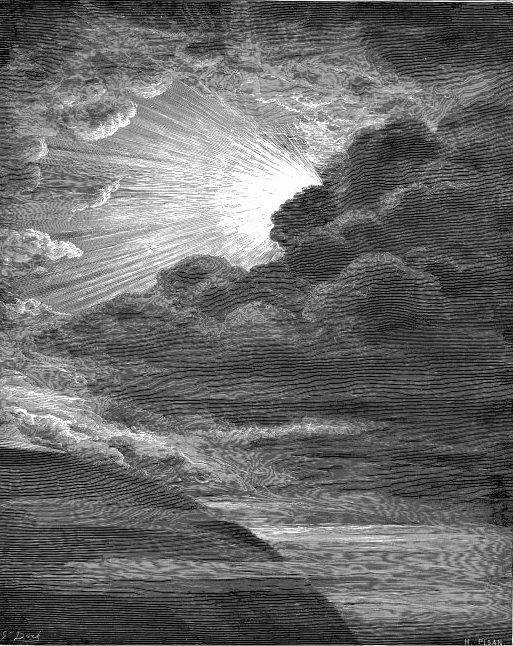
File:Creation of Light.png
Gustave Doré: Let there be light.

     “Let there be light,” said God in Genesis 1:3, “and there was light.”  In myths worldwide, light is associated with life and good, whereas darkness is associated with death and evil.  Lucifer, the Light Bearer, rebelled against God and was cast down into hell to become the Prince of Darkness.  In many cosmic myths the forces of light and darkness are at war, nor is the victory of light guaranteed.  Prehistoric humans huddled around their fire at night, or used fire as a barrier at the entrance to their cave.  For them, darkness meant risk and danger and prowling wild beasts, whereas light brought at least relative security.  And without light there could be no life, so they worshiped the sun, the source of life and light.  (For more of my take on darkness and night, see post #64, A West Village Murder and the Fear of Night.)

     The story of lighting in the city of New York, like that of all cities, replicates these cosmic myths and beliefs, for it is the story of light versus darkness, of pushing back the frontier of night.  In our well-lit cities today, we have little experience of the night sky, the starry infinitudes of space – an experience both humbling and inspiring.  But back in the eighteenth century, before the coming of gaslight and electricity in the nineteenth, darkness was a part of people’s lives, something to wonder at, yet also something to be reckoned with, something to be fought.  And what means of illumination could they use, to fight back the darkness of night?  Outside, torches; in their homes, the fire on the hearth, candles, and lamps.
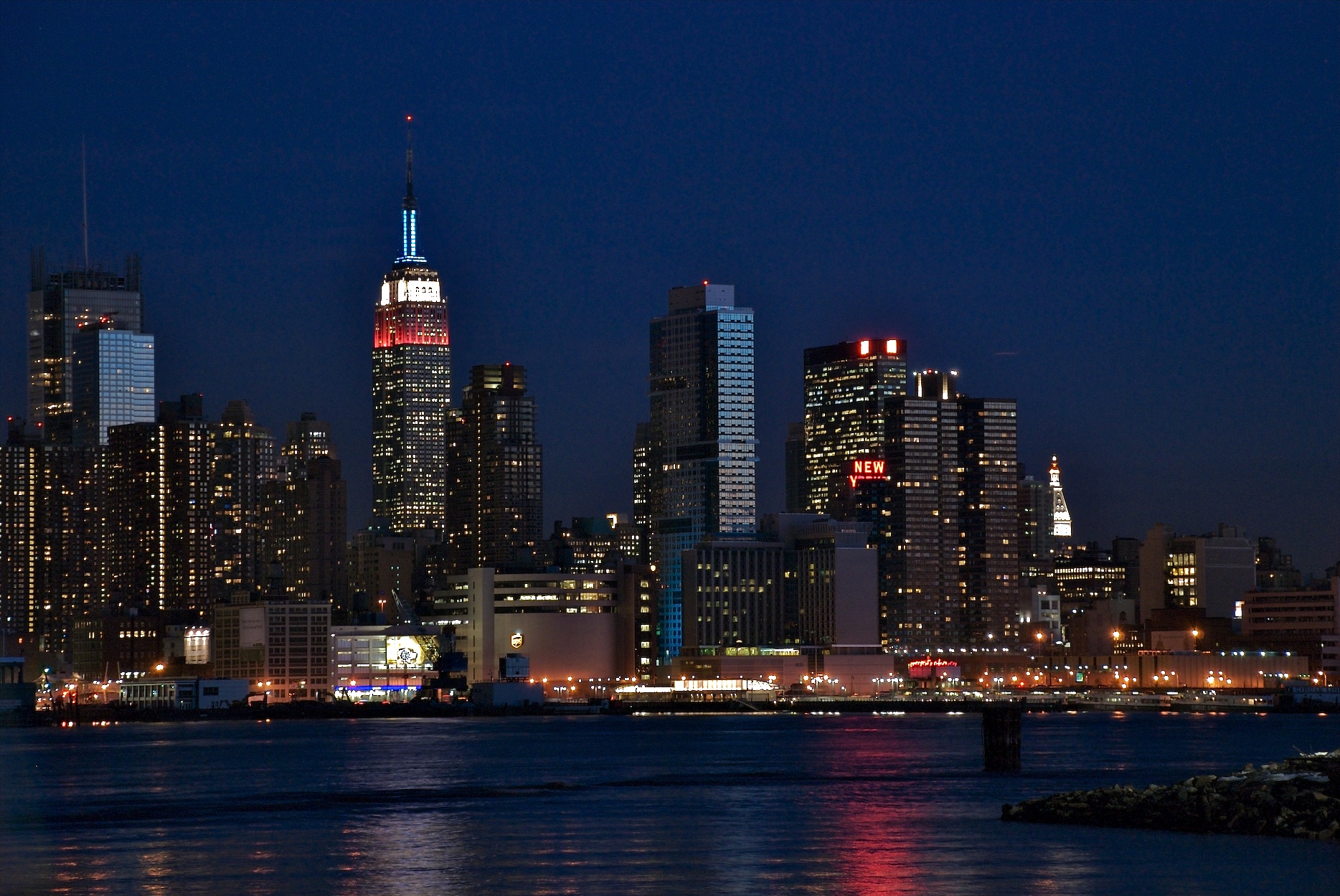
File:New York City at night-0.jpg
What we have gained.
lecates

File:Night Sky Stars Trees 03.jpg
What we have lost.
Michael J. Bennett

     The torch, dating from prehistoric times, has been called the first portable lamp.  The fabled lighthouse of Alexandria, one of Herodotus’s Seven Wonders of the World, was simply a soaring tower with a torchlike fire at the top, visible for miles at sea.  In this country, well into the nineteenth century torchlight parades honored visiting dignitaries like the Prince of Wales in 1860, and rallied supporters during political campaigns.
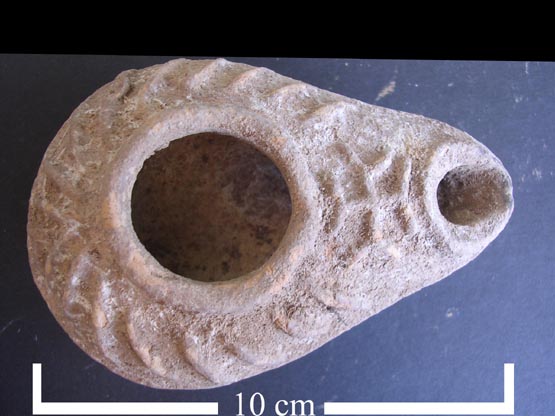
File:Byzantine oil lamp.jpg
A Byzantine oil lamp.
     Inside homes, the wood fire on the hearth was a source of light and warmth and, in the kitchen, the means for cooking meals.  Lamps too existed from prehistoric times: a small open or covered bowl containing some kind of inflammable liquid, and a porous wick that sucked up the liquid and could be lighted.  At first the bowls were improvised from rocks, shells, and horns; later they were fabricated.  The oil might be fish oil, nut oil, sesame oil, or any number of other plant oils, olive oil being the commonest in the Mediterranean countries.  These are the lamps mentioned in both the Old and New Testament of the Bible. 

File:Whale oil lamp.jpg
A whale oil lamp.
Bullenwächter
     In the 1700s, however, the American colonists discovered that spermaceti, a semiliquid, waxy substance obtained from the head of the sperm whale, burned with a bright glow without any disagreeable odor.  It was therefore used more and more in both lamps and candles, and in street lamps as well, creating a profitable market that sent whalers out in great numbers to search the North Atlantic and later, in the nineteenth century, as the sperm whale population in the Atlantic declined, on voyages of several years into the far Pacific, as described in Melville’s Moby Dick.


     The candle is a relatively recent invention.  It was known in China and India before it was created in the West, where it was used by nomadic tribes in Europe in the late Roman period.  Beeswax candles were used in medieval church rituals, but since beeswax was expensive, ordinary people used tallow candles, which were smelly and smoky, dripped, and gave a feeble light.  (Tallow: a mixture of refined animal fats.)  Starting in the eighteenth century, for Americans who could afford them, candles using sperm oil were far superior.

An English Restoration theater, with
candle chandeliers and oil lamp
footlights.
    But what about the interiors of large buildings like theaters?  The theaters of ancient Greece and Rome relied on daylight; night performances were unheard of.  But during the Renaissance, theater moved indoors into the great halls of the nobles, and then into theaters as such, which were lit from overhead by chandeliers with candles – not the ideal lighting, since they dripped hot grease indiscriminately on actors and audience alike, but the best that the times could do.  So let's count our blessings today; in our theater seats we're quite safe from drippy candles, and risk only a crashing chandelier, if a Phantom of the Opera is lurking overhead.

    So eighteenth-century New Yorkers fought the night with means of illumination that had been used for centuries, even millennia: torches, hearth fires, lamps, and candles.  All these involved flame and, when used inside,  had serious drawbacks: they had to burn right side up, be supplied with air, be distanced from inflammable objects, and be protected from drafts. 

     Another problem: these fires were hard to start.  What, no matches?  Not until 1827, when the first friction matches, called lucifers (that name again!), were invented in England; they soon appeared in New York.  But before that, how did people light candles and lamps?  From other candles and lamps, if available, otherwise from fire struck with flint and steel.  And yes, there’s the old joke about doing it by rubbing two Boy Scouts together, inspired by the Scouts’ practice of rubbing two dry sticks together to produce the friction that creates a flame.  But however it was done, it was a lot of work.

     The nineteenth century brought changes that revolutionized lighting.  Candle making by machine made mass production of candles possible, so that cheap candles became available to everyone, and with the introduction of paraffin wax in the mid-1850s, candles were made that burned cleanly without the smell of tallow candles.  But by the second half of the century candles were on their way out, replaced by competing illuminants.  First  introduced in London in 1814, gaslight came soon afterward to New York, where the Common Council granted charters to competing companies to lay pipes in different sections of the city, replacing the whale oil lamps then in use.  In 1824 a banker’s residence in Cherry Street became the first house in the city to receive gaslight.  (Bankers and their friends have a way of getting the latest improvements first.)  In the 1820s and 1830s gaslight lit more and more of the streets, with lamp lighters lighting the polished glass boxes of the lamps at dusk and snuffing them at dawn. 

     But gaslight was not for every community, as it had several requirements.  A plentiful supply of coal, from which the gas was manufactured, was needed, and the means of transporting it.  New York City’s coal was mined in the mountains of Pennsylvania and shipped by barge via the Delaware and Hudson Canal to the Hudson River and then on to the city.  Gas works were also needed: clusters of red-hot retorts, where the coal was burned to create gas, and of gas containers, big bulblike structures of iron where the gas was held, before being sent by underground pipes to the streetlamps, fancy hotels and stores, and well-appointed homes of the affluent.  Gas works were ugly and smelly, and therefore confined to the Hudson and East River waterfronts, well out of sight – and smell – of the fashionable sections of the city. 
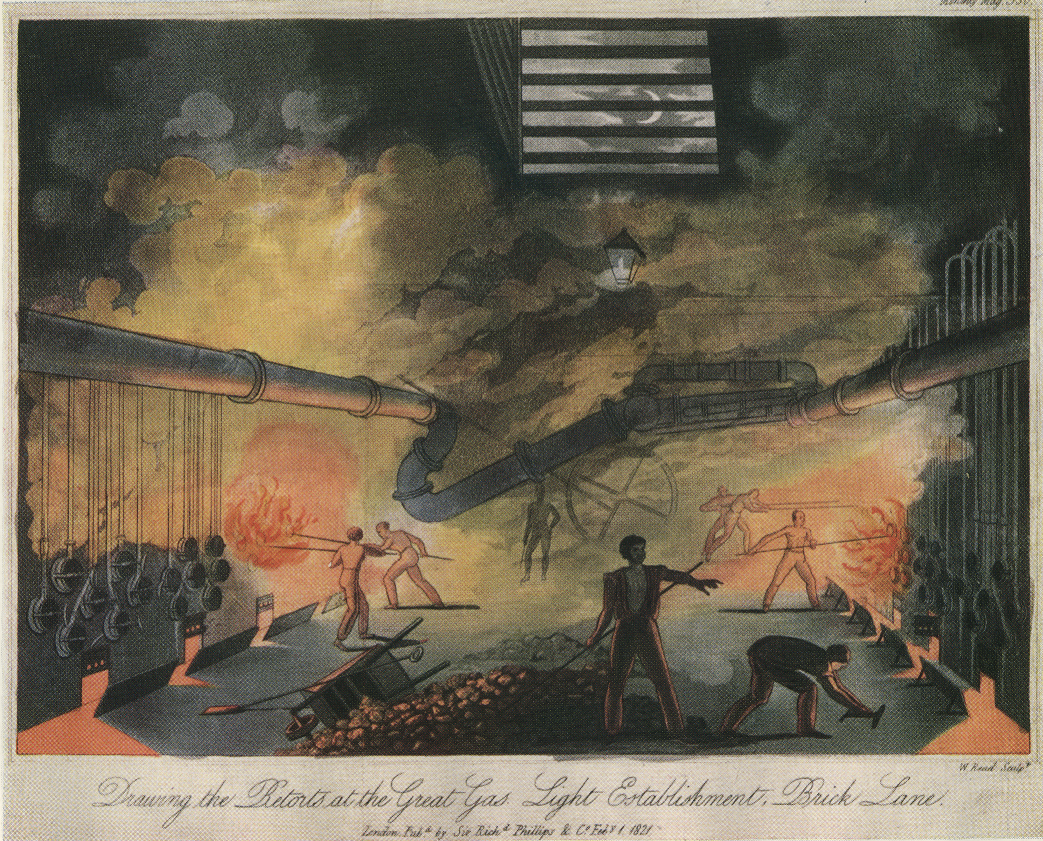

File:Drawing the retorts at the Great Gas Establishment Brick Lane.png
Inside a nineteenth-century gas retort.  Not something you would want next door.


     Gaslight needed big money and a lot of effort to put up all those smelly gas works, so it was confined to the big cities; small towns and rural communities were not accommodated.  But it transformed New York, providing lighting such as had never before been possible.  Hotel lobbies glowed, and the front windows of Fifth Avenue brownstones blazed with light as arriving guests mounted the steep front stoops, while theaters offered Spanish dancers, waterfalls, and naughty cancans in a stellar glare, and pickpockets worked overtime in the evening, though second-story men lamented the illumination, so inimical to their furtive operations.  (We'll learn more about second-story men in a future post about the so-called ladder of thieves; they were on a middle rung, far from the top or the bottom.)


     Another significant development came in 1859 with the discovery of oil in a farming district of northwestern Pennsylvania, which ended abruptly that region’s rural tranquility.  Oil rigs began drilling intensively, and kerosene, a petroleum derivative, became readily available and cheap enough to be widely used in lamps.  As an illuminant it quickly replaced whale oil, which could only be obtained in far distant oceans.  Characteristic of the kerosene lamp was a glass chimney that protected the flame and controlled the flow of air to it, and a knob that adjusted the size of the wick, and thus the size and brightness of the flame.  Kerosene lamps didn’t require the infrastructure of gaslight and so could be used anywhere.  My first awareness of these lamps came in the bad Westerns, often Saturday afternoon serials, that afflicted my childhood.  These were the “Meanwhile back at the ranch …” species, humdrum black-and-whites meant to lure their young victims back a week later for the next installment, which they rarely did.  Viewing them, I always knew that at some point a fight would erupt in the ranch house, a kerosene lamp would be knocked over, curtains would catch fire, and the whole place go up in flames; I was rarely disappointed. 

     Later I encountered the lamps in real life.  In the 1960s, when I first went to Monhegan Island off midcoast Maine, kerosene lamps were still in use there; I learned such niceties as how to refill them, how to light them, and how to trim the wicks of these rather cumbersome contraptions.  Schooled by those dreary old Westerns, I was careful to keep them away from curtains.  Only with the creation some years later of a local company to supply electricity to the island – first for only a few hours, then for more, and finally all day and night – were the kerosene lamps supplanted, thus repeating the progress of mid-nineteenth-century New York.  Progress may be long in coming, but come it does … finally.

     By the late 1870s gaslight, so wondrous at first, and hailed as a clean source of light, had worn out its welcome in the city.  Gas jets emitted headache-inducing fumes of ammonia, sulfur, and carbon dioxide, turned ceilings black, and defiled the parlor, that sanctuary of middle-class gentility, with, alas, soot.  In the land of Go Ahead, in this progress-giddy age, surely something better could be devised.

     It was.  On December 20, 1880, all of Broadway between Union and Madison Square was suddenly bathed in light.  New Yorkers were dazzled, amazed.  Projecting the light were a series of twenty-foot-tall cast-iron posts, one per block, each with an arc light that cast a brilliant glow.  Arc lights, powered by steam engines and electric generators, were cheaper to install than hundreds of lampposts, and were soon spreading illumination along the avenues and over markets, factories, railroad stations, and wharves.  But arc lights were too intense for use in homes, and they too gave off noxious fumes, and created power failures when assailed by storms.  (Sound familiar?)  Something still better was needed.


Arc lights along Broadway in 1880.

     In 1878 Thomas Edison, a young inventor already known for numerous inventions that included the phonograph, informed the press that was he going to develop an incandescent lamp suitable for homes.  Canny investors on both sides of the Atlantic perked up their ears, opened their wallets, and helped create the Edison Electric Light Company, of which Edison himself, wise now in the ways of Wall Street, retained significant control.  Vast sums and great hopes were invested in this ingenious experimenter, who in this matter so far had produced only promises – brash, glowing promises, but promises only, mere words.  Supremely confident, he got to work in his research laboratory in Menlo Park, New Jersey. 
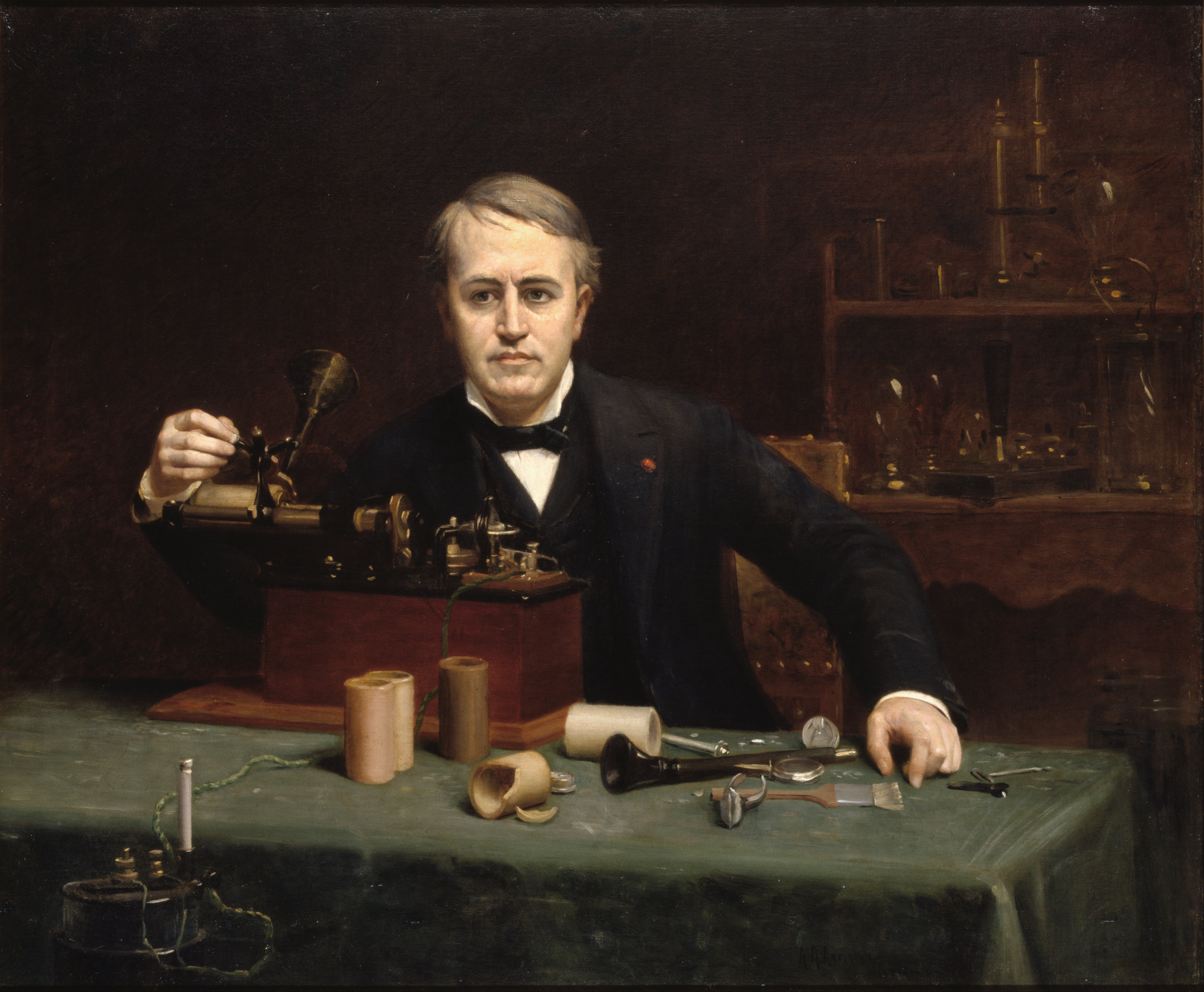

File:Abraham Archibald Anderson - Thomas Alva Edison - Google Art Project.jpg
A portrait of the young Edison.

     Months passed, progress was made.  Aldermen and councilmen were invited to Menlo Park for a gala demonstration of the new lights.  Edison established his power station on Pearl Street, had armies of workmen dig trenches to lay subterranean wires in massive insulated power mains, and installed powerful generators in the power station.  Then, on September 4, 1882, fifty square downtown blocks housing the city’s key financial, commercial, and manufacturing establishments were suddenly illuminated.  If gaslight had been a wonder, and arc lights magic, this was a miracle.  


     J.P. Morgan and the Vanderbilts (those bankers and their friends again!) immediately installed incandescent lights in their mansions, and within a year over five hundred wealthy homes were electrified.  The Stock Exchange followed, then office buildings, machine shops, piano factories, sugar refineries, department stores, and theaters, and middle-class homes as well, though tallow candles were still used in tenements.  People in New York, and then the world over, marveled: with a flick of a switch, there was light.  No lamp to fill, no wick to trim, no fumes, no flickering, just bright, steady light.

     Night life intensified, as hotels, restaurants, and shops, and brothels and gambling parlors too, turned radiant with light, and customers flocked.  By the mid-1890s people were beginning to call a stretch of Broadway blazing with illuminated signs the “Great White Way.”  The New York of today was coming into being, to be further enhanced in the 1920s and 1930s by the advent of neon lights, first developed commercially by the French engineer and inventor Georges Claude.  Today, if in our cities awareness of the night sky has all but vanished, no one seems to care, since there is so much to do at night down here.  Yes, darkness has been vanquished.


File:Times Square at night- Manhattan, New York City, United States of America (9867936733).jpg
Times Square at night, the ultimate in neon lights.
Boris Dzhingarov
     
File:Witch hazel Central Park in winter.jpg
Witch hazel in Central Park.
Downtowngal
File:18th century dowser.jpg
An eighteenth-century dowser.

     A note on witch hazel:  A short article in last Sunday's Times reminds me that even this late in the autumn, with snow predicted, this strangest of plants is blooming.  I have seen it on Monhegan Island in Maine, and down here in Central Park, though you can easily pass by this ribbon-petaled, spidery yellow flower and not even realize it's a flower.  Yes, this is the source of the astringent sold in pharmacies as a remedy for itching (it works!), bleeding, inflammation, acne, bruises, and other skin conditions.  And yes, it was once used for "water witching": a dowser or water witch would hold a forked branch of the plant and traipse an area where underground water might be found, until the stick was tugged or bent downward, indicating the source of water; a well would then be dug.  Skeptical?  Well, I haven't tried it myself, but there are those who insist that it works.  Try it for yourself and report back to me.


     Coming soon:  The Beauty and Danger of the Palisades.


    ©  2013  Clifford Browder

Sunday, December 1, 2013

102. The Dynamo Mayor: La Guardia


The Little Flower

     In the 1920s New Yorkers were surprised to encounter, at election time, a short, pudgy man in rumpled clothes and topped by an outsized hat, a black wide-brimmed Stetson, who, sometimes from the top of an abandoned car, shouted and spieled in a loud, high-pitched voice, while flailing his arms and jabbing a finger to emphasize a point.  He was almost comical, but something about him always drew a crowd.  Maybe it was his nervous energy, or his passionate conviction, or his ability to communicate with them in Italian, German, Hungarian, Croatian, and Yiddish.  But whatever it was, he got and held their attention, and often their vote as well.

     This was Fiorello La Guardia, a peppery firebrand campaigning for a seat in the House, where he served seven terms as a Progressive Republican, his antics provoking both laughter and indignation but always getting him attention, as he fought for the “little people” against “the Interests,” on the side of the Forces of Light against the Forces of Darkness.  (Nuances were alien to him; he was always crusading for the Good, against enemies who were blatantly corrupt, reactionary, selfish, and evil.)  Then, in 1929, he was the Republican candidate for mayor against Jimmy Walker, who was running for a second term.  But the mayor was too popular, and the times too lighthearted and frothy, for an impetuous little reform-minded crusader; he got only 26% of the vote, the lowest figure on record since 1898.  But nothing could stop him; he bounced back to campaign for mayor in 1933.

     Fiorello La Guardia, a son of Italian immigrants, had not grown up in New York.  His father was a bandmaster with the U.S. Army who was stationed at various posts in Arizona, so his dynamo of a son grew up in the wastelands of the West, far removed from the city where he would make his career.  As a young man his knowledge of Italian got him jobs in U.S. consulates in Europe, where he picked up his other foreign languages, but he returned to America and plunked down in New York.  There he worked as an interpreter on Ellis Island and then in Night Court, studied law and passed the bar, and began representing impoverished immigrants in court.  In the course of these occupations he witnessed firsthand the corruption and incompetence of Tammany and went into politics to work for reform, becoming a Progressive Republican.  (Yes, miracle of miracles, in those days there was such a thing as a Progressive Republican, the most famous example being Teddy Roosevelt.) 

     From 1916 to 1932 he was in the House of Representatives for the 14th Congressional District, which extended from 14th Street south to 3rd Street, and from the East River west to the Hudson: a hodgepodge of ethnic groups that included slum-dwelling Jews, Italians, Irish, Poles, Ukrainians, Russians, Czechs, and Romanians, and a contingent of well-scrubbed WASPS in mansions around Washington Square and just north of it.  That a Republican could win repeatedly in this district impressed the party leaders; they marked him as a comer, but soon realized that this explosive little guy simply could not be controlled.

File:Fiorello LaGuardia.jpg
The first New York City mayor to make ample use
of the radio.
     By 1933 the times and the city had changed.  The stock market had crashed, the Roaring Twenties had died with a whimper, Mayor Jimmy had resigned under suspicion of corruption and decamped for Europe, and the city and nation were in the depths of the Depression.  With a sixth of the population on some form of relief, New York City was devastated by the economic crisis, but also by years of Tammany corruption and incompetence.  Clearly, voters were in a mood for change, for someone who could lead them out of this morass, and Fiorello La Guardia never doubted for a minute that he was the man.  Overcoming much resistance, he became the candidate of the City Fusion Party, comprising anti-Tammany Democrats, Old Guard Republicans, and various other segments of the electorate.  He campaigned frenetically, waving his arm, stomping his foot, and trading insults with hecklers, while proclaiming that the city was dying of “Tammanyitis.”  To all of which Tammany did not take kindly.  On election day, November 7, shots were fired, fist fights erupted, skulls were cracked, and the police made numerous arrests.  No matter; the little man with the big mouth was swept decisively into office.  New York would never be the same again.

     On his first day in office the new mayor dashed about the city in his official limousine swearing in commissioners, whom he warned to get results or get out.  By afternoon he was in his office tossing letters at his secretary: “Say yes! … Say no! … Throw it away! … Tell him to go to hell!”  At the same time, he was dictating letters to three stenographers: “Nuts! … Regrets! … Thanks!”  This was a frenzied workaholic the like of which the city had never seen.

     The days that followed only intensified his image.  En route to city hall in the morning, he would have his driver change course so he could check the progress at a housing construction site, supervise traffic flow or snow removal, or query a patrolman about his beat.  No city worker or garbage collector was spared.  On any given day New Yorkers swore that they had seen him on whirlwind visits to dozens of sites in all five boroughs – simultaneously! 

     It wasn’t easy working for such a boss; he was demanding, even a bully.  He expected city employees at all levels to arrive on time and put in a full day’s work; if they didn’t, they were fired.  And no one, under any circumstances, was to take a bribe.  Scrupulously honest, he expected others to be the same.  Gone were the days of Tammany slackness, of cronyism and corruption.  When angry, he was quite capable of knocking an employee’s hat off – “Be respectful when talking to a citizen!” – and of dashing a cigarette from a worker’s lips.  Those who couldn’t take it quit or got fired, but those who could stuck it out, came to respect him and even, in time, to love him.  He gave them pride in their work: they were serving the people in the greatest city in the world.  He really believed that, and they came to believe it, too.  Morale among city workers soared.

     And he got results.  In the first six months of his tenure bankers reduced the interest rates on the city’s borrowing; 1700 recreational renovation projects were completed by Robert Moses, his Parks Commissioner, who completed transformed the city’s parks; free street shows were staged by hired musicians and dancers; and dancing was encouraged on the Central Park Mall.  And this was just the beginning.  The new mayor was praised by the press, cheered by residents; in the very depths of the Depression, there was hope after all for the city.

     Determined to get federal money for further projects and reforms, the indefatigable mayor went to Washington, developed contacts there, and presented the Department of the Interior with specific plans that Moses had worked out in detail.  Other cities went to the same source of funding with vague, well-meaning plans, but La Guardia could show in detail what the federal money would do for New York.  Result: he got more for his city than any other mayor, and New York became a testing ground and showcase for the New Deal.  While publicly professing neutrality, President Roosevelt had secretly worked against La Guardia’s election, hoping to keep the city Democratic, but he came to like the new mayor, however irksome he might at times be; they both believed in Big Government and what it could do for the cities. 

File:Franklin D. Roosevelt and Fiorello LaGuardia in Hyde Park - NARA - 196764.jpg
With the foxy President, who came to like him.  La Guardia's suit is less rumpled than usual.

     Less tranquil was the mayor’s relationship with his Parks Commissioner.   Two strong-willed men used to getting their own way, they argued and shouted and almost came to blows, but for all that worked together successfully.  The fiercely demanding mayor could not do without a commissioner who turned mud pits and slums into parks, and run-down tenements into housing projects, while creating a network of highways and bridges that gave the sprawling city a cohesion it had never had before.  (For more on Moses, see post #78.)

     Over the years that followed Fiorello La Guardia broke the grip of Tammany to create a nonpolitical Civil Service Commission; expanded relief and social service programs; cleared slums and created parks and public housing; unified and updated the city’s mass transit system; expanded education; developed public health programs; reformed the police; opened the city bureaucracy to Jews, Italians, and blacks; appointed more women to important positions than any previous mayor; and sponsored a 1939 World’s Fair. 

     Not one for subtlety and tact, he denounced anyone and anything he deemed corrupt, unjust, or injurious: taxi owners unfairly exploiting the drivers, the New York Bar Association, profit-hungry doctors, drunk drivers, high city insurance rates, inefficient sanitation disposal, racketeers and crooked politicians, urban noise.  Which should have made him a host of powerful enemies, but always he had the people with him; in 1937 he was easily reelected on the Fusion ticket.

     Amazingly, he still found time – a little time – for his wife Marie (yes, he had a wife), who preferred to keep out of the spotlight while she looked after the house and their adopted son and daughter.  His former secretary, Marie knew what she was getting into when she married him and approved of his demanding career.  Amazingly too, he liked to cook and was good with the children.

On a police boat, smashing slot machines.


     A hands-on mayor, the Little Flower loved to swing into action, usually with the press on hand to record it.  In 1934 he went at mobster Frank Costello’s slot machines, smashing them with a sledge hammer and dumping them from a police boat into Long Island Sound while reporters looked on.  If a tenement roof collapsed, a train wreck occurred, or a fire broke out, he would pop up out of nowhere to scream advice and lend a helping hand.  Once, settling into his seat for a performance at Radio City Music Hall, he was informed of a fire nearby, rushed out of the theater, hurried to where smoke was pouring out of a restaurant, and disappeared into the building.  Hours later the firemen, having extinguished the blaze, came out.  “Will someone get the mayor out of there!” yelled a fireman.  With the mayor nowhere in sight, consternation spread.  Finally he appeared, soot-covered, and explained that he had been inspecting the refrigerator system to see if the building code had been violated.

     On a more tranquil occasion, during a lengthy newspaper strike he read the funnies over the radio, so the “kiddies” could keep up with their favorite comic strip characters.  He was said to be charmingly expressive, with appropriate intonation, a careful building of suspense, and an emphasis on the moral lessons to be derived. 

     Alas, he had a puritanical streak in him, as became apparent in 1937, when he refused to renew the theater licenses of the famous Minsky brothers’ burlesque houses, which featured such stellar performers as the comedians Abbott and Costello and the legendary Gypsy Rose Lee.  Burlesque then left the city but flourished just across the river in Union City, imposing on its New York devotees an irksome trans-Hudson expedition to the nearer wilds of New Jersey.

     In 1941 he ran for a third term, again as the Fusion candidate, and won, becoming the first New York mayor in modern times to serve three consecutive terms.  When war came he hoped to get a leave of absence as mayor so he could serve in the Army, but, to his great disappointment, the Army wasn’t interested.  He became increasingly irritable, arbitrary in his actions, and arrogant; he was tired, and the voters sensed it.  Criticism of his policies multiplied, and it was evident that, with federal money now going to the war effort and not to the cities, he was much less successful as mayor and losing touch with the people. 

     In 1945 La Guardia chose not to run for a fourth term and left office at the end of the year.  In 1946 he directed UNRRA, a U.N. organization fighting famine in postwar Europe, but resigned when the U.S. and Great Britain declined to support the organization further.  The question of what this most dynamic little man would do next in retirement was tragically cut short when, having long suffered from ill health, he succumbed to cancer and died in 1947.  Fire houses sounded a signal honoring the death of a fireman, City Hall and other city buildings were draped in black, and Mayor William O’Dwyer, his successor, proclaimed a day of mourning; all public buildings flew flags at half mast for thirty days.  More significant still, some 45,000 citizens of all ages and ethnic groups and all walks of life stood patiently in line to pay their last respects to the Little Flower, as he lay in state in the Cathedral of St. John the Divine.  It is hard to imagine someone so fiercely dynamic stilled at last.  One wonders too if his frenetic life style contributed in some way to his demise.

File:Fiorella LaGuardia statue.jpg
  Now hailed as New York’s best and greatest mayor, he has had a high school, a community college, an airport, and a stretch of West Broadway in Greenwich Village named for him; a statue of him, rumpled suit and all, now adorns this last, La Guardia Place.  He also achieved the ultimate in commemoration when he inspired the hit Broadway musical Fiorello, which ran from 1959 to 1961.  But whether the city would want another mayor so domineering and possessed of such ruthless energy is doubtful.  Who would want to experience a whirlwind twice?  But he will always be remembered and, at a safe distance, fondly.


Bloomberg and de Blasio

    And what of our outgoing and incoming mayors, Michael Bloomberg and Bill de Blasio?  Bloomberg, our 108th mayor (2002-13), is not easily classified.  A lifelong Democrat, in 2001 he chose to run as a Republican and got elected, then in 2007 became an Independent.  As the founder of Bloomberg L.P., a vastly successful financial news service, he is certainly the richest mayor New York City has ever had, being appraised by Forbes magazine in September 2013 as the 13th richest person in the world, with $31 billion in wealth.  That he longed for more than wealth and success in business explains his entrance into the murky and often perilous world of politics.  There are those who decry the participation of the rich in politics, feeling that their money gives them an unfair advantage, but it can also be argued that their wealth renders them less susceptible to greed; if you already have, say, $31 billion, why would you need to get more?


Michael R Bloomberg.jpg
To my eye he looks benign. 
 And, yes, tastefully elegant.
Rubinstein
    As mayor, Bloomberg has supported abortion rights, same-sex marriage, and legalization for illegal immigrants; opposed the death penalty; expanded the city’s ban on smoking; and attempted to restrict soft drink sales – policies that many liberals would endorse.  Yet he calls himself a fiscal conservative and is proud of having turned the city’s $6 billion deficit into a $3 billion surplus.  New Yorkers have applauded many of his initiatives, but not his support of the Police Department’s stop-and-frisk policy, which targets minorities, or his getting the City Council to amend the city’s term limits law to allow him to serve a third consecutive term. 

     As for de Blasio, now that he’s won, the honeymoon is over.  Recently, right after he praised our 106th mayor David Dinkins, Dinkins, who was present, suggested that the new mayor’s plan to finance prekindergarten programs by a tax on the rich, which would require approval by the State Legislature, was a mistake; he would do better to tax suburban commuters.  This surprised de Blasio, who in any case will now have to find ways to implement his campaign promises.  Yes, the honeymoon is over.


     Source note:  In addition to the usual online sources, I have drawn on Alyn Brodsky’s excellent biography, The Great Mayor: Fiorello La Guardia and the Making of the City of New York (2003).  It is meticulously researched and documented, and very readable.  Not for someone who wants a quick take on the subject, however, since it treats its subject in depth.

     Coming soon:  Lighting the City: Pushing Back the Night (from candles and hearthside fires to gaslight, arc lights, and the miracles wrought by Thomas A. Edison, as New Yorkers fought to conquer darkness).  In the works: The Ladder of Thieves (from lowly hog snatchers to the most sophisticated bank robbers, circa 1870).  And other possibilities.

     ©  2013  Clifford Browder